 Bird Album
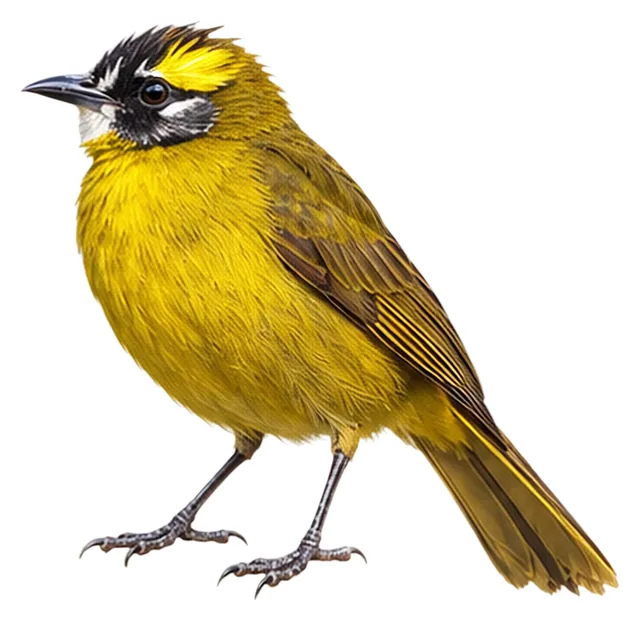
Yellow-eared Bulbul
Pycnonotus penicillatus Blyth, 1851
36 gWeight
The yellow-eared bulbul (Pycnonotus penicillatus) is a species of songbird in the bulbul family of passerine birds.
Busiest months: November–February · Most records: Sri Lanka
Where and when it's recorded

Yellow-eared Bulbul has been recorded at 28 of the 8,171 birding hotspots we track, in 1 country or region.
Records by month Northern Hemisphere
Where it's recorded most
- Horton Plains National ParkSri Lanka692 records
- Victoria ParkSri Lanka649 records
- Nuwara EliyaSri Lanka137 records
More places
- Nuwara Eliya – Hakgala Botanical GardensSri Lanka135 records
- Horton plainsSri Lanka106 records
- Sinharaja Forest ReserveSri Lanka22 records
- Sinharaja NP – Rainforest EcolodgeSri Lanka17 records
- Sinharaja NP – Kudawa accessSri Lanka9 records
- KitulgalaSri Lanka8 records
- Kandy – Udawatta Kele SanctuarySri Lanka7 records
Countries and regions with the most records
eBird records via GBIF up to 2024-12-31. A record means someone listed it; more records partly mean more birders, not more birds.
About
The yellow-eared bulbul (Pycnonotus penicillatus) is a species of songbird in the bulbul family of passerine birds. It is an endemic resident breeder in the highlands of Sri Lanka. The common name is also used as an alternate name for the yellow-throated bulbul.
Excerpt from Wikipedia, CC BY-SA 4.0 · authors · Read more on Wikipedia
Questions
How big is the Yellow-eared Bulbul?
The Yellow-eared Bulbul weighs around 36 g.
Where does the Yellow-eared Bulbul live?
Its breeding range: Oriental: Sri Lanka. It is most often recorded in Sri Lanka.
When is the best time to see the Yellow-eared Bulbul?
At the hotspots we track, it is recorded most in January, February, November and December (Northern Hemisphere).
Is the Yellow-eared Bulbul endangered?
The IUCN Red List classifies the Yellow-eared Bulbul as Least Concern.
What does the Yellow-eared Bulbul eat?
Main food: Fruit.
What family is the Yellow-eared Bulbul in?
It belongs to the family Bulbuls (Pycnonotidae), order Passerines (Passeriformes).
At a glance
- Weight
- 36 g
- Habitat
- Forest
- Diet
- Fruit
- Lifestyle
- Perches in trees
- Migration
- Resident (barely migrates)
- Conservation
- Least Concern
More measurements
- Wing
- 79 mm
- Tail
- 79 mm
- Bill
- 17 mm
- Tarsus
- 21 mm
Averages from the AVONET dataset; length from field guides where available.
Range
Oriental: Sri Lanka
Breeding range, IOC World Bird List 15.2
Classification
- Order
- Passerines Passeriformes
- Family
- Bulbuls Pycnonotidae
- Genus
- Pycnonotus
Other birds in the genus Pycnonotus
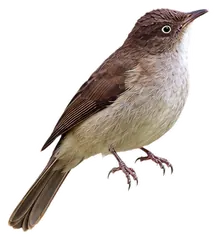 Cream-vented BulbulPycnonotus simplex
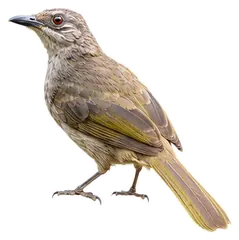 Olive-winged BulbulPycnonotus plumosus
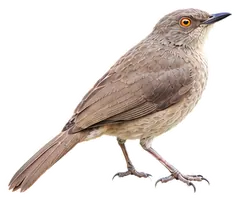 Asian Red-eyed BulbulPycnonotus brunneus
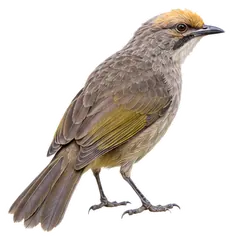 Straw-headed BulbulPycnonotus zeylanicus
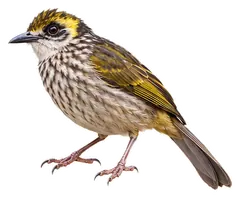 Spot-necked BulbulPycnonotus tympanistrigus
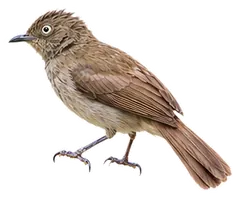 Cream-eyed BulbulPycnonotus pseudosimplex
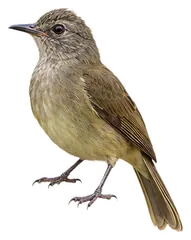 Ashy-fronted BulbulPycnonotus cinereifrons
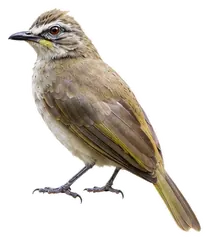 White-browed BulbulPycnonotus luteolus
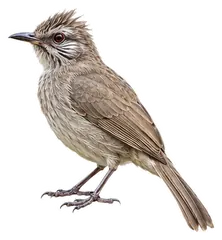 Ayeyarwady BulbulPycnonotus blanfordi
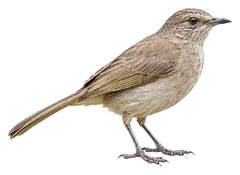 Streak-eared BulbulPycnonotus conradi
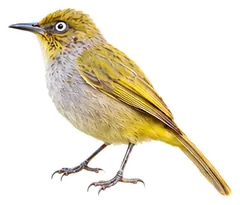 Pale-eyed BulbulPycnonotus davisoni
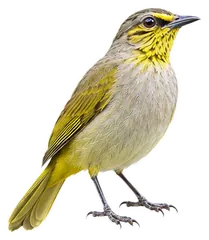 Stripe-throated BulbulPycnonotus finlaysoni
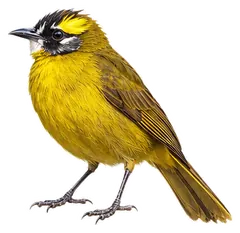
Download illustration
Free to use with credit: “Illustration: Bird Album (birdalbum.com)”. Drawn by AI from a reference photo by fish2bug. ↗
Heard it but can't see it? Mingji identifies birds by sound and photo, on your phone.