 Bird Album
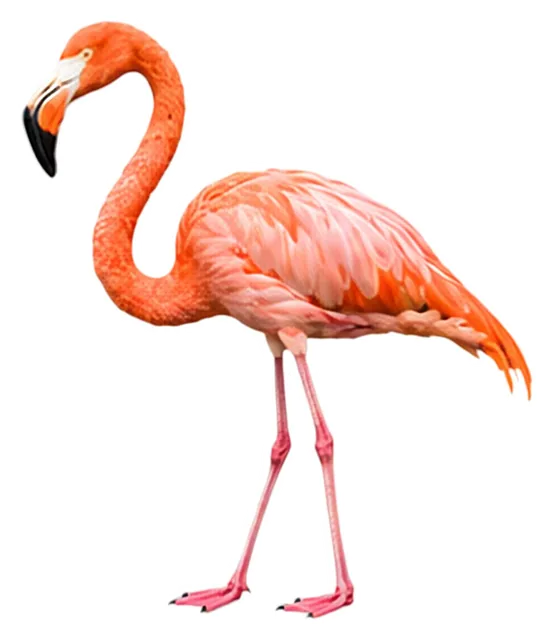
American Flamingo
Phoenicopterus ruber Linnaeus, 1758
≈84 cmLength153 cmWingspan3 kgWeight
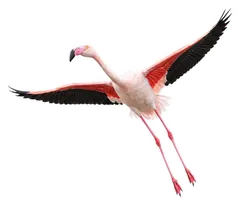
The adult is deep pink overall, with black flight feathers visible when the wings are spread.
Busiest months: January · Most records: Curaçao, Caribbean Netherlands, United States
Looks like Greater Flamingo
How to identify
Field marks
- Adult feathers mostly deep pink
- Adult has red wing coverts and black flight feathers
- Adult has a pinkish-white bill with an extensive black tip
- Adult has entirely pink legs
Male, female and young
Male weighs about 2.8 kg on average; female about 2.2 kg.
Voice
Calls resemble goose honks.
Similar species
Where and when it's recorded

American Flamingo has been recorded at 189 of the 8,171 birding hotspots we track, in 32 countries and regions.
Records by month Northern Hemisphere
Where it's recorded most
- St. Marks NWRUnited States1,819 records
- Camino de grava entre el Corchito y Estero de ChicxulubMexico1,240 records
- Leonabelle Turnbull Birding Ctr.United States1,201 records
More places
- Blue Bay Curaçao Golf & Beach ResortCuraçao1,070 records
- PN Cienaga de Zapata – Las SalinasCuba847 records
- Carretera Sierra Papacal-ChuburnáMexico802 records
- Kralendijk Water Treatment PlantCaribbean Netherlands779 records
- SFF Los Flamencos – Resguardo Perratpu/Boca de CamaronesColombia771 records
- Salina GotoCaribbean Netherlands767 records
- Saliña Sint MichielCuraçao721 records
Countries and regions with the most records
eBird records via GBIF up to 2024-12-31. A record means someone listed it; more records partly mean more birders, not more birds.
About
The American flamingo (Phoenicopterus ruber) is a large species of flamingo native to the West Indies, northern South America (including the Galápagos Islands) and the Yucatán Peninsula. It is closely related to the greater flamingo and Chilean flamingo, and was formerly considered conspecific with the greater flamingo, but that treatment is now widely viewed (e.g. by the American and British Ornithologists' Unions) as incorrect due to a lack of evidence. It is also known as the Caribbean flamingo, although it is also present in the Galápagos Islands.
Excerpt from Wikipedia, CC BY-SA 4.0 · authors · Read more on Wikipedia
Questions
How big is the American Flamingo?
The American Flamingo is about ≈84 cm long, with a wingspan of 153 cm and weighs around 3 kg.
Where does the American Flamingo live?
Its breeding range: North America, Middle America, South America: northern, Galápagos Islands; also Caribbean. It is most often recorded in Curaçao, Caribbean Netherlands and United States.
When is the best time to see the American Flamingo?
At the hotspots we track, it is recorded most in January (Northern Hemisphere).
Is the American Flamingo endangered?
The IUCN Red List classifies the American Flamingo as Least Concern.
What does the American Flamingo eat?
Main food: Fish, shrimp & shellfish.
What family is the American Flamingo in?
It belongs to the family Flamingos (Phoenicopteridae), order Phoenicopteriformes.
At a glance
- Length
- ≈84 cm
- Wingspan
- 153 cm
- Weight
- 3 kg
- Habitat
- Coast & tidal flats
- Diet
- Fish, shrimp & shellfish
- Lifestyle
- Active on the ground
- Migration
- Resident (barely migrates)
- Conservation
- Least Concern
More measurements
- Wing
- 409 mm
- Tail
- 139 mm
- Bill
- 126 mm
- Tarsus
- 282 mm
Averages from the AVONET dataset; length from field guides where available.
Range
North America, Middle America, South America: northern, Galápagos Islands; also Caribbean
Breeding range, IOC World Bird List 15.2
Classification
- Order
- Phoenicopteriformes
- Family
- Flamingos Phoenicopteridae
- Genus
- Phoenicopterus
Other birds in the genus Phoenicopterus
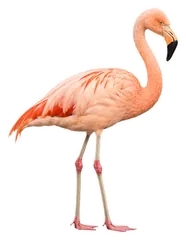 Chilean FlamingoPhoenicopterus chilensis
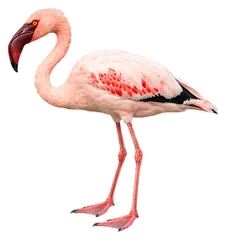 Lesser FlamingoPhoeniconaias minor
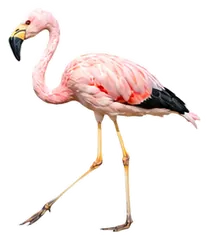 Andean FlamingoPhoenicoparrus andinus
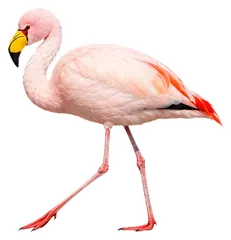 James's FlamingoPhoenicoparrus jamesi
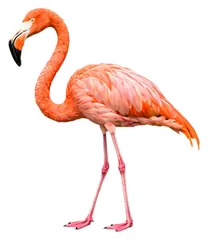
Download illustration
Free to use with credit: “Illustration: Bird Album (birdalbum.com)”. Drawn by AI from a reference photo by JeffreyGammon. ↗
Heard it but can't see it? Mingji identifies birds by sound and photo, on your phone.