 Bird Album
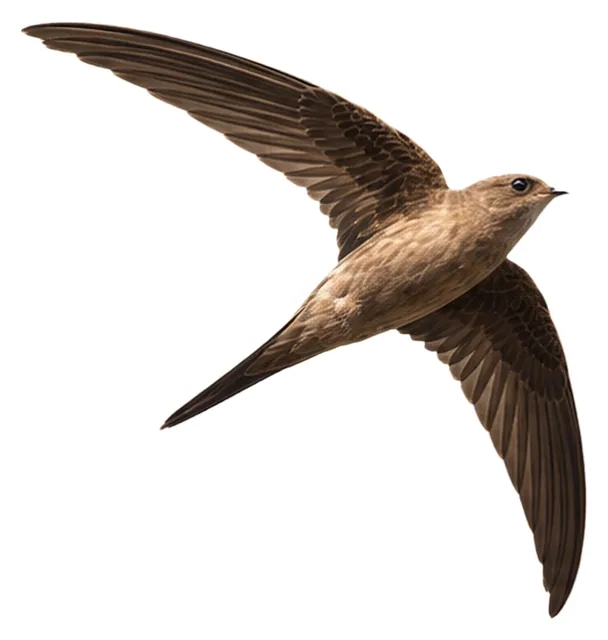
Asian Palm Swift
Cypsiurus balasiensis (Gray, JE, 1829)
≈12 cmLength9.1 gWeight
This small, pale brown swift has long wings swept back into a crescent and a long, deeply forked tail that is often held closed.
Busiest months: February · Most records: India, Thailand, Cambodia
How to identify
Field marks
- Mainly pale brown overall
- Long, swept-back wings shaped like a crescent or boomerang
- Slender body and deeply forked tail, often held closed
- Very short-legged; legs and feet used only to grip vertical surfaces
Male, female and young
Sexes similar; juveniles differ from adults mainly in having a shorter tail.
Voice
Loud, sharp shrieks.
Where and when it's recorded

Asian Palm Swift has been recorded at 822 of the 8,171 birding hotspots we track, in 17 countries and regions.
Records by month Northern Hemisphere
Where it's recorded most
- Krishnampudur AreaIndia3,809 records
- IIT BombayIndia2,658 records
- Panchayat Union Middle School, KrishnampudurIndia2,369 records
More places
- Tharamangalam-West Car StreetIndia2,349 records
- Kannankurichi Mookaneri TankIndia2,011 records
- Krishnampathi Lake, SeeranaickenpalayamIndia1,654 records
- Pavalathanoor Lake, TharamangalamIndia1,578 records
- IIT MadrasIndia1,413 records
- Thrissur Government Medical CollegeIndia1,346 records
- Stanley Reservoir – Pannavadi, MetturIndia1,191 records
Countries and regions with the most records
eBird records via GBIF up to 2024-12-31. A record means someone listed it; more records partly mean more birders, not more birds.
About
The Asian palm swift (Cypsiurus balasiensis) is a small swift. It is very similar to the African palm swift, Cypsiurus parvus, and was formerly considered to be the same species.
Excerpt from Wikipedia, CC BY-SA 4.0 · authors · Read more on Wikipedia
Questions
How big is the Asian Palm Swift?
The Asian Palm Swift is about ≈12 cm long and weighs around 9.1 g.
Where does the Asian Palm Swift live?
Its breeding range: Oriental: widespread. It is most often recorded in India, Thailand and Cambodia.
When is the best time to see the Asian Palm Swift?
At the hotspots we track, it is recorded most in February (Northern Hemisphere).
Is the Asian Palm Swift endangered?
The IUCN Red List classifies the Asian Palm Swift as Least Concern.
What does the Asian Palm Swift eat?
Main food: Insects & other invertebrates.
What family is the Asian Palm Swift in?
It belongs to the family Swifts (Apodidae), order Apodiformes.
At a glance
- Length
- ≈12 cm
- Weight
- 9.1 g
- Habitat
- Towns & farmland
- Diet
- Insects & other invertebrates
- Lifestyle
- Feeds in the air
- Migration
- Resident (barely migrates)
- Conservation
- Least Concern
More measurements
- Wing
- 115 mm
- Tail
- 60 mm
- Bill
- 6 mm
- Tarsus
- 9 mm
Averages from the AVONET dataset; length from field guides where available.
Range
Oriental: widespread
Breeding range, IOC World Bird List 15.2
Classification
- Order
- Apodiformes
- Family
- Swifts Apodidae
- Genus
- Cypsiurus
Other birds in the genus Cypsiurus
 African Palm SwiftCypsiurus parvus
 Malagasy Palm SwiftCypsiurus gracilis
 Spot-fronted SwiftCypseloides cherriei
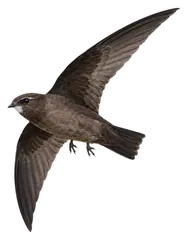 White-chinned SwiftCypseloides cryptus
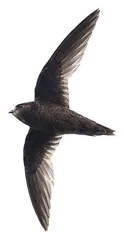 White-fronted SwiftCypseloides storeri
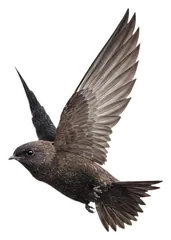 Sooty SwiftCypseloides fumigatus
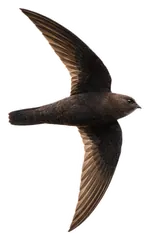 Rothschild's SwiftCypseloides rothschildi
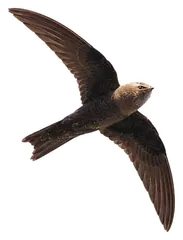 American Black SwiftCypseloides niger
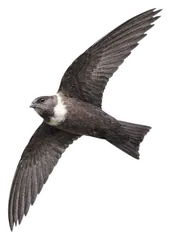 White-chested SwiftCypseloides lemosi
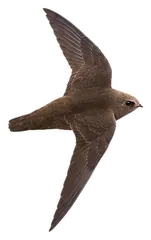 Great Dusky SwiftCypseloides senex
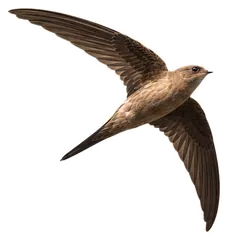
Download illustration
Free to use with credit: “Illustration: Bird Album (birdalbum.com)”. Drawn by AI from a reference photo by Dr. Raju Kasambe. ↗

Heard it but can't see it? Mingji identifies birds by sound and photo, on your phone.
In other languages
- EnglishAsian Palm Swift
- 简体中文棕雨燕
- 繁體中文亞洲棕雨燕
- 日本語アジアヤシアマツバメ
- DeutschBengalensegler
- FrançaisMartinet batassia
- EspañolVencejo palmero asiático
- Portuguêsandorinhão-dos-palmares-asiático
- ItalianoRondone delle palme asiatico
- NederlandsAziatische Palmgierzwaluw
- РусскийАзиатский пальмовый стриж
- Svenskaasiatisk palmseglare
- DanskAsiatisk Palmesejler
- Polskijerzyk jaskółczy