 Bird Album
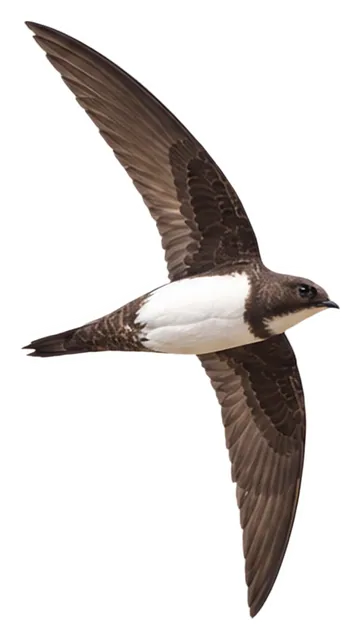
Alpine Swift
Tachymarptis melba (Linnaeus, 1758)
22 cmLength57 cmWingspan100 gWeight
This large swift has a conspicuous white belly patch on a rufous-brown body.
Busiest months: April and September · Most records: Spain, Türkiye, India
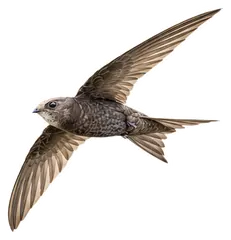
Looks like Common Swift
How to identify
Field marks
- Oval white belly patch surrounded by olive-brown
- Olive-brown upperparts; wings long and pointed, with blacker wingtips
- White throat, not always clearly visible
- Short, forked tail and long, swept-back wings
Male, female and young
Juveniles resemble adults but have pale feather edges.
Voice
A prolonged twittering trill.
Similar species
Where and when it's recorded

Alpine Swift has been recorded at 964 of the 8,171 birding hotspots we track, in 94 countries and regions.
Records by month Northern Hemisphere
Where it's recorded most
- Validebağ Korusu – Genel AlanTürkiye954 records
- RivaTürkiye751 records
- Gazelle ValleyIsrael655 records
More places
- Jerusalem Bird ObservatoryIsrael590 records
- Casares – CastilloSpain543 records
- Bardena – Galugah Raptor Count SiteIran513 records
- Nandi HillsIndia495 records
- Aras Kuş Halkalama İstasyonuTürkiye450 records
- Algeciras – Observatorio de AlgarroboSpain430 records
- Observatorio de CazallaSpain393 records
Countries and regions with the most records
eBird records via GBIF up to 2024-12-31. A record means someone listed it; more records partly mean more birders, not more birds.
About
The alpine swift (Tachymarptis melba) is a species of swift found in Africa, southern Europe, and Asia. They breed in mountains from southern Europe to the Himalayas. Like common swifts, they are migratory; the southern European population winters further south in southern Africa.
Excerpt from Wikipedia, CC BY-SA 4.0 · authors · Read more on Wikipedia
Questions
How big is the Alpine Swift?
The Alpine Swift is about 22 cm long, with a wingspan of 57 cm and weighs around 100 g.
Where does the Alpine Swift live?
Its breeding range: Palearctic, Africa, Oriental: widespread. It is most often recorded in Spain, Türkiye and India.
When is the best time to see the Alpine Swift?
At the hotspots we track, it is recorded most in April and September (Northern Hemisphere).
Is the Alpine Swift endangered?
The IUCN Red List classifies the Alpine Swift as Least Concern.
What does the Alpine Swift eat?
Main food: Insects & other invertebrates.
What family is the Alpine Swift in?
It belongs to the family Swifts (Apodidae), order Apodiformes.
At a glance
- Length
- 22 cm
- Wingspan
- 57 cm
- Weight
- 100 g
- Habitat
- Rocky terrain
- Diet
- Insects & other invertebrates
- Lifestyle
- Feeds in the air
- Migration
- Migratory
- Conservation
- Least Concern
More measurements
- Wing
- 219 mm
- Tail
- 86 mm
- Bill
- 13 mm
- Tarsus
- 15 mm
Averages from the AVONET dataset; length from field guides where available.
Range
Palearctic, Africa, Oriental: widespread
Breeding range, IOC World Bird List 15.2
Classification
- Order
- Apodiformes
- Family
- Swifts Apodidae
- Genus
- Tachymarptis
Other birds in the genus Tachymarptis
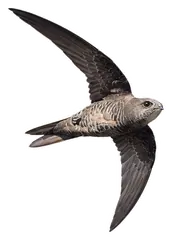 Mottled SwiftTachymarptis aequatorialis
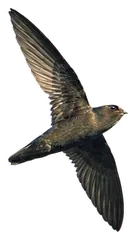 Spot-fronted SwiftCypseloides cherriei
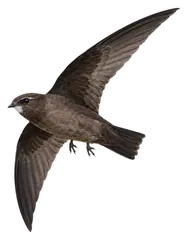 White-chinned SwiftCypseloides cryptus
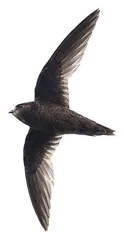 White-fronted SwiftCypseloides storeri
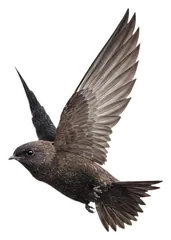 Sooty SwiftCypseloides fumigatus
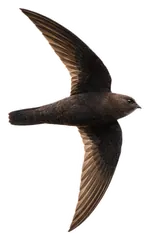 Rothschild's SwiftCypseloides rothschildi
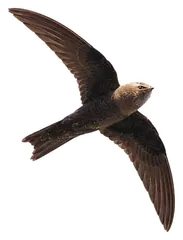 American Black SwiftCypseloides niger
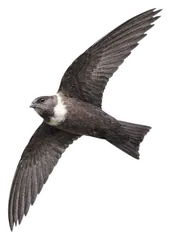 White-chested SwiftCypseloides lemosi
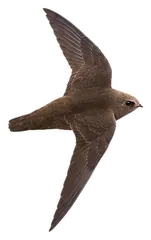 Great Dusky SwiftCypseloides senex
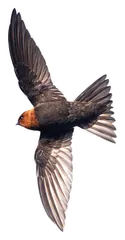 Tepui SwiftStreptoprocne phelpsi
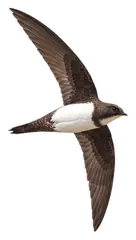
Download illustration
Free to use with credit: “Illustration: Bird Album (birdalbum.com)”. Drawn by AI from a reference photo by Paulo Caseirito. ↗
Heard it but can't see it? Mingji identifies birds by sound and photo, on your phone.