 Bird Album
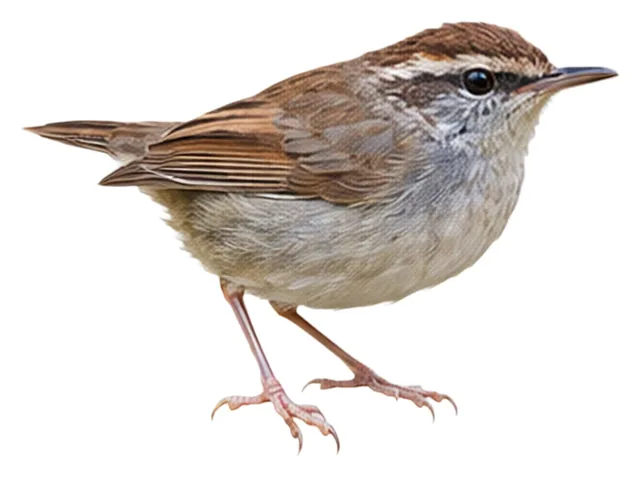
Asian Stubtail
Urosphena squameiceps (Swinhoe, 1863)
≈10 cmLength9.3 gWeight
This small rufous bird has a very short tail, paler underparts and a darker eyestripe.
Busiest months: November–December · Most records: China, Japan, South Korea
How to identify
Field marks
- Rufous overall with paler underparts
- Dark brown eyestripe
- Small, short tail
Male, female and young
The sexes have similar coloration, as do newly fledged juveniles.
Voice
In the breeding season, the male gives a high-pitched “shee-shee-shee-shee” or “cee-cee-cee”; both sexes give calls resembling “chott-chott-chott”.
Where and when it's recorded

Asian Stubtail has been recorded at 388 of the 8,171 birding hotspots we track, in 10 countries and regions.
Records by month Northern Hemisphere
Where it's recorded most
- Yeliu IBATaiwan (China)646 records
- Tai Po Kau Nature ReserveHong Kong (China)612 records
- Pak Sha OHong Kong (China)435 records
More places
- Tai Lam Country ParkHong Kong (China)429 records
- Yilan – Dingliao Ecological ParkTaiwan (China)273 records
- Po ToiHong Kong (China)261 records
- Pat Heung Catchwater, Tai LamHong Kong (China)176 records
- Nanhui DongtanChina145 records
- Shing MunHong Kong (China)135 records
- Wajima – Hegurajima (island)Japan135 records
Countries and regions with the most records
eBird records via GBIF up to 2024-12-31. A record means someone listed it; more records partly mean more birders, not more birds.
About
The Asian stubtail (Urosphena squameiceps) is a bird in the family Cettiidae. The species was first described by Robert Swinhoe in 1863. It breeds in Northeast Asia and Japan.
Excerpt from Wikipedia, CC BY-SA 4.0 · authors · Read more on Wikipedia
Questions
How big is the Asian Stubtail?
The Asian Stubtail is about ≈10 cm long and weighs around 9.3 g.
Where does the Asian Stubtail live?
Its breeding range: Palearctic: southeastern Russia, northeastern China, North and South Korea and Japan. It is most often recorded in China, Japan and South Korea.
When is the best time to see the Asian Stubtail?
At the hotspots we track, it is recorded most in November and December (Northern Hemisphere).
Is the Asian Stubtail endangered?
The IUCN Red List classifies the Asian Stubtail as Least Concern.
What does the Asian Stubtail eat?
Main food: Insects & other invertebrates.
What family is the Asian Stubtail in?
It belongs to the family Cettia Bush Warblers & Allies (Cettiidae), order Passerines (Passeriformes).
At a glance
- Length
- ≈10 cm
- Weight
- 9.3 g
- Habitat
- Forest
- Diet
- Insects & other invertebrates
- Lifestyle
- Active on the ground
- Migration
- Migratory
- Conservation
- Least Concern
More measurements
- Wing
- 51 mm
- Tail
- 31 mm
- Bill
- 13 mm
- Tarsus
- 18 mm
Averages from the AVONET dataset; length from field guides where available.
Range
Palearctic: southeastern Russia, northeastern China, North and South Korea and Japan
Breeding range, IOC World Bird List 15.2
Classification
- Order
- Passerines Passeriformes
- Family
- Cettia Bush Warblers & Allies Cettiidae
- Genus
- Urosphena
Other birds in the genus Urosphena
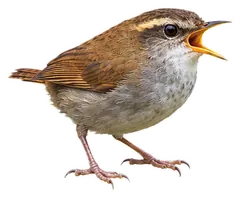 Bornean StubtailUrosphena whiteheadi
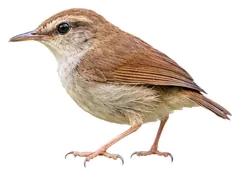 Timor StubtailUrosphena subulata
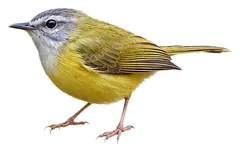 Yellow-bellied WarblerAbroscopus superciliaris
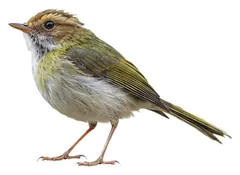 Rufous-faced WarblerAbroscopus albogularis
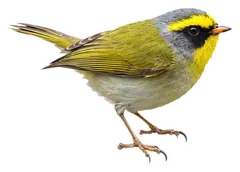 Black-faced WarblerAbroscopus schisticeps
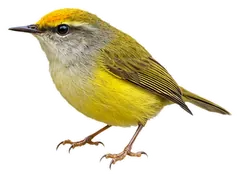 Mountain TailorbirdPhyllergates cucullatus
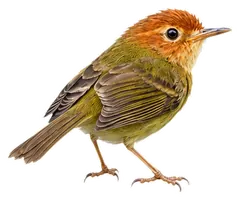 Rufous-headed TailorbirdPhyllergates heterolaemus
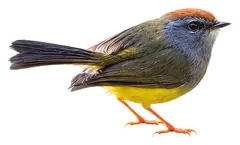 Broad-billed WarblerTickellia hodgsoni
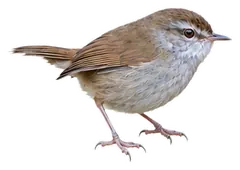 Philippine Bush WarblerHorornis seebohmi
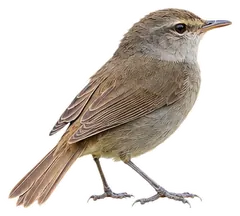 Japanese Bush WarblerHorornis diphone
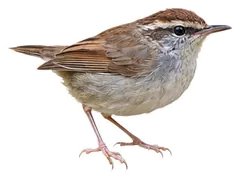
Download illustration
Free to use with credit: “Illustration: Bird Album (birdalbum.com)”. Drawn by AI from a reference photo by (c) Rejoice Gassah, some rights reserved (CC BY). ↗

Heard it but can't see it? Mingji identifies birds by sound and photo, on your phone.
In other languages
- EnglishAsian Stubtail
- 简体中文鳞头树莺
- 繁體中文短尾鶯
- 日本語ヤブサメ
- 한국어숲새
- DeutschBuschstutzschwanz
- FrançaisBouscarle de Swinhoe
- EspañolBuscarla colicorta asiática
- Portuguêscauda-cortada-asiática
- ItalianoMozzicoda asiatico
- NederlandsKortstaartstruikzanger
- РусскийКороткохвостка
- Svenskafjällkronad stubbstjärt
- DanskBrun Busksanger
- Polskikusaczynka północna