 Bird Album
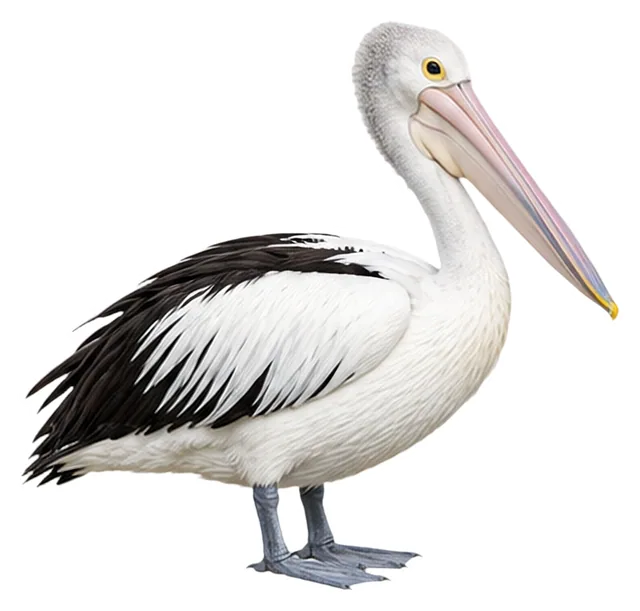
Australian Pelican
Pelecanus conspicillatus Temminck, 1824
5.5 kgWeight
The Australian pelican (Pelecanus conspicillatus) is a large waterbird in the family Pelecanidae, widespread on the inland and coastal waters of Australia and New Guinea, also in Fiji, parts of Indonesia and as a vagrant in New Zealand.
Busiest months: January and October · Most records: Australia, Timor-Leste, Indonesia
Where and when it's recorded
Busiest months: January and October · Most records: Australia, Timor-Leste, Indonesia

Australian Pelican has been recorded at 233 of the 8,276 birding hotspots we track, in 7 countries and regions.
Records by month Southern Hemisphere
Where it's recorded most
- Western Treatment PlantAustralia8,822 records
- Jerrabomberra Wetlands Nature ReserveAustralia6,138 records
- Cairns EsplanadeAustralia5,440 records
More places
- Oxley Creek CommonAustralia3,792 records
- Sandy Camp Road WetlandsAustralia3,181 records
- Lake Samsonvale – Golds Scrub LaneAustralia2,924 records
- Centennial ParkAustralia2,622 records
- Herdsman LakeAustralia2,599 records
- Broome South Wastewater Treatment PlantAustralia2,294 records
- Cairns Esplanade – Southern EndAustralia2,225 records
Countries and regions with the most records
eBird records via GBIF up to 2024-12-31. A record means someone listed it; more records partly mean more birders, not more birds.
About
The Australian pelican (Pelecanus conspicillatus) is a large waterbird in the family Pelecanidae, widespread on the inland and coastal waters of Australia and New Guinea, also in Fiji, parts of Indonesia and as a vagrant in New Zealand. It is a predominantly white bird with black wings and a pink bill. It has been recorded as having the longest bill of any living bird.
Excerpt from Wikipedia, CC BY-SA 4.0 · authors · Read more on Wikipedia
Questions
How big is the Australian Pelican?
The Australian Pelican weighs around 5.5 kg.
Where does the Australian Pelican live?
Its breeding range: Australasia: inland Australia and Tasmania. It is most often recorded in Australia, Timor-Leste and Indonesia.
When is the best time to see the Australian Pelican?
At the hotspots we track, it is recorded most in January and October (Southern Hemisphere).
Is the Australian Pelican endangered?
The IUCN Red List classifies the Australian Pelican as Least Concern.
What does the Australian Pelican eat?
Main food: Fish, shrimp & shellfish.
What family is the Australian Pelican in?
It belongs to the family Pelicans (Pelecanidae), order Pelecaniformes.
At a glance
- Weight
- 5.5 kg
- Habitat
- Wetland
- Diet
- Fish, shrimp & shellfish
- Lifestyle
- On the water surface
- Migration
- Resident (barely migrates)
- Conservation
- Least Concern
More measurements
- Wing
- 602 mm
- Tail
- 151 mm
- Bill
- 414 mm
- Tarsus
- 114 mm
Averages from the AVONET dataset; length from field guides where available.
Range
Australasia: inland Australia and Tasmania
Breeding range, IOC World Bird List 15.2
Classification
- Order
- Pelecaniformes
- Family
- Pelicans Pelecanidae
- Genus
- Pelecanus
Other birds in the genus Pelecanus
 Great White PelicanPelecanus onocrotalus
 Pink-backed PelicanPelecanus rufescens
 Spot-billed PelicanPelecanus philippensis
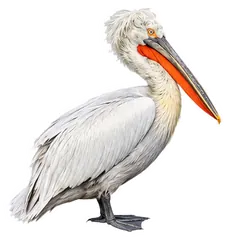 Dalmatian PelicanPelecanus crispus
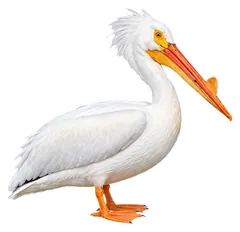 American White PelicanPelecanus erythrorhynchos
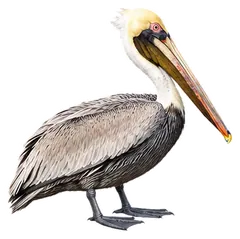 Brown PelicanPelecanus occidentalis
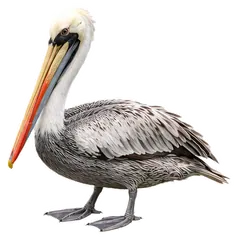 Peruvian PelicanPelecanus thagus
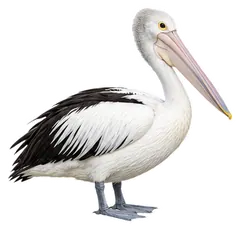
Download illustration
Free to use with credit: “Illustration: Bird Album (birdalbum.com)”. Drawn by AI from a reference photo by jcharmon. ↗
Heard it but can't see it? Mingji identifies birds by sound and photo, on your phone.
In other languages
- EnglishAustralian Pelican
- 简体中文澳洲鹈鹕
- 繁體中文澳洲鵜鶘
- 日本語コシグロペリカン
- DeutschBrillenpelikan
- FrançaisPélican à lunettes
- EspañolPelícano australiano
- Portuguêspelicano-australiano
- ItalianoPellicano australiano
- NederlandsAustralische Pelikaan
- РусскийАвстралийский пеликан
- Svenskaaustralisk pelikan
- DanskAustralsk Pelikan
- Polskipelikan australijski