 Bird Album
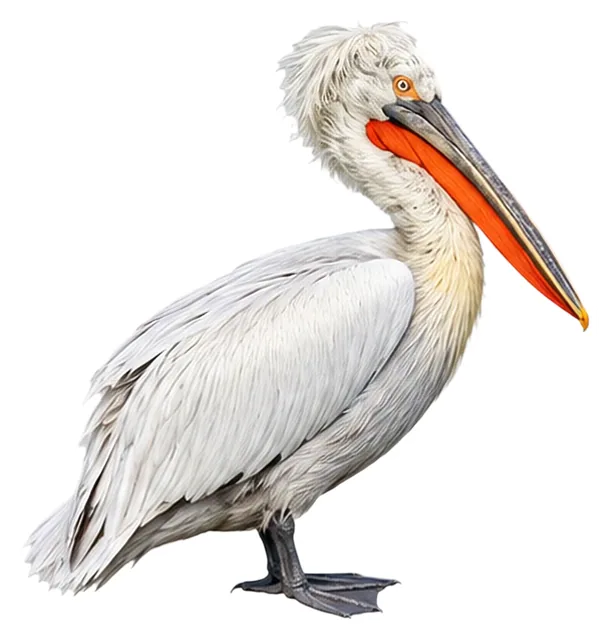
Dalmatian Pelican
Pelecanus crispus Bruch, 1832
160–180 cmLength320 cmWingspan9.5 kgWeight
The largest pelican has a silvery-white body, gray legs and feet, and untidy curls on the back of its head.
Busiest months: January–February and May · Most records: Greece, Bulgaria, India
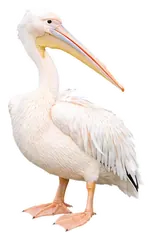
Looks like Great White Pelican
How to identify
Field marks
- Huge bill with a large gular pouch hanging below
- Untidy curled feathers from the back of the head to the nape
- Dark gray legs and feet
- Broad, pale grayish-white wings with black tips to the primaries
Male, female and young
The male is larger than the female; juveniles are grayer and darker overall, with a less prominent crest than adults.
Voice
Usually quiet; in the breeding season it gives low grunts, hisses or barking sounds.
Similar species
Where and when it's recorded
Busiest months: January–February and May · Most records: Greece, Bulgaria, India

Dalmatian Pelican has been recorded at 240 of the 8,276 birding hotspots we track, in 35 countries and regions.
Records by month Northern Hemisphere
To protect this bird from disturbance, we don't list exact sites.
Countries and regions with the most records
eBird records via GBIF up to 2024-12-31. A record means someone listed it; more records partly mean more birders, not more birds.
About
The Dalmatian pelican (Pelecanus crispus), also known as the curly-headed pelican, is the largest member of the pelican family and among the heaviest flying birds in the world. With a wingspan typically ranging between 2.7 and 3.2 metres (8 ft 10 in and 10 ft 6 in), it ranks among the largest soaring birds. These pelicans are known for their graceful flight and often travel in synchronised flocks.
Excerpt from Wikipedia, CC BY-SA 4.0 · authors · Read more on Wikipedia
Questions
How big is the Dalmatian Pelican?
The Dalmatian Pelican is about 160–180 cm long, with a wingspan of 320 cm and weighs around 9.5 kg.
Where does the Dalmatian Pelican live?
Its breeding range: Palearctic: inland southeastern Europe to Kazakhstan and western Mongolia, south to Turkey and Xinjiang (western China). It is most often recorded in Greece, Bulgaria and India.
When is the best time to see the Dalmatian Pelican?
At the hotspots we track, it is recorded most in January, February and May (Northern Hemisphere).
Is the Dalmatian Pelican endangered?
The IUCN Red List classifies the Dalmatian Pelican as Near Threatened.
What does the Dalmatian Pelican eat?
Main food: Fish, shrimp & shellfish.
What family is the Dalmatian Pelican in?
It belongs to the family Pelicans (Pelecanidae), order Pelecaniformes.
At a glance
- Length
- 160–180 cm
- Wingspan
- 320 cm
- Weight
- 9.5 kg
- Habitat
- Wetland
- Diet
- Fish, shrimp & shellfish
- Lifestyle
- On the water surface
- Migration
- Partial migrant
- Conservation
- Near Threatened
More measurements
- Wing
- 687 mm
- Tail
- 198 mm
- Bill
- 414 mm
- Tarsus
- 115 mm
Averages from the AVONET dataset; length from field guides where available.
Range
Palearctic: inland southeastern Europe to Kazakhstan and western Mongolia, south to Turkey and Xinjiang (western China)
Breeding range, IOC World Bird List 15.2
Classification
- Order
- Pelecaniformes
- Family
- Pelicans Pelecanidae
- Genus
- Pelecanus
Other birds in the genus Pelecanus
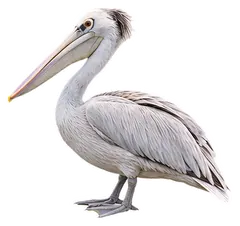 Pink-backed PelicanPelecanus rufescens
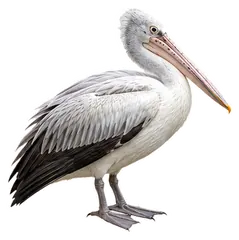 Spot-billed PelicanPelecanus philippensis
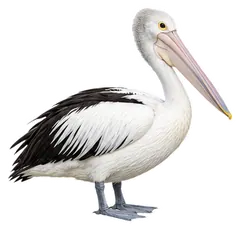 Australian PelicanPelecanus conspicillatus
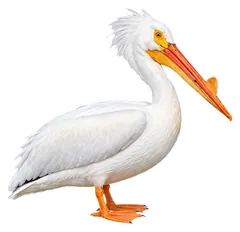 American White PelicanPelecanus erythrorhynchos
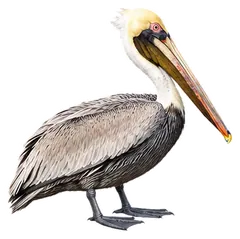 Brown PelicanPelecanus occidentalis
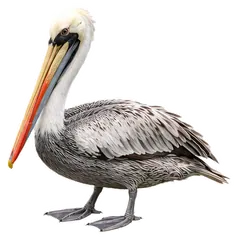 Peruvian PelicanPelecanus thagus
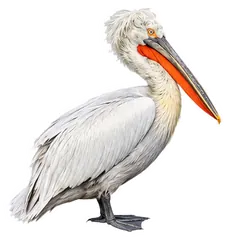
Download illustration
Free to use with credit: “Illustration: Bird Album (birdalbum.com)”. Drawn by AI from a reference photo by Dr. Raju Kasambe. ↗

Heard it but can't see it? Mingji identifies birds by sound and photo, on your phone.