 Bird Album
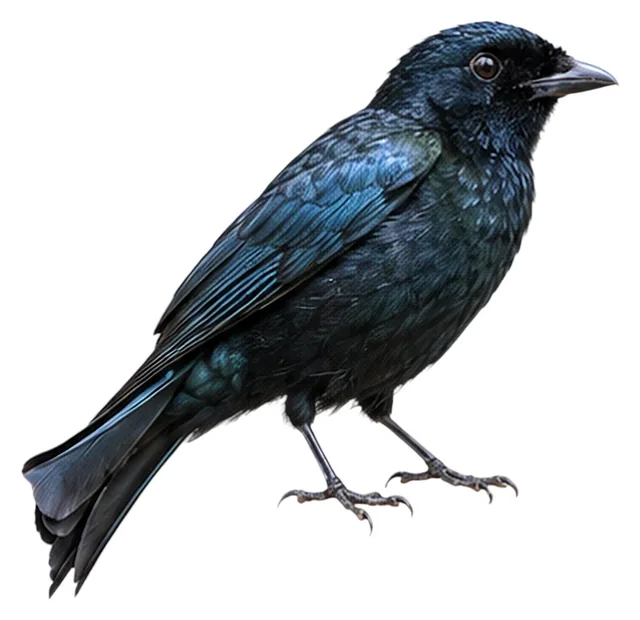
Balicassiao
Dicrurus balicassius (Linnaeus, 1766)
72 gWeight
The balicassiao (Dicrurus balicassius) is a species of passerine bird in the family Dicruridae.
Busiest months: February–March · Most records: Philippines
Where and when it's recorded
Busiest months: February–March · Most records: Philippines

Balicassiao has been recorded at 16 of the 8,276 birding hotspots we track, in 1 country or region.
Records by month Northern Hemisphere
Where it's recorded most
- Subic Bay – Nabasan TrailPhilippines638 records
- Mt. Makiling Forest Reserve – TrailPhilippines376 records
- Palo Alto, BarasPhilippines315 records
More places
- Subic BayPhilippines235 records
- Makiling Botanic Garden, Los BañosPhilippines194 records
- Balinsasayao Twin Lakes Natural Park, SibulanPhilippines194 records
- IRRI Staff Housing, Los BañosPhilippines183 records
- Subic Bay – Hill 394 roadPhilippines182 records
- Mt. Makiling Forest Reserve – TREESPhilippines134 records
- Tabunan, Cebu CityPhilippines132 records
Countries and regions with the most records
eBird records via GBIF up to 2024-12-31. A record means someone listed it; more records partly mean more birders, not more birds.
About
The balicassiao (Dicrurus balicassius) is a species of passerine bird in the family Dicruridae.
Excerpt from Wikipedia, CC BY-SA 4.0 · authors · Read more on Wikipedia
Questions
How big is the Balicassiao?
The Balicassiao weighs around 72 g.
Where does the Balicassiao live?
Its breeding range: Oriental: northern, west-central Philippines (Luzon and West Visayas). It is most often recorded in Philippines.
When is the best time to see the Balicassiao?
At the hotspots we track, it is recorded most in February and March (Northern Hemisphere).
Is the Balicassiao endangered?
The IUCN Red List classifies the Balicassiao as Least Concern.
What does the Balicassiao eat?
Main food: Insects & other invertebrates.
What family is the Balicassiao in?
It belongs to the family Drongos (Dicruridae), order Passerines (Passeriformes).
At a glance
- Weight
- 72 g
- Habitat
- Forest
- Diet
- Insects & other invertebrates
- Lifestyle
- Perches in trees
- Migration
- Resident (barely migrates)
- Conservation
- Least Concern
More measurements
- Wing
- 138 mm
- Tail
- 110 mm
- Bill
- 34 mm
- Tarsus
- 24 mm
Averages from the AVONET dataset; length from field guides where available.
Range
Oriental: northern, west-central Philippines (Luzon and West Visayas)
Breeding range, IOC World Bird List 15.2
Classification
- Order
- Passerines Passeriformes
- Family
- Drongos Dicruridae
- Genus
- Dicrurus
Other birds in the genus Dicrurus
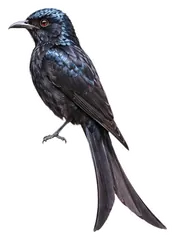 Bronzed DrongoDicrurus aeneus
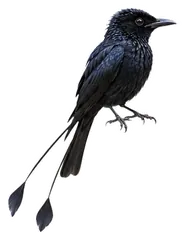 Lesser Racket-tailed DrongoDicrurus remifer
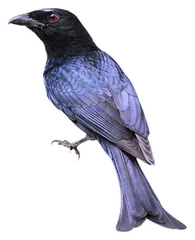 Crow-billed DrongoDicrurus annectens
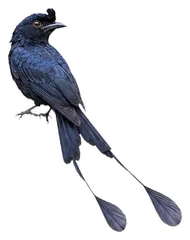 Greater Racket-tailed DrongoDicrurus paradiseus
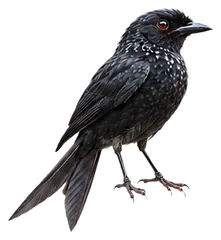 Sri Lanka DrongoDicrurus lophorinus
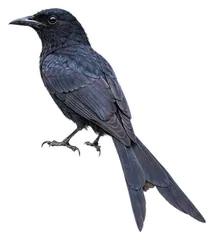 Andaman DrongoDicrurus andamanensis
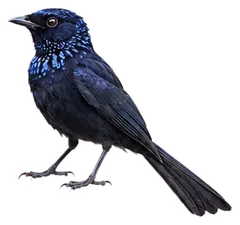 Sumatran DrongoDicrurus sumatranus
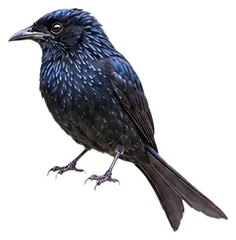 Sulawesi DrongoDicrurus montanus
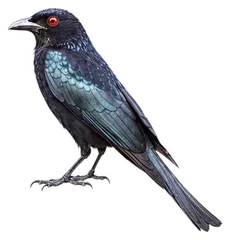 Spangled DrongoDicrurus bracteatus
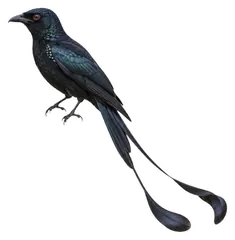 Paradise DrongoDicrurus megarhynchus
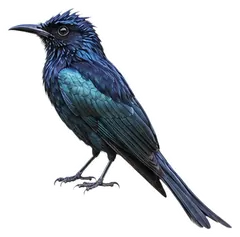 Hair-crested DrongoDicrurus hottentottus
 Tablas DrongoDicrurus menagei
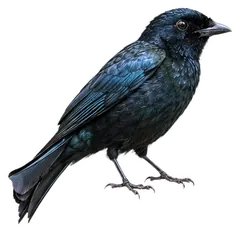
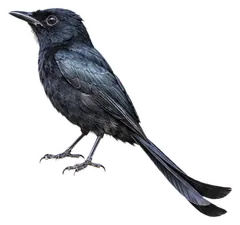
Download illustration
Free to use with credit: “Illustration: Bird Album (birdalbum.com)”. Drawn by AI from a reference photo by Forest Botial-Jarvis. ↗
Heard it but can't see it? Mingji identifies birds by sound and photo, on your phone.