 Bird Album
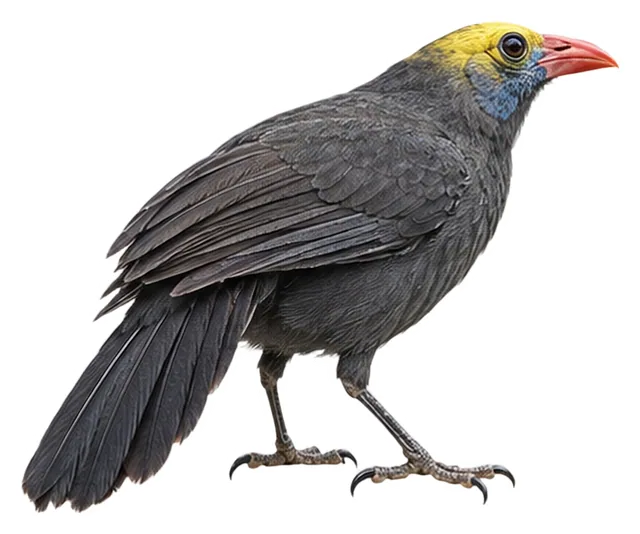
Bare-headed Laughingthrush
Melanocichla calva (Sharpe, 1888)
79 gWeight
The bare-headed laughingthrush (Melanocichla calva) is a species of bird in the Old World babbler family Timaliidae.
Busiest months: March and July · Most records: Malaysia
Where and when it's recorded
Busiest months: March and July · Most records: Malaysia

Bare-headed Laughingthrush has been recorded at 13 of the 8,276 birding hotspots we track, in 1 country or region.
Records by month Northern Hemisphere
Where it's recorded most
- Kinabalu Park – HQ areaMalaysia533 records
- Kinabalu Park – Power Station RoadMalaysia149 records
- Kinabalu Park – Silau Silau TrailMalaysia84 records
More places
- Kinabalu Park – Road to Timpohon Gate RoadMalaysia72 records
- Kinabalu Park – Kiau View/Silau Silau Trail JunctionMalaysia39 records
- Kinabalu Park – Timpohon GateMalaysia37 records
- Kinabalu Park – Hill LodgeMalaysia35 records
- Ba'kelalan – Bario RoadMalaysia22 records
- Crocker Range NP – Gunung Alab SubstationMalaysia16 records
- Crocker Range NP – Rafflesia Information CentreMalaysia12 records
Countries and regions with the most records
eBird records via GBIF up to 2024-12-31. A record means someone listed it; more records partly mean more birders, not more birds.
About
The bare-headed laughingthrush (Melanocichla calva) is a species of bird in the Old World babbler family Timaliidae. It is endemic to highland forests at elevations of 750–1,800 m (2,460–5,910 ft) in the mountain ranges of north-central Borneo, along with some outlying peaks. It is 25–26 cm (9.8–10.2 in) long, with both sexes similar in appearance.
Excerpt from Wikipedia, CC BY-SA 4.0 · authors · Read more on Wikipedia
Questions
How big is the Bare-headed Laughingthrush?
The Bare-headed Laughingthrush weighs around 79 g.
Where does the Bare-headed Laughingthrush live?
Its breeding range: Oriental: montane eastern Sarawak and Sabah (northern Borneo). It is most often recorded in Malaysia.
When is the best time to see the Bare-headed Laughingthrush?
At the hotspots we track, it is recorded most in March and July (Northern Hemisphere).
Is the Bare-headed Laughingthrush endangered?
The IUCN Red List classifies the Bare-headed Laughingthrush as Least Concern.
What does the Bare-headed Laughingthrush eat?
Main food: Insects & other invertebrates.
What family is the Bare-headed Laughingthrush in?
It belongs to the family Babblers, Scimitar Babblers (Timaliidae), order Passerines (Passeriformes).
At a glance
- Weight
- 79 g
- Habitat
- Forest
- Diet
- Insects & other invertebrates
- Lifestyle
- Perches in trees
- Migration
- Resident (barely migrates)
- Conservation
- Least Concern
More measurements
- Wing
- 119 mm
- Tail
- 113 mm
- Bill
- 27 mm
- Tarsus
- 37 mm
Averages from the AVONET dataset; length from field guides where available.
Range
Oriental: montane eastern Sarawak and Sabah (northern Borneo)
Breeding range, IOC World Bird List 15.2
Classification
- Order
- Passerines Passeriformes
- Family
- Babblers, Scimitar Babblers Timaliidae
- Genus
- Melanocichla
Other birds in the genus Melanocichla
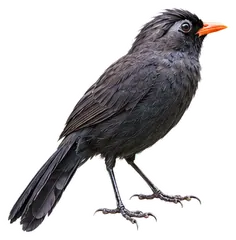 Black LaughingthrushMelanocichla lugubris
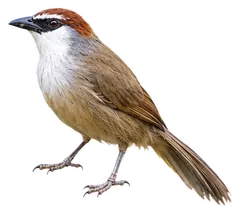 Chestnut-capped BabblerTimalia pileata
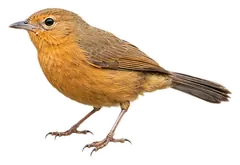 Tawny-bellied BabblerDumetia hyperythra
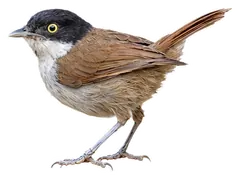 Dark-fronted BabblerDumetia atriceps
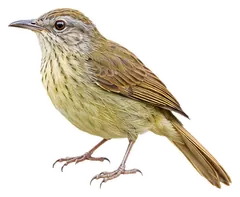 Grey-faced Tit-BabblerMixornis kelleyi
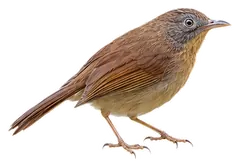 Grey-cheeked Tit-BabblerMixornis flavicollis
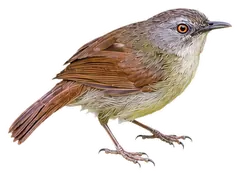 Kangean Tit-BabblerMixornis prillwitzi
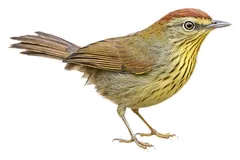 Pin-striped Tit-BabblerMixornis gularis
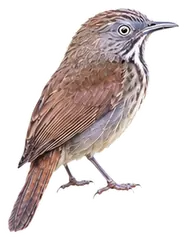 Bold-striped Tit-BabblerMixornis bornensis
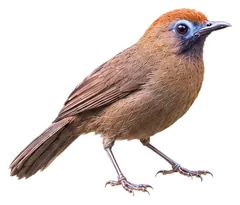 Fluffy-backed Tit-BabblerMacronus ptilosus
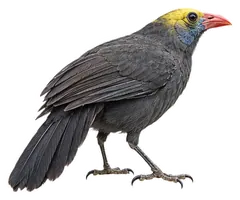
Download illustration
Free to use with credit: “Illustration: Bird Album (birdalbum.com)”. Drawn by AI from a reference photo by Francesco Veronesi. ↗
Heard it but can't see it? Mingji identifies birds by sound and photo, on your phone.