 Bird Album
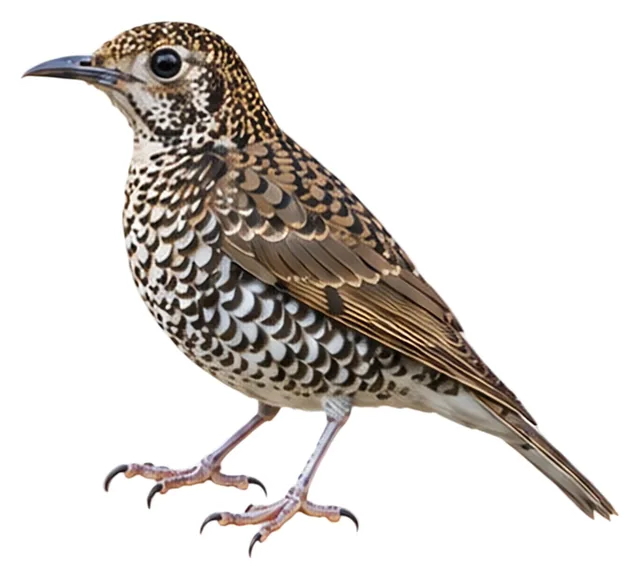
Bassian Thrush
Zoothera lunulata (Latham, 1801)
27–29 cmLength130 gWeight
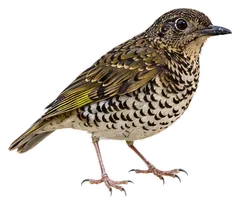
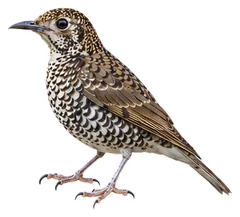
The Bassian thrush (Zoothera lunulata), also known as the olive-tailed thrush, is a medium-sized mostly insectivorous thrush found from northern Queensland to southeastern Australia.
Busiest months: August and October · Most records: Australia
Where and when it's recorded
Busiest months: August and October · Most records: Australia

Bassian Thrush has been recorded at 47 of the 8,276 birding hotspots we track, in 1 country or region.
Records by month Southern Hemisphere
Where it's recorded most
- O'Reilly's Rainforest RetreatAustralia618 records
- Australian National Botanic GardensAustralia467 records
- Bendthualaly, BellawongarahAustralia316 records
More places
- Barren Grounds Nature ReserveAustralia235 records
- Bunyip State ParkAustralia119 records
- Royal Botanic Gardens MelbourneAustralia104 records
- Royal National Park – Lady Carrington DriveAustralia97 records
- Jerrara DamAustralia96 records
- InalaAustralia87 records
- Boys WalkAustralia75 records
Countries and regions with the most records
eBird records via GBIF up to 2024-12-31. A record means someone listed it; more records partly mean more birders, not more birds.
About
The Bassian thrush (Zoothera lunulata), also known as the olive-tailed thrush, is a medium-sized mostly insectivorous thrush found from northern Queensland to southeastern Australia. It also occurs in Tasmania, on some larger islands of Bass Strait, and on Kangaroo Island. The thrushes range from 27 to 29 cm (10.5 to 11.5 in) in length and average 100 g (3.5 oz) in weight.
Excerpt from Wikipedia, CC BY-SA 4.0 · authors · Read more on Wikipedia
Questions
How big is the Bassian Thrush?
The Bassian Thrush is about 27–29 cm long and weighs around 130 g.
Where does the Bassian Thrush live?
Its breeding range: Australasia: northeastern, southeastern, southern Australia and Tasmania. It is most often recorded in Australia.
When is the best time to see the Bassian Thrush?
At the hotspots we track, it is recorded most in August and October (Southern Hemisphere).
Is the Bassian Thrush endangered?
The IUCN Red List classifies the Bassian Thrush as Least Concern.
What does the Bassian Thrush eat?
Main food: Insects & other invertebrates.
What family is the Bassian Thrush in?
It belongs to the family Thrushes (Turdidae), order Passerines (Passeriformes).
At a glance
- Length
- 27–29 cm
- Weight
- 130 g
- Habitat
- Forest
- Diet
- Insects & other invertebrates
- Lifestyle
- Active on the ground
- Migration
- Resident (barely migrates)
- Conservation
- Least Concern
More measurements
- Wing
- 133 mm
- Tail
- 108 mm
- Bill
- 32 mm
- Tarsus
- 34 mm
Averages from the AVONET dataset; length from field guides where available.
Range
Australasia: northeastern, southeastern, southern Australia and Tasmania
Breeding range, IOC World Bird List 15.2
Classification
- Order
- Passerines Passeriformes
- Family
- Thrushes Turdidae
- Genus
- Zoothera
Other birds in the genus Zoothera
 Long-tailed ThrushZoothera dixoni
 Alpine ThrushZoothera mollissima
 Himalayan ThrushZoothera salimalii
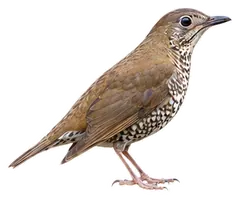 Sichuan ThrushZoothera griseiceps
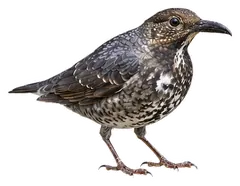 Long-billed ThrushZoothera monticola
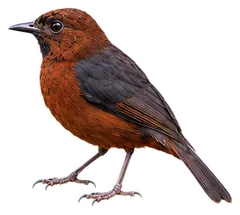 GeomaliaZoothera heinrichi
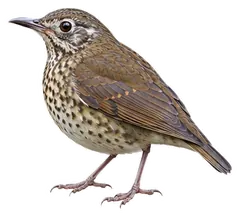 Dark-sided ThrushZoothera marginata
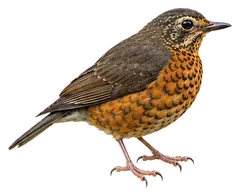 Everett's ThrushZoothera everetti
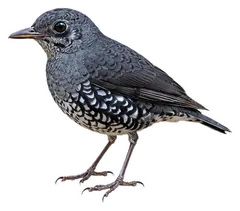 Sunda ThrushZoothera andromedae
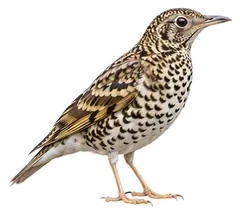 White's ThrushZoothera aurea
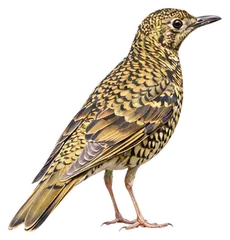 Scaly ThrushZoothera dauma
 Nilgiri ThrushZoothera neilgherriensis
Download illustration
Free to use with credit: “Illustration: Bird Album (birdalbum.com)”. Drawn by AI from reference photos. ↗
Heard it but can't see it? Mingji identifies birds by sound and photo, on your phone.