 Bird Album
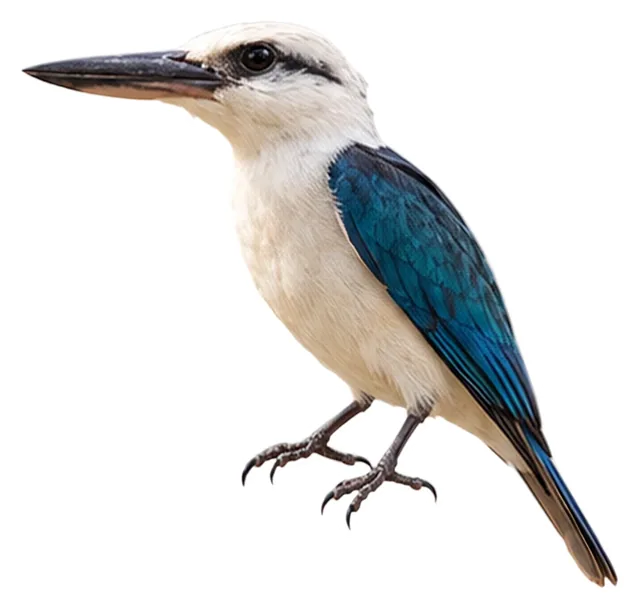
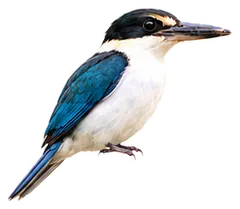
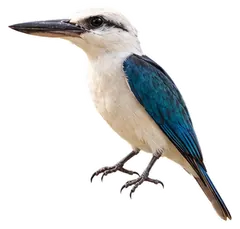
Beach Kingfisher
Todiramphus saurophagus (Gould, 1843)
30 cmLength126 gWeight
The beach kingfisher (Todiramphus saurophagus) is a species of bird in the kingfisher family Alcedinidae.
Busiest months: August–September · Most records: Indonesia, Solomon Islands, Papua New Guinea
Where and when it's recorded

Beach Kingfisher has been recorded at 14 of the 8,171 birding hotspots we track, in 3 countries and regions.
Records by month Southern Hemisphere
Where it's recorded most
- Airport BayIndonesia118 records
- Tetepare Nature PreserveSolomon Islands101 records
- West Waigeo forest - Red and Wilson's BOP sites areaIndonesia23 records
More places
- Makira West near AnutaSolomon Islands20 records
- West Waigeo birding roadIndonesia20 records
- KukunduSolomon Islands7 records
- Logging Track, ObiIndonesia6 records
- Sorong MangrovesIndonesia6 records
- Kolombangara IslandSolomon Islands5 records
- Walindi Dive ResortPapua New Guinea5 records
Countries and regions with the most records
eBird records via GBIF up to 2024-12-31. A record means someone listed it; more records partly mean more birders, not more birds.
About
The beach kingfisher (Todiramphus saurophagus) is a species of bird in the kingfisher family Alcedinidae. It is closely related to members of the collared kingfisher species complex, specifically the Melanesian kingfisher, but it is twice the size of members of that complex found close to it. The beach kingfisher has two subspecies, the widespread nominate race and T. s. admiralitatis of the Admiralty Islands.
Excerpt from Wikipedia, CC BY-SA 4.0 · authors · Read more on Wikipedia
Questions
How big is the Beach Kingfisher?
The Beach Kingfisher is about 30 cm long and weighs around 126 g.
Where does the Beach Kingfisher live?
Its breeding range: Australasia: Moluccas to Bismarck Archipelago and Solomon Islands. It is most often recorded in Indonesia, Solomon Islands and Papua New Guinea.
When is the best time to see the Beach Kingfisher?
At the hotspots we track, it is recorded most in August and September (Southern Hemisphere).
Is the Beach Kingfisher endangered?
The IUCN Red List classifies the Beach Kingfisher as Least Concern.
What does the Beach Kingfisher eat?
Main food: Omnivore.
What family is the Beach Kingfisher in?
It belongs to the family Kingfishers (Alcedinidae), order Coraciiformes.
At a glance
- Length
- 30 cm
- Weight
- 126 g
- Habitat
- Woodland
- Diet
- Omnivore
- Lifestyle
- Perches in trees
- Migration
- Resident (barely migrates)
- Conservation
- Least Concern
More measurements
- Wing
- 128 mm
- Tail
- 83 mm
- Bill
- 64 mm
- Tarsus
- 18 mm
Averages from the AVONET dataset; length from field guides where available.
Range
Australasia: Moluccas to Bismarck Archipelago and Solomon Islands
Breeding range, IOC World Bird List 15.2
Classification
- Order
- Coraciiformes
- Family
- Kingfishers Alcedinidae
- Genus
- Todiramphus
Other birds in the genus Todiramphus
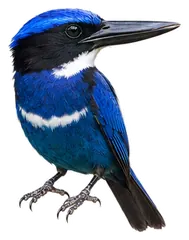 Blue-black KingfisherTodiramphus nigrocyaneus
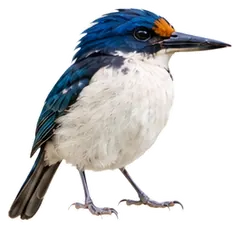 Rufous-lored KingfisherTodiramphus winchelli
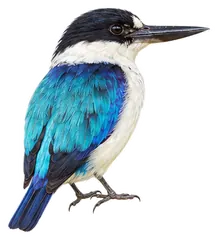 Blue-and-white KingfisherTodiramphus diops
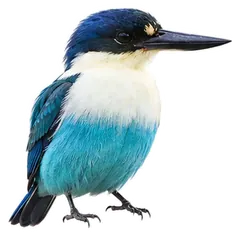 Lazuli KingfisherTodiramphus lazuli
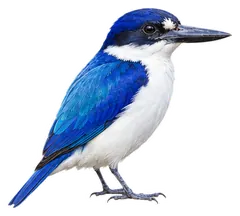 Forest KingfisherTodiramphus macleayii
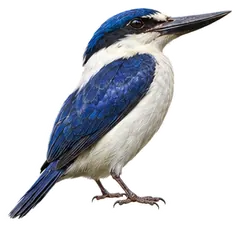 White-mantled KingfisherTodiramphus albonotatus
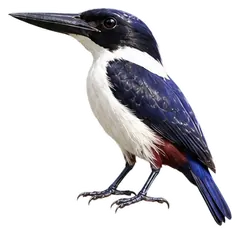 Ultramarine KingfisherTodiramphus leucopygius
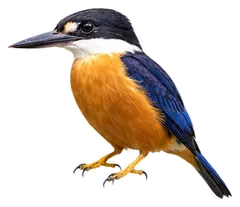 Vanuatu KingfisherTodiramphus farquhari
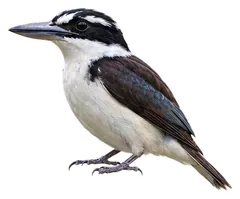 Sombre KingfisherTodiramphus funebris
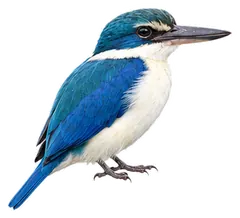 Collared KingfisherTodiramphus chloris
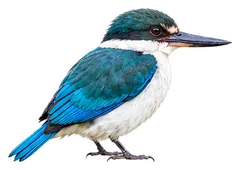 Torresian KingfisherTodiramphus sordidus
 Islet KingfisherTodiramphus colonus
Download illustration
Free to use with credit: “Illustration: Bird Album (birdalbum.com)”. Drawn by AI from a reference photo by John D Reynolds. ↗
Heard it but can't see it? Mingji identifies birds by sound and photo, on your phone.
In other languages
- EnglishBeach Kingfisher
- 简体中文白头翡翠
- 繁體中文海灘翡翠
- 日本語シロガシラショウビン
- DeutschEchsenliest
- FrançaisMartin-chasseur à tête blanche
- EspañolAlción lagartijero
- Portuguêsmartim-caçador-da-praia
- ItalianoMartin pescatore ripario
- NederlandsHagedisijsvogel
- РусскийБелоголовая альциона
- Svenskakrabbkungsfiskare
- DanskKrabbeisfugl
- Polskiłowczyk białogłowy