 Bird Album
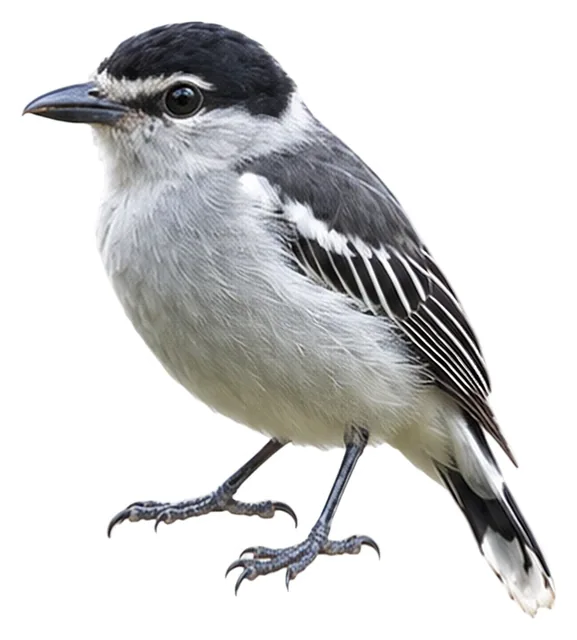
Black-and-white Becard
Pachyramphus albogriseus Sclater, PL, 1857
13–15 cmLength17 gWeight
The black-and-white becard (Pachyramphus albogriseus) is a species of bird in the family Tityridae, the tityras, becards, and allies.
Busiest months: March, May and October · Most records: Costa Rica, Venezuela, Peru
Where and when it's recorded
Busiest months: March, May and October · Most records: Costa Rica, Venezuela, Peru

Black-and-white Becard has been recorded at 51 of the 8,276 birding hotspots we track, in 6 countries and regions.
Records by month Northern Hemisphere
Where it's recorded most
- Hotel QuelitalesCosta Rica186 records
- RF Río Macho, Cartago – camino ICECosta Rica76 records
- PN Tapanti – Sector TapantiCosta Rica75 records
More places
- PN Macarao – El BarnizVenezuela64 records
- RF de PalmichalVenezuela44 records
- ACP Abra Patricia – Owlet LodgePeru43 records
- Flor de Café/PlataformaPeru42 records
- RF de Palmichal – Santuario de Flora y Fauna BugparadiseVenezuela37 records
- PN Henri Pittier – Estacion Rancho GrandeVenezuela30 records
- Reserva El CopalCosta Rica28 records
Countries and regions with the most records
eBird records via GBIF up to 2024-12-31. A record means someone listed it; more records partly mean more birders, not more birds.
About
The black-and-white becard (Pachyramphus albogriseus) is a species of bird in the family Tityridae, the tityras, becards, and allies. Sources differ on its range; all agree it is found in Colombia, Costa Rica, Panama, and Venezuela and some add Ecuador and Peru.
Excerpt from Wikipedia, CC BY-SA 4.0 · authors · Read more on Wikipedia
Questions
How big is the Black-and-white Becard?
The Black-and-white Becard is about 13–15 cm long and weighs around 17 g.
Where does the Black-and-white Becard live?
Its breeding range: Middle America, South America: Montane forest in Costa Rica and western Panama then discontinually to northern, northeastern Colombia and northwestern Venezuela (Santa Marta Mountains and Perijá Mountains) to northern Venezuela and along eastern slope of Andes from eastern Colombia to southern Peru. It is most often recorded in Costa Rica, Venezuela and Peru.
When is the best time to see the Black-and-white Becard?
At the hotspots we track, it is recorded most in March, May and October (Northern Hemisphere).
Is the Black-and-white Becard endangered?
The IUCN Red List classifies the Black-and-white Becard as Least Concern.
What does the Black-and-white Becard eat?
Main food: Omnivore.
What family is the Black-and-white Becard in?
It belongs to the family Tityras, Becards & Allies (Tityridae), order Passerines (Passeriformes).
At a glance
- Length
- 13–15 cm
- Weight
- 17 g
- Habitat
- Forest
- Diet
- Omnivore
- Lifestyle
- Perches in trees
- Migration
- Resident (barely migrates)
- Conservation
- Least Concern
More measurements
- Wing
- 71 mm
- Tail
- 54 mm
- Bill
- 16 mm
- Tarsus
- 18 mm
Averages from the AVONET dataset; length from field guides where available.
Range
Middle America, South America: Montane forest in Costa Rica and western Panama then discontinually to northern, northeastern Colombia and northwestern Venezuela (Santa Marta Mountains and Perijá Mountains) to northern Venezuela and along eastern slope of Andes from eastern Colombia to southern Peru
Breeding range, IOC World Bird List 15.2
Classification
- Order
- Passerines Passeriformes
- Family
- Tityras, Becards & Allies Tityridae
- Genus
- Pachyramphus
Other birds in the genus Pachyramphus
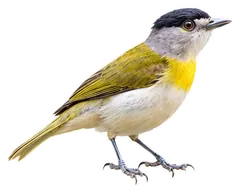 Green-backed BecardPachyramphus viridis
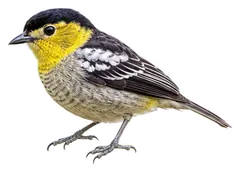 Barred BecardPachyramphus versicolor
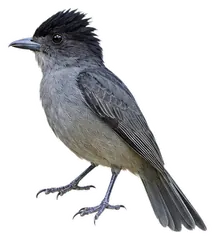 Slaty BecardPachyramphus spodiurus
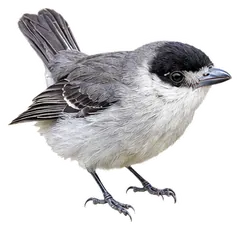 Cinereous BecardPachyramphus rufus
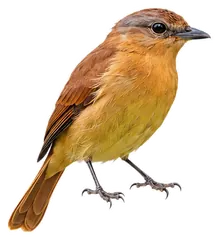 Chestnut-crowned BecardPachyramphus castaneus
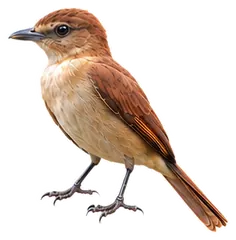 Cinnamon BecardPachyramphus cinnamomeus
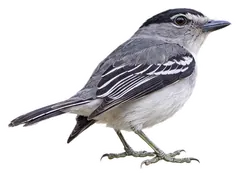 Cryptic BecardPachyramphus salvini
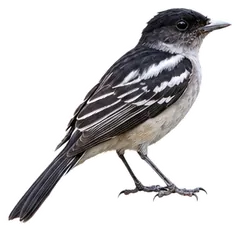 White-winged BecardPachyramphus polychopterus
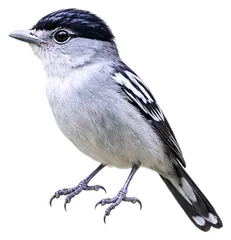 Black-capped BecardPachyramphus marginatus
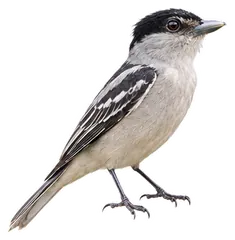 Grey-collared BecardPachyramphus major
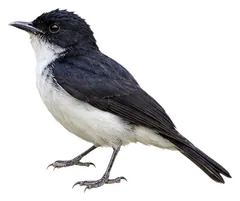 Glossy-backed BecardPachyramphus surinamus
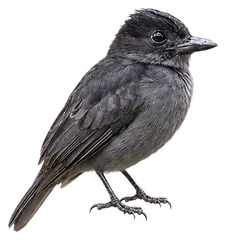 One-colored BecardPachyramphus homochrous
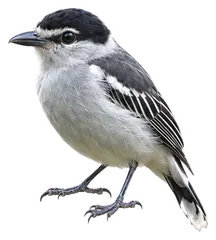
Download illustration
Free to use with credit: “Illustration: Bird Album (birdalbum.com)”. Drawn by AI from a reference photo by Steven Easley. ↗
Heard it but can't see it? Mingji identifies birds by sound and photo, on your phone.