 Bird Album
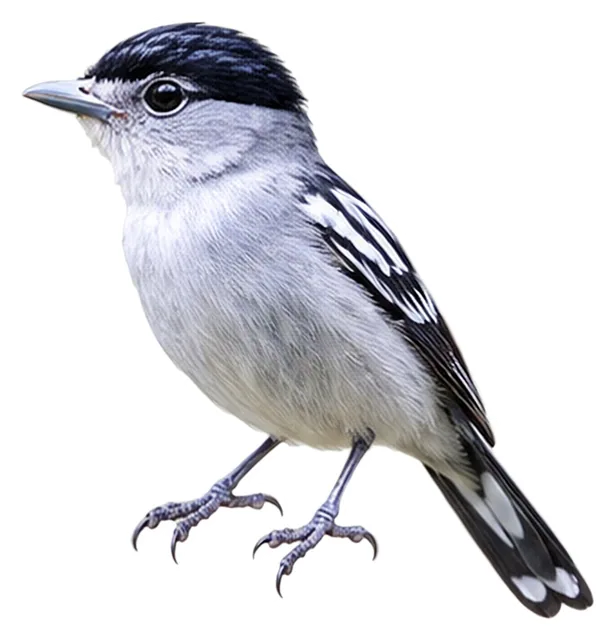
Black-capped Becard
Pachyramphus marginatus (Lichtenstein, MHC, 1823)
13–14 cmLength18 gWeight
The black-capped becard (Pachyramphus marginatus) is a species of bird in the family Tityridae, the tityras, becards, and allies.
Busiest months: July and October · Most records: Brazil, Peru, Ecuador
Where and when it's recorded
Busiest months: July and October · Most records: Brazil, Peru, Ecuador

Black-capped Becard has been recorded at 130 of the 8,276 birding hotspots we track, in 9 countries and regions.
Records by month Southern Hemisphere
Where it's recorded most
- Linhares – Reserva Natural da Vale do Rio DoceBrazil368 records
- Porto Seguro – RPPN Estação VeracelBrazil278 records
- Reserva Ecológica de GuapiaçuBrazil186 records
More places
- Los Amigos Biological StationPeru132 records
- Área do Projeto DacnisBrazil109 records
- Sacha LodgeEcuador108 records
- RPPN Serra BonitaBrazil100 records
- Rio Cristalino – listas históricasBrazil96 records
- Estación Biológica de Cocha CashuPeru90 records
- Explorer's InnPeru73 records
Countries and regions with the most records
eBird records via GBIF up to 2024-12-31. A record means someone listed it; more records partly mean more birders, not more birds.
About
The black-capped becard (Pachyramphus marginatus) is a species of bird in the family Tityridae, the tityras, becards, and allies. It is found in Bolivia, Brazil, Colombia, Ecuador, French Guiana, Guyana, Peru, Suriname, and Venezuela.
Excerpt from Wikipedia, CC BY-SA 4.0 · authors · Read more on Wikipedia
Questions
How big is the Black-capped Becard?
The Black-capped Becard is about 13–14 cm long and weighs around 18 g.
Where does the Black-capped Becard live?
Its breeding range: South America: Amazonia and eastern Brazil. It is most often recorded in Brazil, Peru and Ecuador.
When is the best time to see the Black-capped Becard?
At the hotspots we track, it is recorded most in July and October (Southern Hemisphere).
Is the Black-capped Becard endangered?
The IUCN Red List classifies the Black-capped Becard as Least Concern.
What does the Black-capped Becard eat?
Main food: Omnivore.
What family is the Black-capped Becard in?
It belongs to the family Tityras, Becards & Allies (Tityridae), order Passerines (Passeriformes).
At a glance
- Length
- 13–14 cm
- Weight
- 18 g
- Habitat
- Forest
- Diet
- Omnivore
- Lifestyle
- Perches in trees
- Migration
- Resident (barely migrates)
- Conservation
- Least Concern
More measurements
- Wing
- 68 mm
- Tail
- 50 mm
- Bill
- 15 mm
- Tarsus
- 18 mm
Averages from the AVONET dataset; length from field guides where available.
Range
South America: Amazonia and eastern Brazil
Breeding range, IOC World Bird List 15.2
Classification
- Order
- Passerines Passeriformes
- Family
- Tityras, Becards & Allies Tityridae
- Genus
- Pachyramphus
Other birds in the genus Pachyramphus
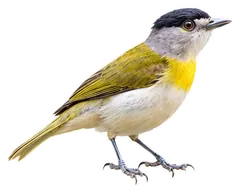 Green-backed BecardPachyramphus viridis
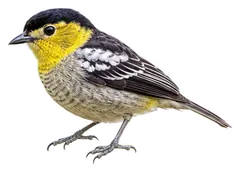 Barred BecardPachyramphus versicolor
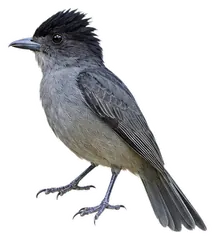 Slaty BecardPachyramphus spodiurus
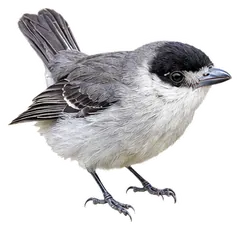 Cinereous BecardPachyramphus rufus
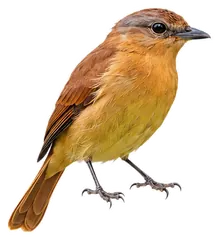 Chestnut-crowned BecardPachyramphus castaneus
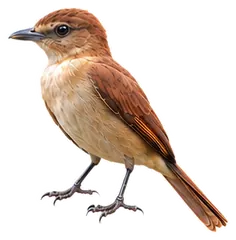 Cinnamon BecardPachyramphus cinnamomeus
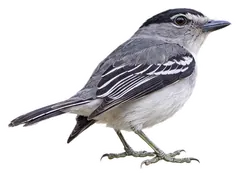 Cryptic BecardPachyramphus salvini
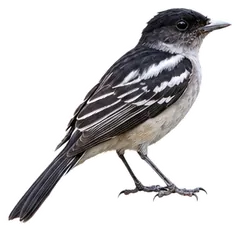 White-winged BecardPachyramphus polychopterus
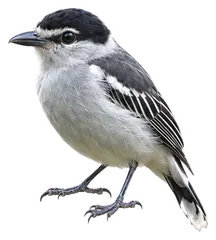 Black-and-white BecardPachyramphus albogriseus
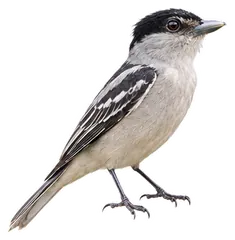 Grey-collared BecardPachyramphus major
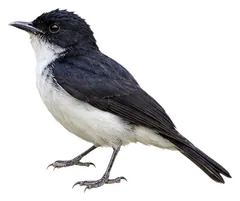 Glossy-backed BecardPachyramphus surinamus
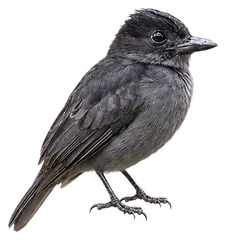 One-colored BecardPachyramphus homochrous
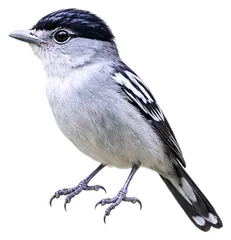
Download illustration
Free to use with credit: “Illustration: Bird Album (birdalbum.com)”. Drawn by AI from a reference photo by Antonio Amaral. ↗
Heard it but can't see it? Mingji identifies birds by sound and photo, on your phone.
In other languages
- EnglishBlack-capped Becard
- 简体中文黑顶厚嘴霸鹟
- 繁體中文黑頂比卡雀
- 日本語ズグロカザリドリモドキ
- DeutschStreifenrückenbekarde
- FrançaisBécarde à calotte noire
- EspañolAnambé capirotado
- Portuguêscaneleiro-bordado
- ItalianoBeccaio capinero
- NederlandsZwartkapbekarde
- РусскийЧерношапочный бекард
- Svenskasvarthättad bekard
- DanskSortkronet Bekard
- Polskibekardzik czarnołbisty