 Bird Album
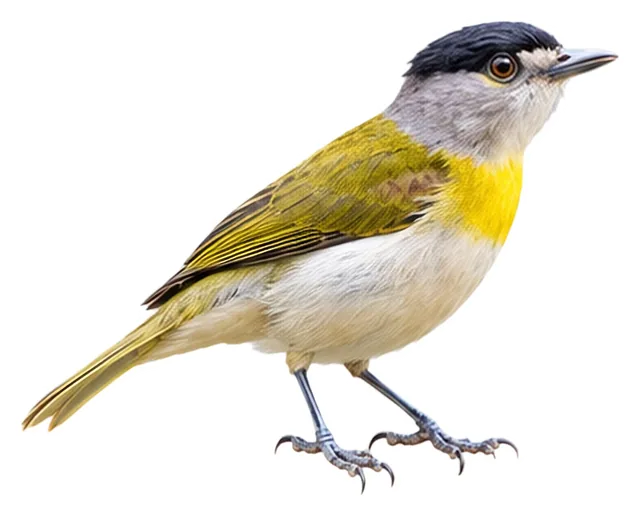
Green-backed Becard
Pachyramphus viridis (Vieillot, 1816)
14–16 cmLength21 gWeight
The green-backed becard (Pachyramphus viridis) is a species of passerine bird in the family Tityridae, the tityras, becards, and allies.
Busiest months: October · Most records: Brazil, Argentina, Uruguay
Where and when it's recorded
Busiest months: October · Most records: Brazil, Argentina, Uruguay

Green-backed Becard has been recorded at 185 of the 8,276 birding hotspots we track, in 11 countries and regions.
Records by month Southern Hemisphere
Where it's recorded most
- Paso Centurión – ÁreaUruguay267 records
- Salesópolis – Sítio MacuquinhoBrazil254 records
- WildSumaco LodgeEcuador204 records
More places
- Nova Friburgo – Ecolodge ItororóBrazil181 records
- RPPN Serra BonitaBrazil178 records
- Poconé – SouthWild PantanalBrazil164 records
- Rio Branco – Ramal do NocaBrazil151 records
- Establecimiento Los PicazosArgentina148 records
- PE IntervalesBrazil148 records
- Flor de Café/PlataformaPeru131 records
Countries and regions with the most records
eBird records via GBIF up to 2024-12-31. A record means someone listed it; more records partly mean more birders, not more birds.
About
The green-backed becard (Pachyramphus viridis) is a species of passerine bird in the family Tityridae, the tityras, becards, and allies. It is found in Argentina, Bolivia, Brazil, Guyana, Paraguay, Uruguay, and Venezuela. The green-backed becard includes the yellow-cheeked becard as a subspecies.
Excerpt from Wikipedia, CC BY-SA 4.0 · authors · Read more on Wikipedia
Questions
How big is the Green-backed Becard?
The Green-backed Becard is about 14–16 cm long and weighs around 21 g.
Where does the Green-backed Becard live?
Its breeding range: South America: northern, western, eastern, central. It is most often recorded in Brazil, Argentina and Uruguay.
When is the best time to see the Green-backed Becard?
At the hotspots we track, it is recorded most in October (Southern Hemisphere).
Is the Green-backed Becard endangered?
The IUCN Red List classifies the Green-backed Becard as Least Concern.
What does the Green-backed Becard eat?
Main food: Insects & other invertebrates.
What family is the Green-backed Becard in?
It belongs to the family Tityras, Becards & Allies (Tityridae), order Passerines (Passeriformes).
At a glance
- Length
- 14–16 cm
- Weight
- 21 g
- Habitat
- Forest
- Diet
- Insects & other invertebrates
- Lifestyle
- Perches in trees
- Migration
- Partial migrant
- Conservation
- Least Concern
More measurements
- Wing
- 72 mm
- Tail
- 54 mm
- Bill
- 15 mm
- Tarsus
- 18 mm
Averages from the AVONET dataset; length from field guides where available.
Range
South America: northern, western, eastern, central
Breeding range, IOC World Bird List 15.2
Classification
- Order
- Passerines Passeriformes
- Family
- Tityras, Becards & Allies Tityridae
- Genus
- Pachyramphus
Other birds in the genus Pachyramphus
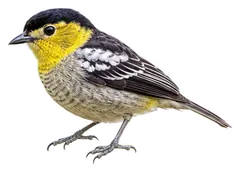 Barred BecardPachyramphus versicolor
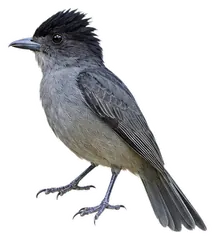 Slaty BecardPachyramphus spodiurus
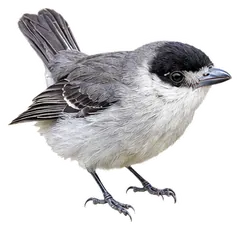 Cinereous BecardPachyramphus rufus
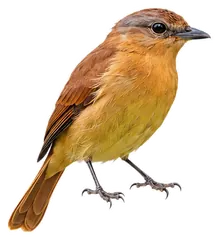 Chestnut-crowned BecardPachyramphus castaneus
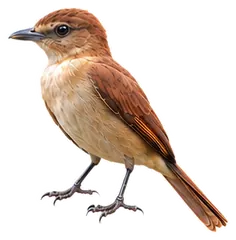 Cinnamon BecardPachyramphus cinnamomeus
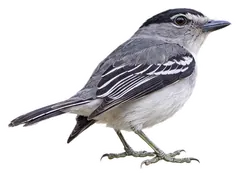 Cryptic BecardPachyramphus salvini
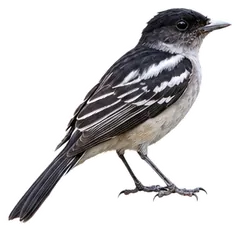 White-winged BecardPachyramphus polychopterus
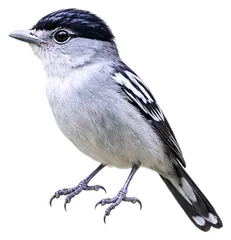 Black-capped BecardPachyramphus marginatus
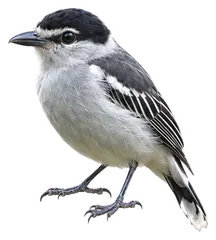 Black-and-white BecardPachyramphus albogriseus
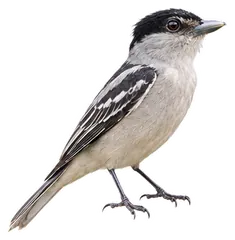 Grey-collared BecardPachyramphus major
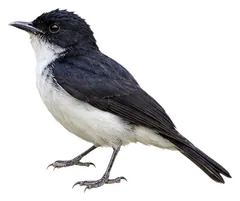 Glossy-backed BecardPachyramphus surinamus
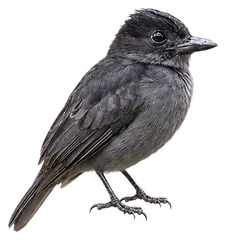 One-colored BecardPachyramphus homochrous
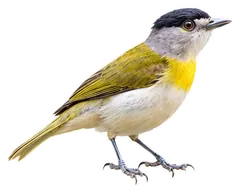
Download illustration
Free to use with credit: “Illustration: Bird Album (birdalbum.com)”. Drawn by AI from a reference photo by Paulo Mascaretti. ↗
Heard it but can't see it? Mingji identifies birds by sound and photo, on your phone.