 Bird Album
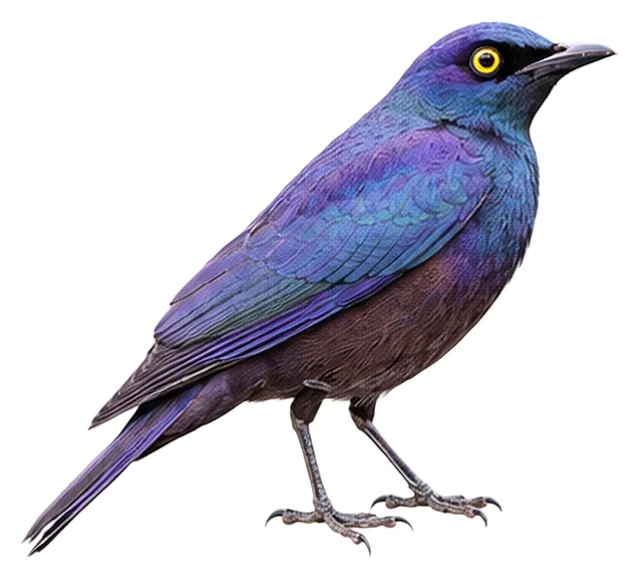
Black-bellied Starling
Notopholia corusca (Nordmann, 1835)
56 gWeight
Busiest months: October–November · Most records: South Africa, Kenya, Mozambique
Where and when it's recorded

Black-bellied Starling has been recorded at 54 of the 8,171 birding hotspots we track, in 6 countries and regions.
Records by month Southern Hemisphere
Where it's recorded most
- St Lucia – iGwalagwala TrailSouth Africa565 records
- Eshowe – Dlinza ForestSouth Africa539 records
- Arabuko-Sokoke Forest NRKenya535 records
More places
- Mkhuze GRSouth Africa363 records
- iSimangaliso WP – Eastern ShoresSouth Africa277 records
- Umlalazi NRSouth Africa231 records
- East Usambara Mountains – Amani Nature ReserveTanzania188 records
- Bonamanzi GRSouth Africa177 records
- St Lucia – iMfolozi River mouthSouth Africa174 records
- Phinda GR – AirfieldSouth Africa136 records
Countries and regions with the most records
eBird records via GBIF up to 2024-12-31. A record means someone listed it; more records partly mean more birders, not more birds.
Questions
How big is the Black-bellied Starling?
The Black-bellied Starling weighs around 56 g.
Where does the Black-bellied Starling live?
Its breeding range: Africa: eastern, southeastern. It is most often recorded in South Africa, Kenya and Mozambique.
When is the best time to see the Black-bellied Starling?
At the hotspots we track, it is recorded most in October and November (Southern Hemisphere).
Is the Black-bellied Starling endangered?
The IUCN Red List classifies the Black-bellied Starling as Least Concern.
What does the Black-bellied Starling eat?
Main food: Fruit.
What family is the Black-bellied Starling in?
It belongs to the family Starlings, Rhabdornises (Sturnidae), order Passerines (Passeriformes).
At a glance
- Weight
- 56 g
- Habitat
- Woodland
- Diet
- Fruit
- Lifestyle
- Perches in trees
- Migration
- Partial migrant
- Conservation
- Least Concern
More measurements
- Wing
- 107 mm
- Tail
- 78 mm
- Bill
- 22 mm
- Tarsus
- 25 mm
Averages from the AVONET dataset; length from field guides where available.
Range
Africa: eastern, southeastern
Breeding range, IOC World Bird List 15.2
Classification
- Order
- Passerines Passeriformes
- Family
- Starlings, Rhabdornises Sturnidae
- Genus
- Notopholia
More from the family Starlings, Rhabdornises
 Metallic StarlingAplonis metallica
 Yellow-eyed StarlingAplonis mystacea
 Singing StarlingAplonis cantoroides
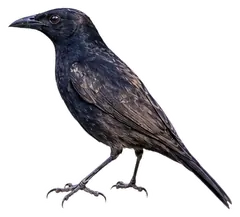 Tanimbar StarlingAplonis crassa
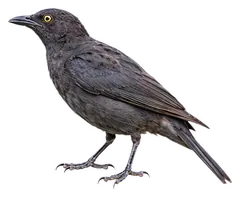 Atoll StarlingAplonis feadensis
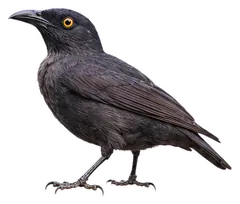 Rennell StarlingAplonis insularis
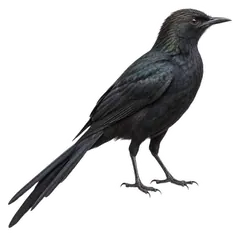 Long-tailed StarlingAplonis magna
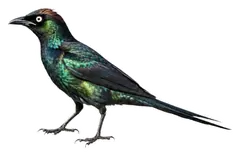 White-eyed StarlingAplonis brunneicapillus
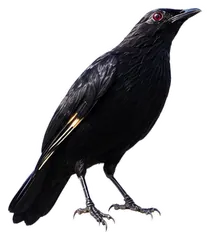 Brown-winged StarlingAplonis grandis
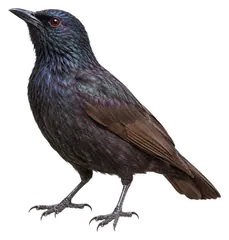 Makira StarlingAplonis dichroa
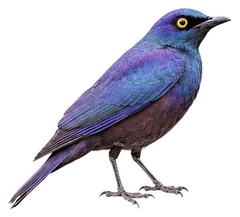
Download illustration
Free to use with credit: “Illustration: Bird Album (birdalbum.com)”. Drawn by AI from reference photos. ↗
Heard it but can't see it? Mingji identifies birds by sound and photo, on your phone.
In other languages
- EnglishBlack-bellied Starling
- 简体中文黑腹辉椋鸟
- 繁體中文黑腹輝椋鳥
- 日本語クロハラテリムク
- DeutschSchwarzbauch-Glanzstar
- FrançaisChoucador à ventre noir
- EspañolEstornino ventrinegro
- Portuguêsestorninho-de-barriga-preta
- ItalianoStorno splendente pancianera
- NederlandsZwartbuikglansspreeuw
- РусскийЧернобрюхий спрео
- Svenskasvartbukig stare
- DanskSortbuget Glansstær
- Polskibłyszczak czarnobrzuchy