 Bird Album
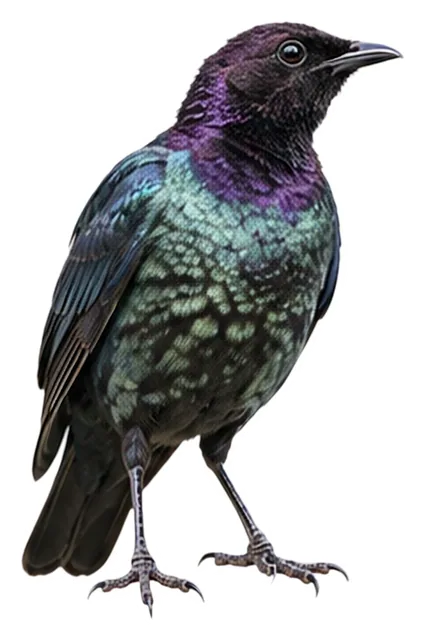
Purple-headed Starling
Hylopsar purpureiceps (Verreaux, J & Verreaux, É, 1851)
63 gWeight
The purple-headed starling (Hylopsar purpureiceps), also known as the purple-headed glossy-starling, is a species of starling in the family Sturnidae.
Busiest months: July · Most records: Uganda, Equatorial Guinea, Gabon
Where and when it's recorded

Purple-headed Starling has been recorded at 63 of the 8,171 birding hotspots we track, in 8 countries and regions.
Records by month Northern Hemisphere
Where it's recorded most
- Kibale NPUganda415 records
- Bigodi SwampUganda398 records
- Budongo Forest Reserve – Royal MileUganda240 records
More places
- Mabira ForestUganda126 records
- Bigodi Ecotourism Research CentreUganda102 records
- Semuliki NPUganda80 records
- Chimpanzee Forest LodgeUganda66 records
- Semuliki NP – Kirumya TrailUganda65 records
- Bwindi-Impenetrable Forest NP – BuhomaUganda44 records
- Bwindi-Impenetrable NP – 'The Neck'Uganda37 records
Countries and regions with the most records
eBird records via GBIF up to 2024-12-31. A record means someone listed it; more records partly mean more birders, not more birds.
About
The purple-headed starling (Hylopsar purpureiceps), also known as the purple-headed glossy-starling, is a species of starling in the family Sturnidae.
Excerpt from Wikipedia, CC BY-SA 4.0 · authors · Read more on Wikipedia
Questions
How big is the Purple-headed Starling?
The Purple-headed Starling weighs around 63 g.
Where does the Purple-headed Starling live?
Its breeding range: Africa: Nigeria to Uganda and eastern, southern DR Congo. It is most often recorded in Uganda, Equatorial Guinea and Gabon.
When is the best time to see the Purple-headed Starling?
At the hotspots we track, it is recorded most in July (Northern Hemisphere).
Is the Purple-headed Starling endangered?
The IUCN Red List classifies the Purple-headed Starling as Least Concern.
What does the Purple-headed Starling eat?
Main food: Fruit.
What family is the Purple-headed Starling in?
It belongs to the family Starlings, Rhabdornises (Sturnidae), order Passerines (Passeriformes).
At a glance
- Weight
- 63 g
- Habitat
- Forest
- Diet
- Fruit
- Lifestyle
- Perches in trees
- Migration
- Resident (barely migrates)
- Conservation
- Least Concern
More measurements
- Wing
- 114 mm
- Tail
- 68 mm
- Bill
- 21 mm
- Tarsus
- 23 mm
Averages from the AVONET dataset; length from field guides where available.
Range
Africa: Nigeria to Uganda and eastern, southern DR Congo
Breeding range, IOC World Bird List 15.2
Classification
- Order
- Passerines Passeriformes
- Family
- Starlings, Rhabdornises Sturnidae
- Genus
- Hylopsar
Other birds in the genus Hylopsar
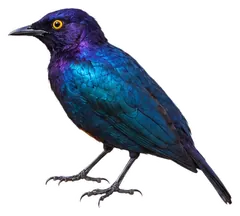 Copper-tailed StarlingHylopsar cupreocauda
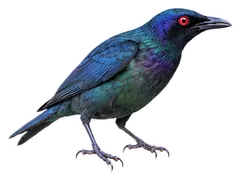 Metallic StarlingAplonis metallica
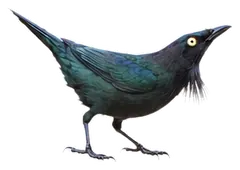 Yellow-eyed StarlingAplonis mystacea
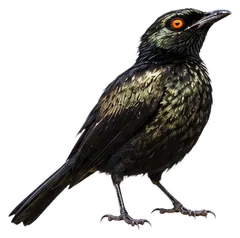 Singing StarlingAplonis cantoroides
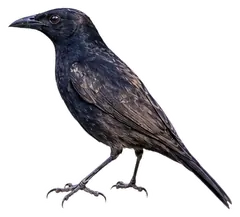 Tanimbar StarlingAplonis crassa
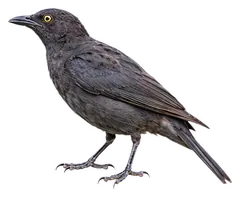 Atoll StarlingAplonis feadensis
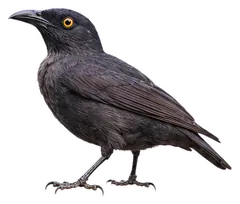 Rennell StarlingAplonis insularis
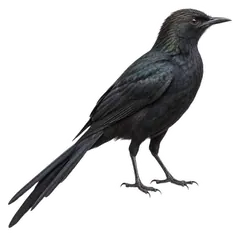 Long-tailed StarlingAplonis magna
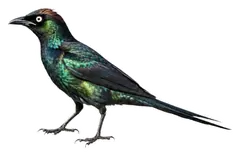 White-eyed StarlingAplonis brunneicapillus
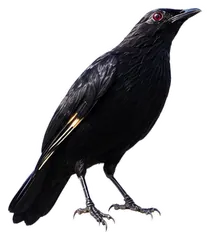 Brown-winged StarlingAplonis grandis
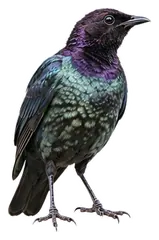
Download illustration
Free to use with credit: “Illustration: Bird Album (birdalbum.com)”. Drawn by AI from a reference photo by Sergey Yeliseev. ↗
Heard it but can't see it? Mingji identifies birds by sound and photo, on your phone.
In other languages
- EnglishPurple-headed Starling
- 简体中文紫头辉椋鸟
- 繁體中文紫頭輝椋鳥
- 日本語ムラサキズキンテリムク
- DeutschSamtglanzstar
- FrançaisChoucador à tête pourprée
- EspañolEstornino cabecipúrpura
- Portuguêsestorninho-de-cabeça-aveludada
- ItalianoStorno splendente testaviola
- NederlandsPurperkopglansspreeuw
- РусскийБархатный спрео
- Svenskapurpurhuvad stare
- DanskFløjlsglansstær
- Polskibłyszczak purpurowogłowy