 Bird Album
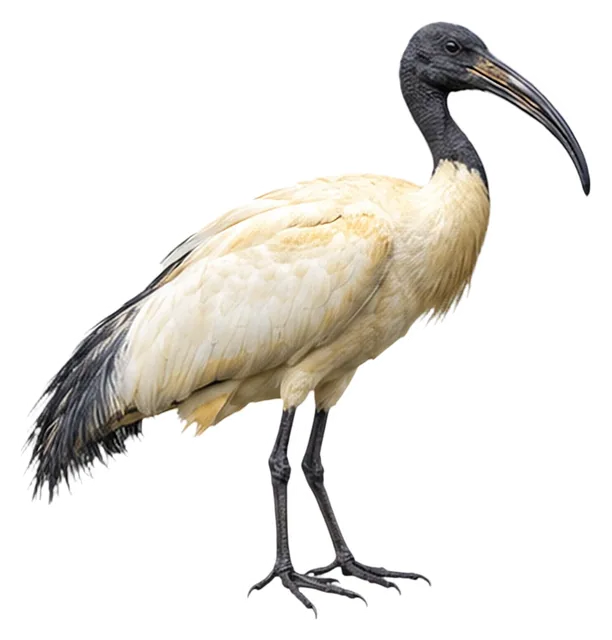
Black-headed Ibis
Threskiornis melanocephalus (Latham, 1790)
65–76 cmLength1.3 kgWeight
It has a mainly white body, a bare blackish head and neck, and a curved black bill.
Busiest months: December–February · Most records: India, Sri Lanka, Thailand
How to identify
Field marks
- Black bare skin on the head and neck, without feathers
- Mainly white body feathers
- Black, decurved bill
- Black legs and feet
Male, female and young
Sexes alike; juveniles have gray feathers on the neck and rufous-gray spots on the wings and back.
Voice
Almost silent, with pairs giving ventriloquial grunts only beside the nest.
Where and when it's recorded

Black-headed Ibis has been recorded at 331 of the 8,171 birding hotspots we track, in 14 countries and regions.
Records by month Northern Hemisphere
To protect this bird from disturbance, we don't list exact sites.
Countries and regions with the most records
eBird records via GBIF up to 2024-12-31. A record means someone listed it; more records partly mean more birders, not more birds.
About
The black-headed ibis (Threskiornis melanocephalus), also known as the Oriental white ibis, Indian white ibis, and black-necked ibis, is a species of wading bird of the ibis family Threskiornithidae which breeds in the South and Southeast Asia from India to the west and as far east as Japan.
Excerpt from Wikipedia, CC BY-SA 4.0 · authors · Read more on Wikipedia
Questions
How big is the Black-headed Ibis?
The Black-headed Ibis is about 65–76 cm long and weighs around 1.3 kg.
Where does the Black-headed Ibis live?
Its breeding range: Oriental: India, Southeast Asia, southeastern Sumatra and northern Java (where now rare). It is most often recorded in India, Sri Lanka and Thailand.
When is the best time to see the Black-headed Ibis?
At the hotspots we track, it is recorded most in January, February and December (Northern Hemisphere).
Is the Black-headed Ibis endangered?
The IUCN Red List classifies the Black-headed Ibis as Least Concern.
What does the Black-headed Ibis eat?
Main food: Fish, shrimp & shellfish.
What family is the Black-headed Ibis in?
It belongs to the family Ibises, Spoonbills (Threskiornithidae), order Pelecaniformes.
At a glance
- Length
- 65–76 cm
- Weight
- 1.3 kg
- Habitat
- Wetland
- Diet
- Fish, shrimp & shellfish
- Lifestyle
- Active on the ground
- Migration
- Resident (barely migrates)
- Conservation
- Least Concern
More measurements
- Wing
- 350 mm
- Tail
- 148 mm
- Bill
- 158 mm
- Tarsus
- 104 mm
Averages from the AVONET dataset; length from field guides where available.
Range
Oriental: India, Southeast Asia, southeastern Sumatra and northern Java (where now rare)
Breeding range, IOC World Bird List 15.2
Classification
- Order
- Pelecaniformes
- Family
- Ibises, Spoonbills Threskiornithidae
- Genus
- Threskiornis
Other birds in the genus Threskiornis
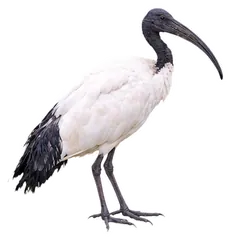 African Sacred IbisThreskiornis aethiopicus
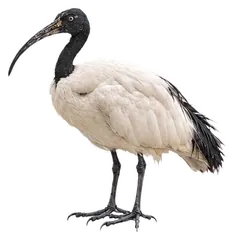 Malagasy Sacred IbisThreskiornis bernieri
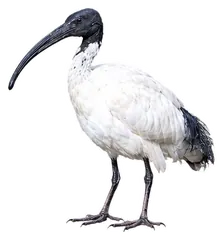 Australian White IbisThreskiornis molucca
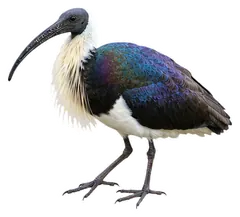 Straw-necked IbisThreskiornis spinicollis
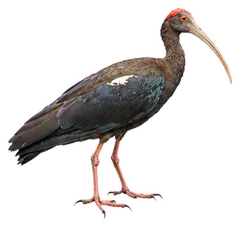 Red-naped IbisPseudibis papillosa
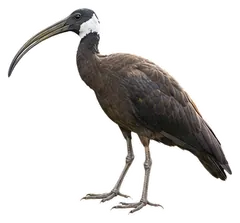 White-shouldered IbisPseudibis davisoni
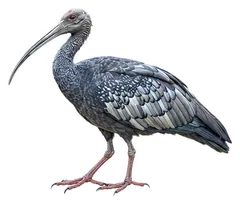 Giant IbisPseudibis gigantea
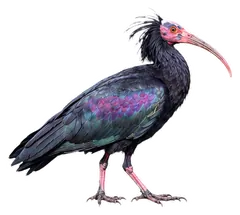 Northern Bald IbisGeronticus eremita
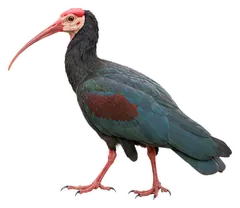 Southern Bald IbisGeronticus calvus
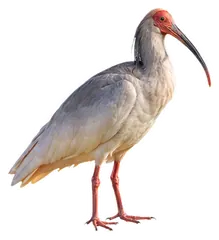 Crested IbisNipponia nippon
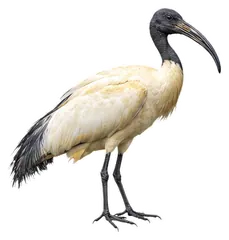
Download illustration
Free to use with credit: “Illustration: Bird Album (birdalbum.com)”. Drawn by AI from a reference photo by Matthieu Gauvain. ↗
Heard it but can't see it? Mingji identifies birds by sound and photo, on your phone.