 Bird Album
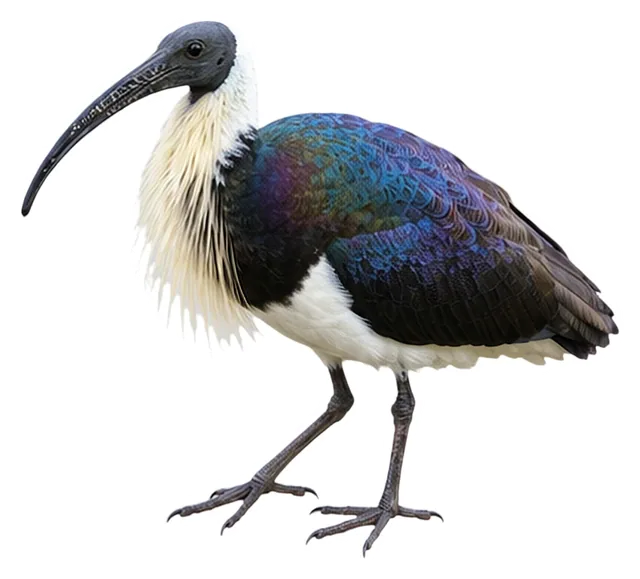
Straw-necked Ibis
Threskiornis spinicollis (Jameson, 1835)
1.3 kgWeight
The straw-necked ibis (Threskiornis spinicollis) is a bird of the ibis and spoonbill family Threskiornithidae.
Busiest months: April–October · Most records: Australia, Papua New Guinea
Where and when it's recorded

Straw-necked Ibis has been recorded at 214 of the 8,171 birding hotspots we track, in 2 countries and regions.
Records by month Southern Hemisphere
Where it's recorded most
- Western Treatment PlantAustralia8,002 records
- Oxley Creek CommonAustralia3,315 records
- Jerrabomberra Wetlands Nature ReserveAustralia2,859 records
More places
- Townsville Town Common Conservation ParkAustralia1,967 records
- Herdsman LakeAustralia1,800 records
- Broome South Wastewater Treatment PlantAustralia1,306 records
- Fogg Dam Conservation ReserveAustralia1,097 records
- Sandy Camp Road WetlandsAustralia1,096 records
- Western Treatment Plant – T Section PondsAustralia1,095 records
- Alice Springs Sewage PondsAustralia1,024 records
Countries and regions with the most records
eBird records via GBIF up to 2024-12-31. A record means someone listed it; more records partly mean more birders, not more birds.
About
The straw-necked ibis (Threskiornis spinicollis) is a bird of the ibis and spoonbill family Threskiornithidae. It can be found throughout Australia, New Guinea, and parts of Indonesia. Adults have distinctive straw-like feathers on their necks.
Excerpt from Wikipedia, CC BY-SA 4.0 · authors · Read more on Wikipedia
Questions
How big is the Straw-necked Ibis?
The Straw-necked Ibis weighs around 1.3 kg.
Where does the Straw-necked Ibis live?
Its breeding range: Australasia: Trans-Fly (south-central New Guinea), near Port Moresby (southeastern New Guinea), Australia and Tasmania. It is most often recorded in Australia and Papua New Guinea.
When is the best time to see the Straw-necked Ibis?
At the hotspots we track, it is recorded most in April, May, June, July, August, September and October (Southern Hemisphere).
Is the Straw-necked Ibis endangered?
The IUCN Red List classifies the Straw-necked Ibis as Least Concern.
What does the Straw-necked Ibis eat?
Main food: Omnivore.
What family is the Straw-necked Ibis in?
It belongs to the family Ibises, Spoonbills (Threskiornithidae), order Pelecaniformes.
At a glance
- Weight
- 1.3 kg
- Habitat
- Grassland
- Diet
- Omnivore
- Lifestyle
- Active on the ground
- Migration
- Resident (barely migrates)
- Conservation
- Least Concern
More measurements
- Wing
- 364 mm
- Tail
- 151 mm
- Bill
- 157 mm
- Tarsus
- 89 mm
Averages from the AVONET dataset; length from field guides where available.
Range
Australasia: Trans-Fly (south-central New Guinea), near Port Moresby (southeastern New Guinea), Australia and Tasmania
Breeding range, IOC World Bird List 15.2
Classification
- Order
- Pelecaniformes
- Family
- Ibises, Spoonbills Threskiornithidae
- Genus
- Threskiornis
Other birds in the genus Threskiornis
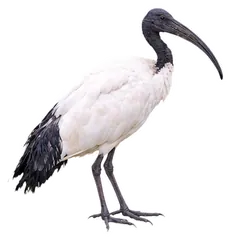 African Sacred IbisThreskiornis aethiopicus
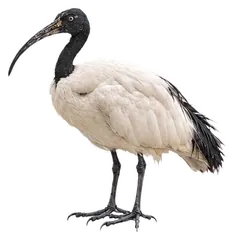 Malagasy Sacred IbisThreskiornis bernieri
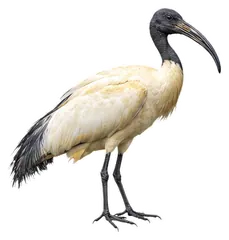 Black-headed IbisThreskiornis melanocephalus
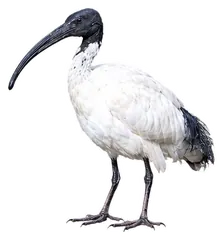 Australian White IbisThreskiornis molucca
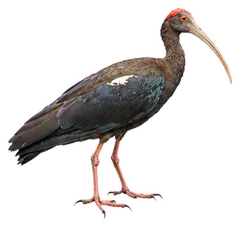 Red-naped IbisPseudibis papillosa
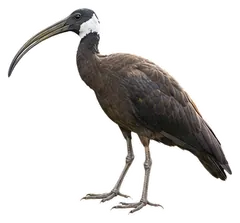 White-shouldered IbisPseudibis davisoni
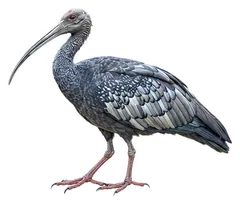 Giant IbisPseudibis gigantea
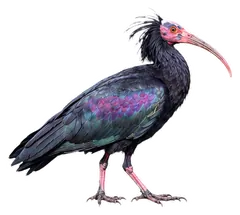 Northern Bald IbisGeronticus eremita
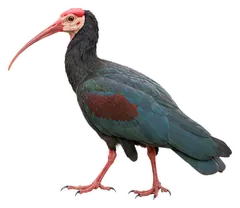 Southern Bald IbisGeronticus calvus
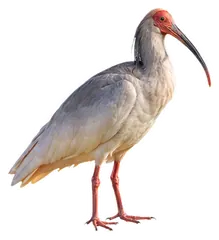 Crested IbisNipponia nippon
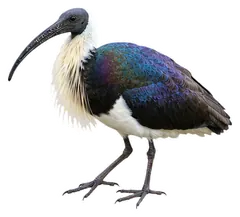
Download illustration
Free to use with credit: “Illustration: Bird Album (birdalbum.com)”. Drawn by AI from a reference photo by Charles Lam. ↗
Heard it but can't see it? Mingji identifies birds by sound and photo, on your phone.