 Bird Album
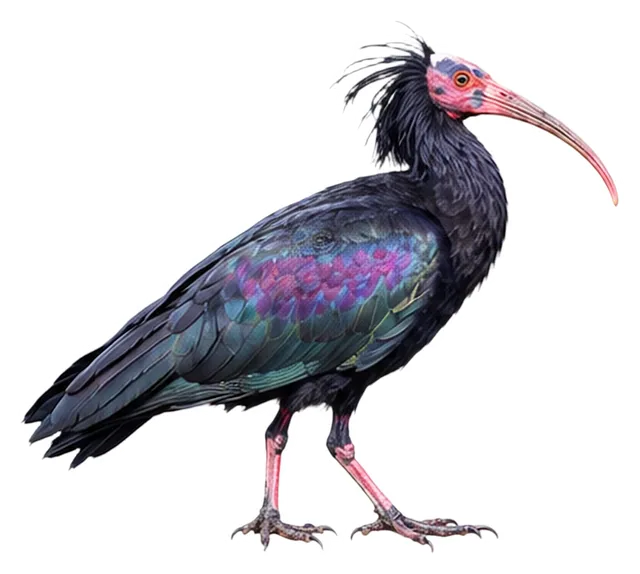
Northern Bald Ibis
Geronticus eremita (Linnaeus, 1758)
1.2 kgWeight
The northern bald ibis, hermit ibis, or Waldrapp (Geronticus eremita) is a migratory Old World ibis found in open areas such as grasslands, rocky mountains, and semi-deserts, often close to running water.
Busiest months: March–April and September · Most records: Morocco, Spain, Syria
Where and when it's recorded

Northern Bald Ibis has been recorded at 36 of the 8,171 birding hotspots we track, in 10 countries and regions.
Records by month Northern Hemisphere
Where it's recorded most
- La Breña y Marismas de Barbate PNat – El CañilloSpain563 records
- Estuaire du Asif n'SrouMorocco282 records
- PN Sous-Massa – Estuaire de l'Oued MassaMorocco280 records
More places
- PN Souss-Massa – domaine généraleMorocco97 records
- Cap GhirMorocco66 records
- La Janda – ÁreaSpain59 records
- Oued Massa – champs d'AghorimzeMorocco43 records
- La Janda – Puente del PericónSpain28 records
- Observatorio de CazallaSpain20 records
- Doñana PN – Marisma de El RocíoSpain17 records
Countries and regions with the most records
eBird records via GBIF up to 2024-12-31. A record means someone listed it; more records partly mean more birders, not more birds.
About
The northern bald ibis, hermit ibis, or Waldrapp (Geronticus eremita) is a migratory Old World ibis found in open areas such as grasslands, rocky mountains, and semi-deserts, often close to running water. This 70–80 cm (28–31 in) glossy black ibis, which, unlike many members of the ibis family, is non-wading, has an unfeathered red face and head, and a long, curved red bill. It breeds colonially on coastal or mountain cliff ledges, where it typically lays two to three eggs in a stick nest, and feeds on lizards, insects, and other small animals.
Excerpt from Wikipedia, CC BY-SA 4.0 · authors · Read more on Wikipedia
Questions
How big is the Northern Bald Ibis?
The Northern Bald Ibis weighs around 1.2 kg.
Where does the Northern Bald Ibis live?
Its breeding range: Africa: coastal west-central Morocco; nearly extinct central Syria; semicaptive in south-central Turkey; formerly much more widespread; now reintroduced locally in central, southern Europe. It is most often recorded in Morocco, Spain and Syria.
When is the best time to see the Northern Bald Ibis?
At the hotspots we track, it is recorded most in March, April and September (Northern Hemisphere).
Is the Northern Bald Ibis endangered?
The IUCN Red List classifies the Northern Bald Ibis as Endangered.
What does the Northern Bald Ibis eat?
Main food: Insects & other invertebrates.
What family is the Northern Bald Ibis in?
It belongs to the family Ibises, Spoonbills (Threskiornithidae), order Pelecaniformes.
At a glance
- Weight
- 1.2 kg
- Habitat
- Rocky terrain
- Diet
- Insects & other invertebrates
- Lifestyle
- Active on the ground
- Migration
- Migratory
- Conservation
- Endangered
More measurements
- Wing
- 402 mm
- Tail
- 184 mm
- Bill
- 132 mm
- Tarsus
- 73 mm
Averages from the AVONET dataset; length from field guides where available.
Range
Africa: coastal west-central Morocco; nearly extinct central Syria; semicaptive in south-central Turkey; formerly much more widespread; now reintroduced locally in central, southern Europe
Breeding range, IOC World Bird List 15.2
Classification
- Order
- Pelecaniformes
- Family
- Ibises, Spoonbills Threskiornithidae
- Genus
- Geronticus
Other birds in the genus Geronticus
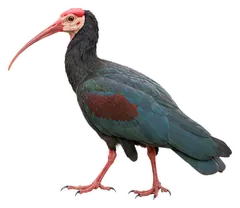 Southern Bald IbisGeronticus calvus
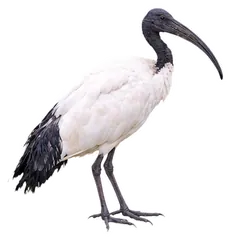 African Sacred IbisThreskiornis aethiopicus
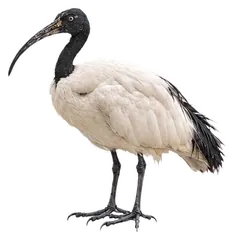 Malagasy Sacred IbisThreskiornis bernieri
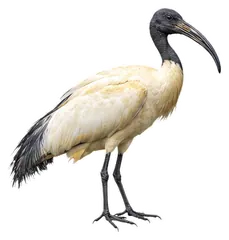 Black-headed IbisThreskiornis melanocephalus
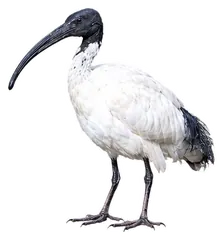 Australian White IbisThreskiornis molucca
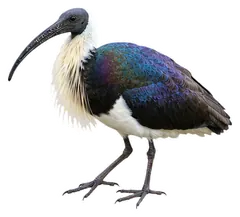 Straw-necked IbisThreskiornis spinicollis
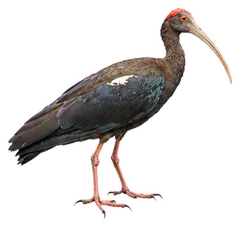 Red-naped IbisPseudibis papillosa
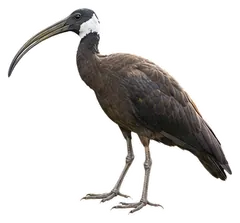 White-shouldered IbisPseudibis davisoni
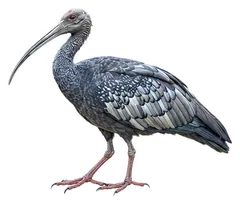 Giant IbisPseudibis gigantea
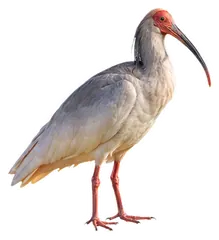 Crested IbisNipponia nippon
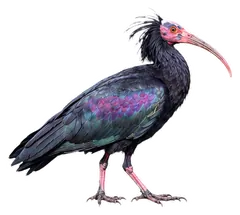
Download illustration
Free to use with credit: “Illustration: Bird Album (birdalbum.com)”. Drawn by AI from reference photos. ↗
Heard it but can't see it? Mingji identifies birds by sound and photo, on your phone.