 Bird Album
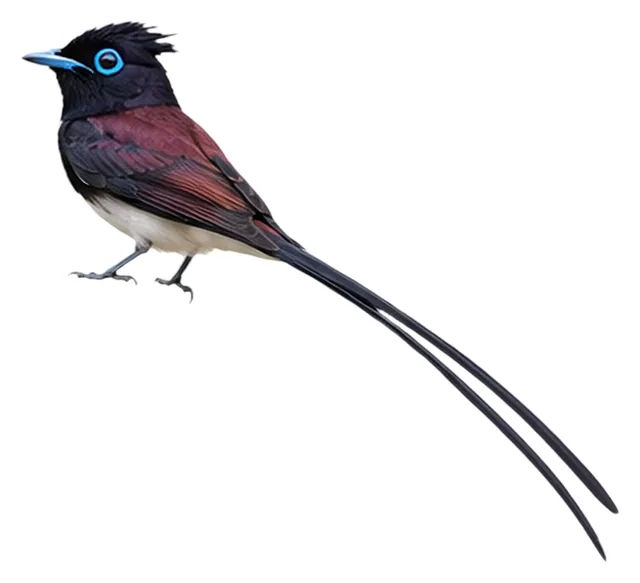
Black Paradise Flycatcher
Terpsiphone atrocaudata (Eyton, 1839)
≈18 cmLength19 gWeight
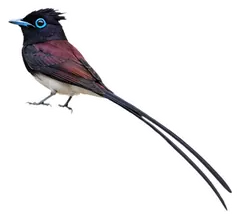
The male has an extremely long black tail, a purple-blue metallic gloss on the head and breast, and a white belly.
Busiest months: April and October · Most records: China, Thailand, Singapore
Looks like Amur Paradise Flycatcher
How to identify
Field marks
- Male has black head and breast with a purple-blue metallic gloss, and white underparts
- Male has extremely long, black central tail feathers
- Back, wings and rump deep chestnut
- Large black eyes with blue eye-rings; short blue bill
Male, female and young
Female resembles male, but has darker, browner chestnut areas and a shorter tail.
Voice
The call resembles the Japanese phrase “tsuki-hi-hoshi”, meaning “moon, sun, stars”.
Similar species
Where and when it's recorded

Black Paradise Flycatcher has been recorded at 273 of the 8,171 birding hotspots we track, in 9 countries and regions.
Records by month Northern Hemisphere
Where it's recorded most
- Yeliu IBATaiwan (China)669 records
- Nanhui DongtanChina536 records
- Man Nai IslandThailand327 records
More places
- Taipei – Taipei Botanical GardenTaiwan (China)230 records
- Yilan – Dingliao Ecological ParkTaiwan (China)218 records
- Tai Po Kau Nature ReserveHong Kong (China)126 records
- Singapore Botanic GardensSingapore124 records
- Tai Lam Country ParkHong Kong (China)120 records
- Po ToiHong Kong (China)107 records
- Matsu – DongyinChina94 records
Countries and regions with the most records
eBird records via GBIF up to 2024-12-31. A record means someone listed it; more records partly mean more birders, not more birds.
About
The black paradise flycatcher (Terpsiphone atrocaudata), also known as the Japanese paradise flycatcher, is a medium-sized passerine bird native to southeastern Asia. Males have exceptionally long tails. Females are generally duller in appearance and have shorter tails.
Excerpt from Wikipedia, CC BY-SA 4.0 · authors · Read more on Wikipedia
Questions
How big is the Black Paradise Flycatcher?
The Black Paradise Flycatcher is about ≈18 cm long and weighs around 19 g.
Where does the Black Paradise Flycatcher live?
Its breeding range: Palearctic: eastern, also far northern Philippines. It is most often recorded in China, Thailand and Singapore.
When is the best time to see the Black Paradise Flycatcher?
At the hotspots we track, it is recorded most in April and October (Northern Hemisphere).
Is the Black Paradise Flycatcher endangered?
The IUCN Red List classifies the Black Paradise Flycatcher as Least Concern.
What does the Black Paradise Flycatcher eat?
Main food: Insects & other invertebrates.
What family is the Black Paradise Flycatcher in?
It belongs to the family Monarchs (Monarchidae), order Passerines (Passeriformes).
At a glance
- Length
- ≈18 cm
- Weight
- 19 g
- Habitat
- Forest
- Diet
- Insects & other invertebrates
- Lifestyle
- Perches in trees
- Migration
- Migratory
- Conservation
- Least Concern
More measurements
- Wing
- 92 mm
- Tail
- 103 mm
- Bill
- 20 mm
- Tarsus
- 16 mm
Averages from the AVONET dataset; length from field guides where available.
Range
Palearctic: eastern, also far northern Philippines
Breeding range, IOC World Bird List 15.2
Subspecies · 2
- Terpsiphone atrocaudata atrocaudata c, s Korean Pen., Japan and Taiwan (China) | non-breeding: to se Asia and Sumatra
- Terpsiphone atrocaudata periophthalmica Lanyu (off Taiwan (China)) and Batan Is. (far n Philippines) | non-breeding: to n, w Philippines
Classification
- Order
- Passerines Passeriformes
- Family
- Monarchs Monarchidae
- Genus
- Terpsiphone
Other birds in the genus Terpsiphone
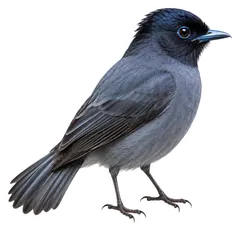 Bedford's Paradise FlycatcherTerpsiphone bedfordi
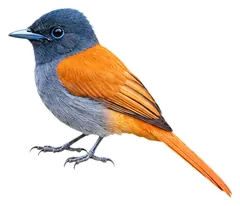 Rufous-vented Paradise FlycatcherTerpsiphone rufocinerea
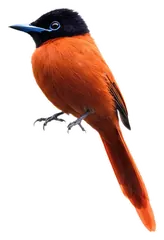 Red-bellied Paradise FlycatcherTerpsiphone rufiventer
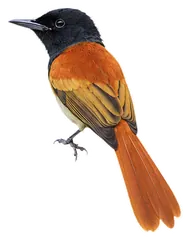 Bates's Paradise FlycatcherTerpsiphone batesi
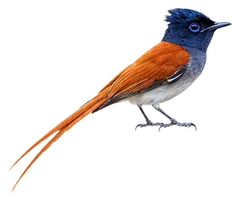 African Paradise FlycatcherTerpsiphone viridis
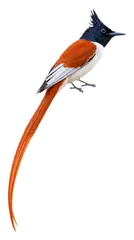 Indian Paradise FlycatcherTerpsiphone paradisi
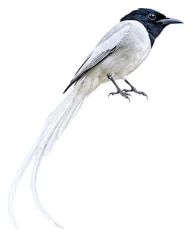 Blyth's Paradise FlycatcherTerpsiphone affinis
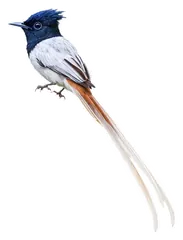 Tenggara Paradise FlycatcherTerpsiphone floris
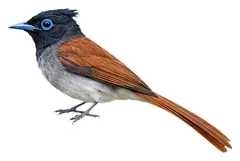 Amur Paradise FlycatcherTerpsiphone incei
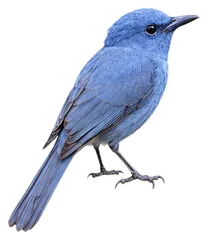 Blue Paradise FlycatcherTerpsiphone cyanescens
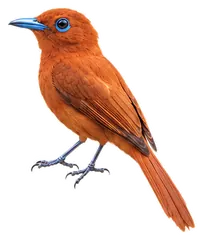 Rufous Paradise FlycatcherTerpsiphone cinnamomea
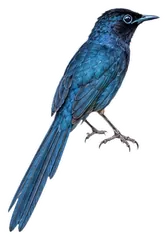 Sao Tome Paradise FlycatcherTerpsiphone atrochalybeia
Download illustration
Free to use with credit: “Illustration: Bird Album (birdalbum.com)”. Drawn by AI from a reference photo by Pokopong. ↗

Heard it but can't see it? Mingji identifies birds by sound and photo, on your phone.
In other languages
- EnglishBlack Paradise Flycatcher
- 简体中文紫寿带
- 繁體中文紫綬帶
- 日本語サンコウチョウ
- 한국어긴꼬리딱새
- DeutschJapanparadiesschnäpper
- FrançaisTchitrec du Japon
- EspañolMonarca japonés
- Portuguêspapa-moscas-do-paraíso-japonês
- ItalianoPigliamosche del paradiso del Giappone
- NederlandsJapanse Paradijsmonarch
- РусскийЧёрная райская мухоловка
- Svenskajapansk paradismonark
- DanskSort Paradismonark
- Polskimuchodławka czarnosterna