 Bird Album
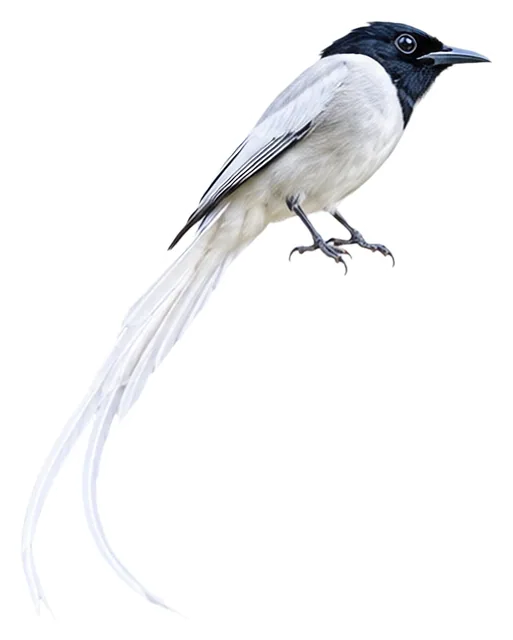
Blyth's Paradise Flycatcher
Terpsiphone affinis (Blyth, 1846)
≈19 cmLength19 gWeight
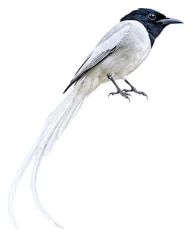
The male has a blue eye-ring and very long central tail feathers in the breeding season.
Busiest months: February–March · Most records: Malaysia, Thailand, Singapore
How to identify
Field marks
- Male has dark head and blue eye-ring
- Male has a small crest on the head
- Breeding male has very long central tail feathers
Male, female and young
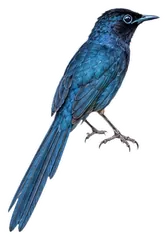
Male has 2 color morphs, rufous and white; female resembles the rufous male in the non-breeding season, but usually has a duller blue eye-ring and a slightly paler head.
Voice
The song is a clear series of “wiwiwiwiwiwiwi”; the call is nasal, like “ji-jeh”.
Where and when it's recorded

Blyth's Paradise Flycatcher has been recorded at 327 of the 8,171 birding hotspots we track, in 13 countries and regions.
Records by month Northern Hemisphere
Where it's recorded most
- Danum Valley Borneo Rainforest LodgeMalaysia739 records
- Danum Valley Field CentreMalaysia375 records
- Khao Pra – Bang Khram Wildlife Sanctuary / Khao Nor Chu ChiThailand271 records
More places
- Taman Negara NP Kuala TahanMalaysia258 records
- Deramakot Forest ReserveMalaysia237 records
- Kaeng Krachan NPThailand212 records
- Gunung Panti Recreational Forest – Panti Bird Sanctuary and North AreaMalaysia200 records
- Khao Luang NP – Krung Ching Waterfall trail & campgroundThailand192 records
- Singapore Botanic GardensSingapore181 records
- Dihing Patkai NP – SoraipungIndia181 records
Countries and regions with the most records
eBird records via GBIF up to 2024-12-31. A record means someone listed it; more records partly mean more birders, not more birds.
About
Blyth's paradise flycatcher (Terpsiphone affinis), also called the oriental paradise flycatcher, is a species of bird in the family Monarchidae. This species occupies evergreen broadleaf forests and forest edges, including secondary growth, gardens, and plantations, typically in lowland and foothill regions. Some populations undertake migratory movements.
Excerpt from Wikipedia, CC BY-SA 4.0 · authors · Read more on Wikipedia
Questions
How big is the Blyth's Paradise Flycatcher?
The Blyth's Paradise Flycatcher is about ≈19 cm long and weighs around 19 g.
Where does the Blyth's Paradise Flycatcher live?
Its breeding range: Oriental: eastern Nepal and northeastern India to southern China, Indochina, Malay Peninsula and Greater Sundas. It is most often recorded in Malaysia, Thailand and Singapore.
When is the best time to see the Blyth's Paradise Flycatcher?
At the hotspots we track, it is recorded most in February and March (Northern Hemisphere).
Is the Blyth's Paradise Flycatcher endangered?
The IUCN Red List classifies the Blyth's Paradise Flycatcher as Least Concern.
What does the Blyth's Paradise Flycatcher eat?
Main food: Insects & other invertebrates.
What family is the Blyth's Paradise Flycatcher in?
It belongs to the family Monarchs (Monarchidae), order Passerines (Passeriformes).
At a glance
- Length
- ≈19 cm
- Weight
- 19 g
- Habitat
- Woodland
- Diet
- Insects & other invertebrates
- Lifestyle
- Perches in trees
- Migration
- Partial migrant
- Conservation
- Least Concern
More measurements
- Wing
- 91 mm
- Tail
- 110 mm
- Bill
- 21 mm
- Tarsus
- 17 mm
Averages from the AVONET dataset; length from field guides where available.
Range
Oriental: eastern Nepal and northeastern India to southern China, Indochina, Malay Peninsula and Greater Sundas
Breeding range, IOC World Bird List 15.2
Subspecies · 1
- Terpsiphone affinis indochinensis e Myanmar and s China to Indochina
Classification
- Order
- Passerines Passeriformes
- Family
- Monarchs Monarchidae
- Genus
- Terpsiphone
Other birds in the genus Terpsiphone
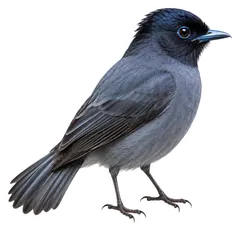 Bedford's Paradise FlycatcherTerpsiphone bedfordi
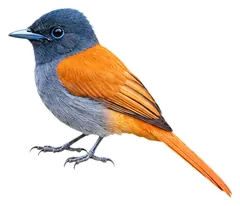 Rufous-vented Paradise FlycatcherTerpsiphone rufocinerea
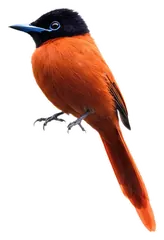 Red-bellied Paradise FlycatcherTerpsiphone rufiventer
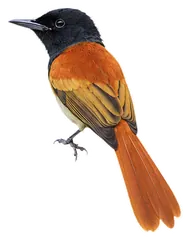 Bates's Paradise FlycatcherTerpsiphone batesi
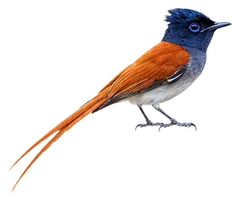 African Paradise FlycatcherTerpsiphone viridis
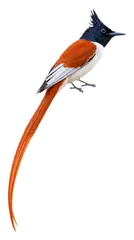 Indian Paradise FlycatcherTerpsiphone paradisi
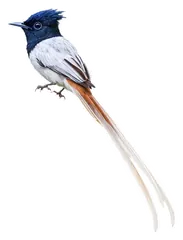 Tenggara Paradise FlycatcherTerpsiphone floris
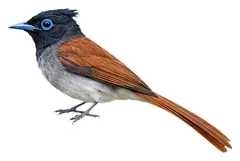 Amur Paradise FlycatcherTerpsiphone incei
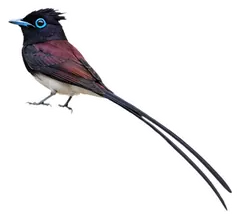 Black Paradise FlycatcherTerpsiphone atrocaudata
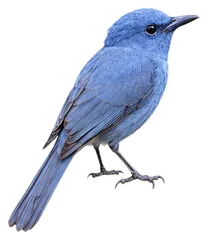 Blue Paradise FlycatcherTerpsiphone cyanescens
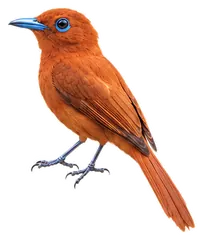 Rufous Paradise FlycatcherTerpsiphone cinnamomea
 Sao Tome Paradise FlycatcherTerpsiphone atrochalybeia
Download illustration
Free to use with credit: “Illustration: Bird Album (birdalbum.com)”. Drawn by AI from a reference photo by Ian Dugdale. ↗
Heard it but can't see it? Mingji identifies birds by sound and photo, on your phone.
In other languages
- EnglishBlyth's Paradise Flycatcher
- 简体中文中南寿带
- 繁體中文布來氏綬帶
- 日本語ブライスサンコウチョウ
- DeutschBlythparadiesschnäpper
- FrançaisTchitrec de Blyth
- EspañolMonarca del paraíso oriental
- Portuguêspapa-moscas-do-paraíso-oriental
- NederlandsOriëntaalse Paradijsmonarch
- РусскийИндокитайская райская мухоловка
- Svenskaorientparadismonark
- DanskOrientalsk Paradismonark
- Polskimuchodławka indochińska