 Bird Album
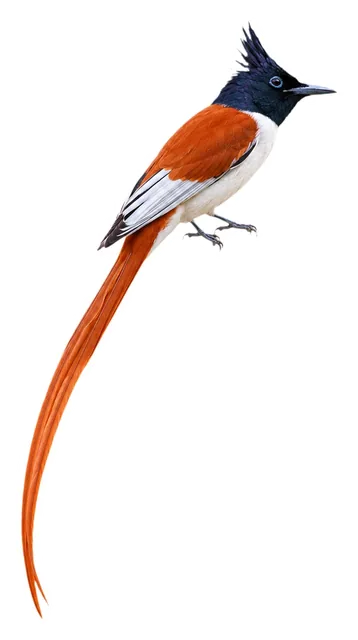
Indian Paradise Flycatcher
Terpsiphone paradisi (Linnaeus, 1758)
19–22 cmLength19 gWeight
The adult male trails 2 long central tail feathers like a pair of ribbons.
Busiest months: December–February · Most records: India, Sri Lanka, Nepal
How to identify
Field marks
- Adult has glossy black head and black crest
- Adult bill black and stout
- Adult male has 2 very long central tail feathers
- Female has rufous back and grayish throat and underparts
Male, female and young
Adult male has mainly bright rufous or white upperparts and a long tail; female has a short tail and rufous back.
Where and when it's recorded

Indian Paradise Flycatcher has been recorded at 318 of the 8,171 birding hotspots we track, in 13 countries and regions.
Records by month Northern Hemisphere
Where it's recorded most
- GKVK CampusIndia2,669 records
- Valley SchoolIndia1,995 records
- Nandi HillsIndia1,420 records
More places
- IIT MadrasIndia1,276 records
- Rishi Valley – School CampusIndia1,102 records
- Sinhagad ValleyIndia1,064 records
- IISc BangaloreIndia981 records
- Salim Ali Centre for Ornithology and Natural HistoryIndia969 records
- Thattekkad Bird SanctuaryIndia892 records
- Yala National ParkSri Lanka822 records
Countries and regions with the most records
eBird records via GBIF up to 2024-12-31. A record means someone listed it; more records partly mean more birders, not more birds.
About
The Indian paradise flycatcher (Terpsiphone paradisi) is a medium-sized passerine bird in the monarch flycatcher family, Monarchidae. As the global population is considered stable, it has been listed as Least Concern on the IUCN Red List since 2004. It is native to the Indian subcontinent, with resident and breeding populations in most of Bangladesh, India and Sri Lanka, as well as parts of Afghanistan, Bhutan, China, Myanmar, Nepal, Pakistan, Tajikistan and Turkmenistan.
Excerpt from Wikipedia, CC BY-SA 4.0 · authors · Read more on Wikipedia
Questions
How big is the Indian Paradise Flycatcher?
The Indian Paradise Flycatcher is about 19–22 cm long and weighs around 19 g.
Where does the Indian Paradise Flycatcher live?
Its breeding range: Oriental: northern Afghanistan and western China to central Bangladesh, southwestern Myanmar and Sri Lanka. It is most often recorded in India, Sri Lanka and Nepal.
When is the best time to see the Indian Paradise Flycatcher?
At the hotspots we track, it is recorded most in January, February and December (Northern Hemisphere).
Is the Indian Paradise Flycatcher endangered?
The IUCN Red List classifies the Indian Paradise Flycatcher as Least Concern.
What does the Indian Paradise Flycatcher eat?
Main food: Insects & other invertebrates.
What family is the Indian Paradise Flycatcher in?
It belongs to the family Monarchs (Monarchidae), order Passerines (Passeriformes).
At a glance
- Length
- 19–22 cm
- Weight
- 19 g
- Habitat
- Woodland
- Diet
- Insects & other invertebrates
- Lifestyle
- Perches in trees
- Migration
- Partial migrant
- Conservation
- Least Concern
More measurements
- Wing
- 95 mm
- Tail
- 110 mm
- Bill
- 25 mm
- Tarsus
- 18 mm
Averages from the AVONET dataset; length from field guides where available.
Range
Oriental: northern Afghanistan and western China to central Bangladesh, southwestern Myanmar and Sri Lanka
Breeding range, IOC World Bird List 15.2
Subspecies · 1
- Terpsiphone paradisi leucogaster n Afghanistan and w China to nc India and w Nepal | non-breeding: to s India
Classification
- Order
- Passerines Passeriformes
- Family
- Monarchs Monarchidae
- Genus
- Terpsiphone
Other birds in the genus Terpsiphone
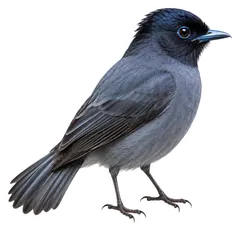 Bedford's Paradise FlycatcherTerpsiphone bedfordi
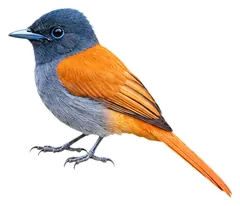 Rufous-vented Paradise FlycatcherTerpsiphone rufocinerea
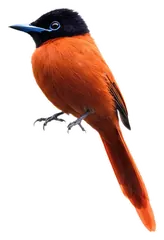 Red-bellied Paradise FlycatcherTerpsiphone rufiventer
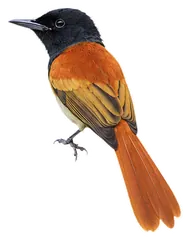 Bates's Paradise FlycatcherTerpsiphone batesi
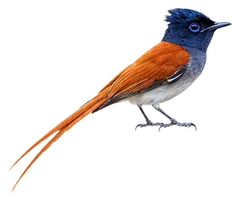 African Paradise FlycatcherTerpsiphone viridis
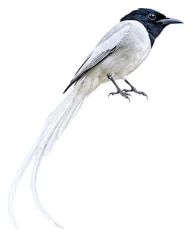 Blyth's Paradise FlycatcherTerpsiphone affinis
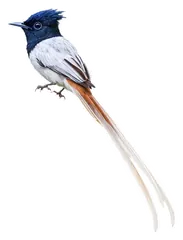 Tenggara Paradise FlycatcherTerpsiphone floris
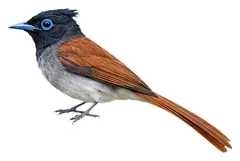 Amur Paradise FlycatcherTerpsiphone incei
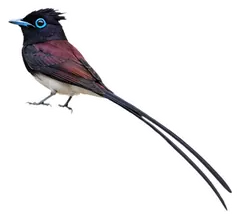 Black Paradise FlycatcherTerpsiphone atrocaudata
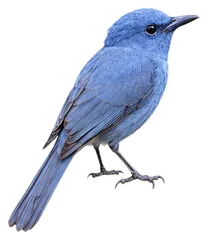 Blue Paradise FlycatcherTerpsiphone cyanescens
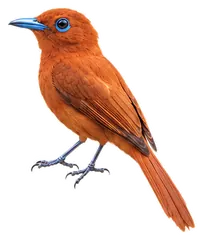 Rufous Paradise FlycatcherTerpsiphone cinnamomea
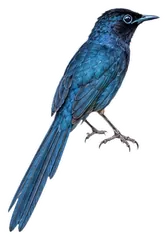 Sao Tome Paradise FlycatcherTerpsiphone atrochalybeia
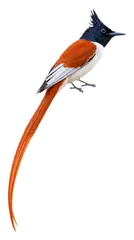
Download illustration
Free to use with credit: “Illustration: Bird Album (birdalbum.com)”. Drawn by AI from a reference photo by Jugal Patel. ↗
Heard it but can't see it? Mingji identifies birds by sound and photo, on your phone.
In other languages
- EnglishIndian Paradise Flycatcher
- 简体中文印度寿带
- 繁體中文印度綬帶
- 日本語カワリサンコウチョウ
- 한국어북방긴꼬리딱새
- DeutschHainparadiesschnäpper
- FrançaisTchitrec de paradis
- EspañolMonarca del paraíso indio
- Portuguêspapa-moscas-do-paraíso-indiano
- ItalianoPigliamosche del paradiso asiatico
- NederlandsIndiase Paradijsmonarch
- РусскийРайская мухоловка
- Svenskaindisk paradismonark
- DanskAsiatisk Paradismonark
- Polskimuchodławka rajska