 Bird Album
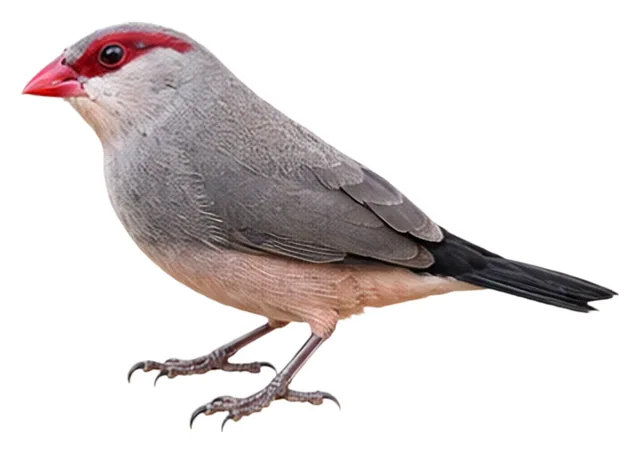
Black-rumped Waxbill
Estrilda troglodytes (Lichtenstein, MHC, 1823)
≈10 cmLength7.6 gWeight
This small finch weighs about 6 g and inhabits dry savanna, cultivated land and scrub.
Busiest months: January and November · Most records: Gambia, Uganda, Senegal
How to identify
Where and when it's recorded

Black-rumped Waxbill has been recorded at 129 of the 8,171 birding hotspots we track, in 24 countries and regions.
Records by month Northern Hemisphere
Where it's recorded most
- Farasuto Forest Community NRGambia242 records
- Murchison Falls NP – North sideUganda176 records
- Campement de WassadouSenegal175 records
More places
- Amurum Forest ReserveNigeria88 records
- Tendaba – Tendaba CampGambia81 records
- Tono Dam & vicinityGhana72 records
- Brenu Beach – grasslandsGhana69 records
- TendabaGambia59 records
- Murchison Falls NP – PakubaUganda48 records
- Parc Urbain Bangr-WeoogoBurkina Faso47 records
Countries and regions with the most records
eBird records via GBIF up to 2024-12-31. A record means someone listed it; more records partly mean more birders, not more birds.
About
The black-rumped waxbill (Estrilda troglodytes) is a common species of estrildid finch found in Southern Africa. It has an estimated global extent of occurrence of 2,000,000 km2.
Excerpt from Wikipedia, CC BY-SA 4.0 · authors · Read more on Wikipedia
Questions
How big is the Black-rumped Waxbill?
The Black-rumped Waxbill is about ≈10 cm long and weighs around 7.6 g.
Where does the Black-rumped Waxbill live?
Its breeding range: Africa: Mauritania to Liberia and east to Eritrea, Ethiopia and western Kenya. It is most often recorded in Gambia, Uganda and Senegal.
When is the best time to see the Black-rumped Waxbill?
At the hotspots we track, it is recorded most in January and November (Northern Hemisphere).
Is the Black-rumped Waxbill endangered?
The IUCN Red List classifies the Black-rumped Waxbill as Least Concern.
What does the Black-rumped Waxbill eat?
Main food: Seeds.
What family is the Black-rumped Waxbill in?
It belongs to the family Waxbills, Munias & Allies (Estrildidae), order Passerines (Passeriformes).
At a glance
- Length
- ≈10 cm
- Weight
- 7.6 g
- Habitat
- Shrubland
- Diet
- Seeds
- Lifestyle
- Varied
- Migration
- Resident (barely migrates)
- Conservation
- Least Concern
More measurements
- Wing
- 50 mm
- Tail
- 43 mm
- Bill
- 10 mm
- Tarsus
- 13 mm
Averages from the AVONET dataset; length from field guides where available.
Range
Africa: Mauritania to Liberia and east to Eritrea, Ethiopia and western Kenya
Breeding range, IOC World Bird List 15.2
Classification
- Order
- Passerines Passeriformes
- Family
- Waxbills, Munias & Allies Estrildidae
- Genus
- Estrilda
Other birds in the genus Estrilda
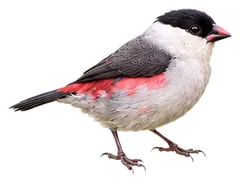 Black-crowned WaxbillEstrilda nonnula
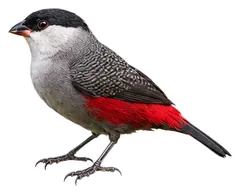 Black-headed WaxbillEstrilda atricapilla
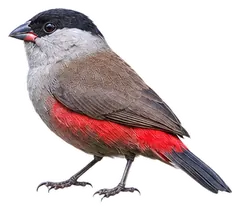 Kandt's WaxbillEstrilda kandti
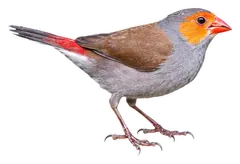 Orange-cheeked WaxbillEstrilda melpoda
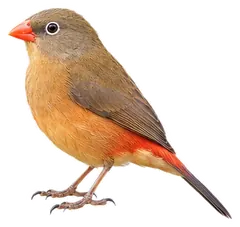 Anambra WaxbillEstrilda poliopareia
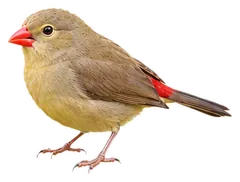 Fawn-breasted WaxbillEstrilda paludicola
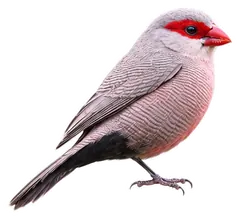 Common WaxbillEstrilda astrild
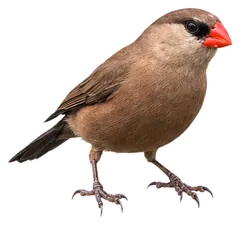 Black-lored WaxbillEstrilda nigriloris
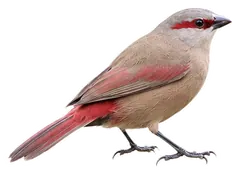 Crimson-rumped WaxbillEstrilda rhodopyga
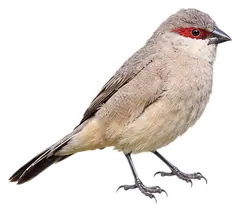 Arabian WaxbillEstrilda rufibarba
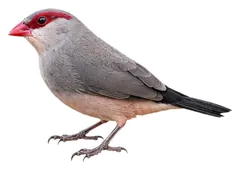
Download illustration
Free to use with credit: “Illustration: Bird Album (birdalbum.com)”. Drawn by AI from a reference photo by Marc Faucher. ↗
Heard it but can't see it? Mingji identifies birds by sound and photo, on your phone.