 Bird Album
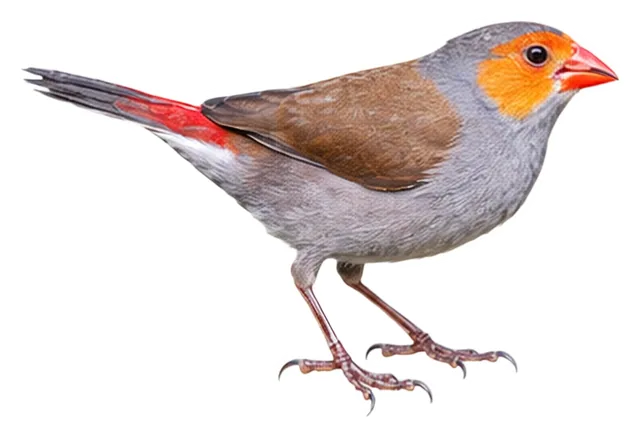
Orange-cheeked Waxbill
Estrilda melpoda (Vieillot, 1817)
≈10 cmLength7.6 gWeight
This small finch climbs up and down grass stems and hangs upside down to eat grass seeds.
Busiest months: September–October · Most records: Puerto Rico, United States, Ghana
How to identify
Male, female and young
The male usually has a brighter orange patch on the belly; the juvenile resembles the adult on fledging but has duller orange on the sides of the head.
Voice
A high, thin “peep” is the best clue to its presence.
Where and when it's recorded

Orange-cheeked Waxbill has been recorded at 248 of the 8,171 birding hotspots we track, in 32 countries and regions.
Records by month Northern Hemisphere
Where it's recorded most
- Huntington Central Park – EastUnited States1,066 records
- Laguna Cartagena - West EndPuerto Rico761 records
- Hacienda La EsperanzaPuerto Rico714 records
More places
- Reserva Natural Laguna CartagenaPuerto Rico452 records
- Mile Square Regional Park, Fountain ValleyUnited States399 records
- Refugio de Vida Silvestre de BoquerónPuerto Rico391 records
- Laguna Cartagena – TowerPuerto Rico344 records
- Gramas Lindas, Toa BajaPuerto Rico251 records
- 26 HDLPuerto Rico226 records
- Reserva Natural Punta GuaniquillaPuerto Rico204 records
Countries and regions with the most records
eBird records via GBIF up to 2024-12-31. A record means someone listed it; more records partly mean more birders, not more birds.
About
The orange-cheeked waxbill (Estrilda melpoda) is a common species of estrildid finch native to western and central Africa, with an estimated global extent of occurrence of 3,600,000 km2.
Excerpt from Wikipedia, CC BY-SA 4.0 · authors · Read more on Wikipedia
Questions
How big is the Orange-cheeked Waxbill?
The Orange-cheeked Waxbill is about ≈10 cm long and weighs around 7.6 g.
Where does the Orange-cheeked Waxbill live?
Its breeding range: Africa: southern Mauritania, Senegal and Gambia to southern Chad, Central African Republic, southeastern Sudan and Ethiopia, Gabon, northern Angola, and DR Congo, western Burundi and northern Zambia. It is most often recorded in Puerto Rico, United States and Ghana.
When is the best time to see the Orange-cheeked Waxbill?
At the hotspots we track, it is recorded most in September and October (Northern Hemisphere).
Is the Orange-cheeked Waxbill endangered?
The IUCN Red List classifies the Orange-cheeked Waxbill as Least Concern.
What does the Orange-cheeked Waxbill eat?
Main food: Seeds.
What family is the Orange-cheeked Waxbill in?
It belongs to the family Waxbills, Munias & Allies (Estrildidae), order Passerines (Passeriformes).
At a glance
- Length
- ≈10 cm
- Weight
- 7.6 g
- Habitat
- Grassland
- Diet
- Seeds
- Lifestyle
- Varied
- Migration
- Resident (barely migrates)
- Conservation
- Least Concern
More measurements
- Wing
- 46 mm
- Tail
- 46 mm
- Bill
- 10 mm
- Tarsus
- 14 mm
Averages from the AVONET dataset; length from field guides where available.
Range
Africa: southern Mauritania, Senegal and Gambia to southern Chad, Central African Republic, southeastern Sudan and Ethiopia, Gabon, northern Angola, and DR Congo, western Burundi and northern Zambia
Breeding range, IOC World Bird List 15.2
Classification
- Order
- Passerines Passeriformes
- Family
- Waxbills, Munias & Allies Estrildidae
- Genus
- Estrilda
Other birds in the genus Estrilda
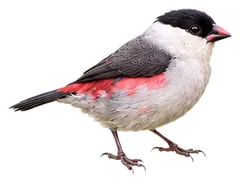 Black-crowned WaxbillEstrilda nonnula
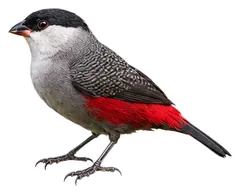 Black-headed WaxbillEstrilda atricapilla
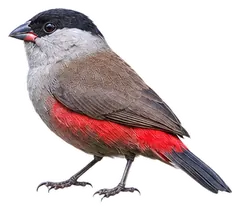 Kandt's WaxbillEstrilda kandti
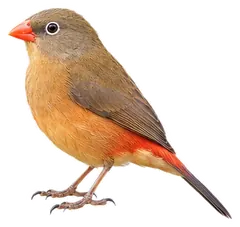 Anambra WaxbillEstrilda poliopareia
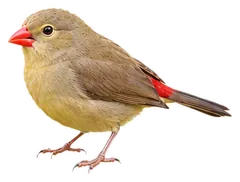 Fawn-breasted WaxbillEstrilda paludicola
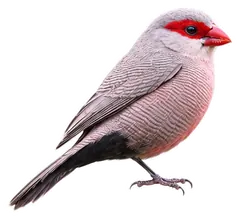 Common WaxbillEstrilda astrild
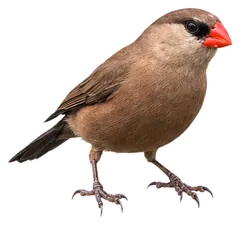 Black-lored WaxbillEstrilda nigriloris
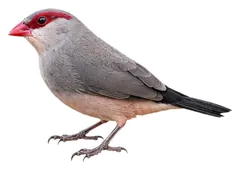 Black-rumped WaxbillEstrilda troglodytes
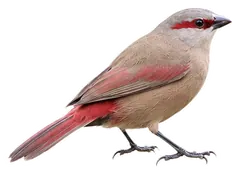 Crimson-rumped WaxbillEstrilda rhodopyga
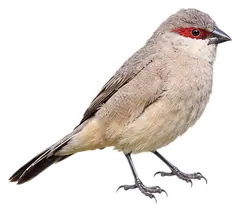 Arabian WaxbillEstrilda rufibarba
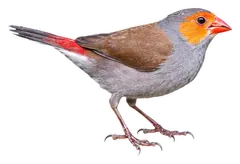
Download illustration
Free to use with credit: “Illustration: Bird Album (birdalbum.com)”. Drawn by AI from a reference photo by James Benz. ↗
Heard it but can't see it? Mingji identifies birds by sound and photo, on your phone.
In other languages
- EnglishOrange-cheeked Waxbill
- 简体中文橙颊梅花雀
- 繁體中文橙頰梅花雀
- 日本語ホオアカカエデチョウ
- DeutschOrangewangenastrild
- FrançaisAstrild à joues orange
- EspañolEstrilda carinaranja
- Portuguêsbico-de-lacre-de-faces-laranja
- ItalianoAstrilde guancearancio
- NederlandsOranjekaakje
- РусскийОранжевощёкий астрильд
- Svenskaorangekindad astrild
- DanskOrangekindet Astrild
- Polskiastryld złotolicy