 Bird Album
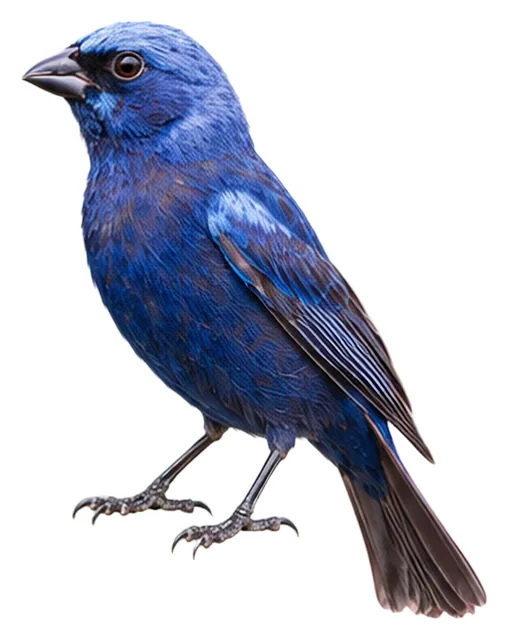
Blue Bunting
Cyanocompsa parellina (Bonaparte, 1850)
13–14 cmLength16 gWeight
The blue bunting (Cyanocompsa parellina) is a species of passerine in the family Cardinalidae, the cardinals or cardinal grosbeaks.
Busiest months: February–March · Most records: Belize, Mexico, United States
Where and when it's recorded
Busiest months: February–March · Most records: Belize, Mexico, United States

Blue Bunting has been recorded at 110 of the 8,276 birding hotspots we track, in 7 countries and regions.
Records by month Northern Hemisphere
Where it's recorded most
- Black Rock LodgeBelize1,144 records
- PN Tikal – sitio arqueológicoGuatemala745 records
- Chan Chich LodgeBelize695 records
More places
- La Milpa Field StationBelize641 records
- Lamanai Outpost Lodge & Indian ChurchBelize631 records
- Quinta Mazatlan WBCUnited States530 records
- Lamanai Maya siteBelize507 records
- Frontera Audubon CenterUnited States465 records
- Rancho PrimaveraMexico426 records
- Bentsen-Rio Grande Val. SP WBC (Mission)United States379 records
Countries and regions with the most records
eBird records via GBIF up to 2024-12-31. A record means someone listed it; more records partly mean more birders, not more birds.
About
The blue bunting (Cyanocompsa parellina) is a species of passerine in the family Cardinalidae, the cardinals or cardinal grosbeaks. It is found in Belize, El Salvador, Guatemala, Honduras, Mexico, and Nicaragua.
Excerpt from Wikipedia, CC BY-SA 4.0 · authors · Read more on Wikipedia
Questions
How big is the Blue Bunting?
The Blue Bunting is about 13–14 cm long and weighs around 16 g.
Where does the Blue Bunting live?
Its breeding range: Middle America: Mexico to Nicaragua. It is most often recorded in Belize, Mexico and United States.
When is the best time to see the Blue Bunting?
At the hotspots we track, it is recorded most in February and March (Northern Hemisphere).
Is the Blue Bunting endangered?
The IUCN Red List classifies the Blue Bunting as Least Concern.
What does the Blue Bunting eat?
Main food: Fruit.
What family is the Blue Bunting in?
It belongs to the family Cardinals & Allies (Cardinalidae), order Passerines (Passeriformes).
At a glance
- Length
- 13–14 cm
- Weight
- 16 g
- Habitat
- Woodland
- Diet
- Fruit
- Lifestyle
- Perches in trees
- Migration
- Resident (barely migrates)
- Conservation
- Least Concern
More measurements
- Wing
- 68 mm
- Tail
- 55 mm
- Bill
- 12 mm
- Tarsus
- 18 mm
Averages from the AVONET dataset; length from field guides where available.
Range
Middle America: Mexico to Nicaragua
Breeding range, IOC World Bird List 15.2
Classification
- Order
- Passerines Passeriformes
- Family
- Cardinals & Allies Cardinalidae
- Genus
- Cyanocompsa
More from the family Cardinals & Allies
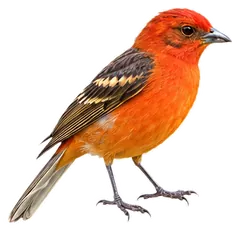 Flame-colored TanagerPiranga bidentata
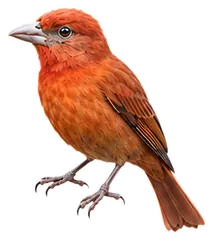 Tooth-billed TanagerPiranga lutea
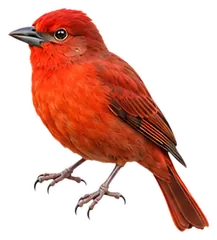 Red TanagerPiranga flava
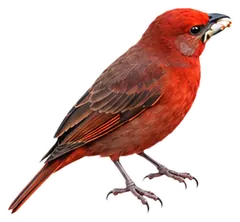 Hepatic TanagerPiranga hepatica
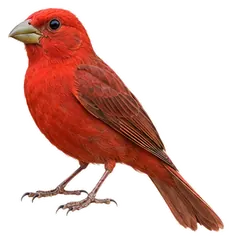 Summer TanagerPiranga rubra
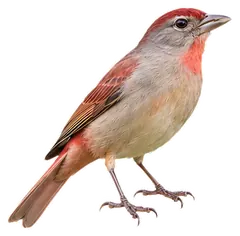 Rose-throated TanagerPiranga roseogularis
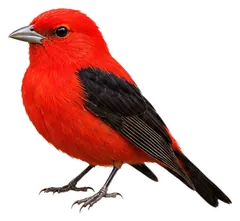 Scarlet TanagerPiranga olivacea
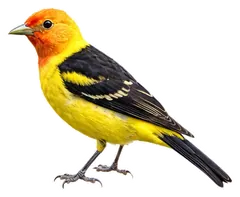 Western TanagerPiranga ludoviciana
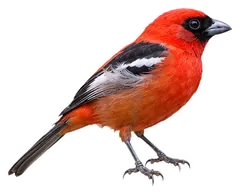 White-winged TanagerPiranga leucoptera
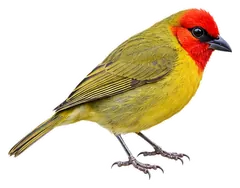 Red-headed TanagerPiranga erythrocephala
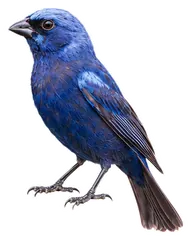
Download illustration
Free to use with credit: “Illustration: Bird Album (birdalbum.com)”. Drawn by AI from a reference photo by Greg Lasley. ↗
Heard it but can't see it? Mingji identifies birds by sound and photo, on your phone.