 Bird Album
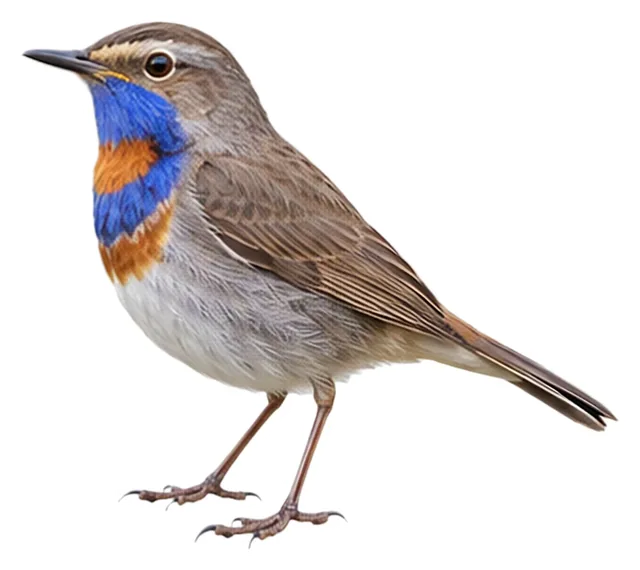
Bluethroat
Luscinia svecica (Linnaeus, 1758)
≈14 cmLength22 cmWingspan17 gWeight
The male's blue throat is usually bordered below by a narrow black band followed by a broad brick-red band, and the white supercilium is conspicuous.
Busiest months: November–January and March · Most records: India, Israel, Spain
How to identify
Field marks
- Male has a blue throat, usually bordered below by black and brick-red bands
- Conspicuous white supercilium
- Red patches on both sides of the tail base
- Plain rufous upperparts
Male, female and young
Female has a pale throat and breast, usually with just a single black crescent; newly fledged juvenile has dark brown spots on the upperparts.
Voice
A typical “chack” call; male's song is varied and includes frequent mimicry.
Where and when it's recorded

Bluethroat has been recorded at 1,453 of the 8,276 birding hotspots we track, in 90 countries and regions.
Records by month Northern Hemisphere
Where it's recorded most
- International Birding and Research Center Eilat (IBRCE)Israel3,299 records
- Bharatpur – Keoladeo Ghana NPIndia2,671 records
- GambellUnited States1,837 records
More places
- Aras Kuş Halkalama İstasyonuTürkiye1,517 records
- Lezíria Grande de Vila Franca de Xira – área geralPortugal1,511 records
- Private estate near Green MubazzarahUnited Arab Emirates1,496 records
- Gazelle ValleyIsrael1,100 records
- Okhla Bird SanctuaryIndia1,098 records
- Baruipur MarshesIndia1,001 records
- Sultanpur National ParkIndia919 records
Countries and regions with the most records
eBird records via GBIF up to 2024-12-31. A record means someone listed it; more records partly mean more birders, not more birds.
About
The bluethroat (Luscinia svecica) is a small passerine bird in the Old World flycatcher family. It is a migratory insectivorous species breeding in wet birch wood or bushy swamp in Europe and across the Palearctic with a foothold in western Alaska. It nests in tussocks or low in dense bushes.
Excerpt from Wikipedia, CC BY-SA 4.0 · authors · Read more on Wikipedia
Questions
How big is the Bluethroat?
The Bluethroat is about ≈14 cm long, with a wingspan of 22 cm and weighs around 17 g.
Where does the Bluethroat live?
Its breeding range: Palearctic: widespread, also western Alaska. It is most often recorded in India, Israel and Spain.
When is the best time to see the Bluethroat?
At the hotspots we track, it is recorded most in January, March, November and December (Northern Hemisphere).
Is the Bluethroat endangered?
The IUCN Red List classifies the Bluethroat as Least Concern.
What does the Bluethroat eat?
Main food: Insects & other invertebrates.
What family is the Bluethroat in?
It belongs to the family Chats, Old World Flycatchers (Muscicapidae), order Passerines (Passeriformes).
At a glance
- Length
- ≈14 cm
- Wingspan
- 22 cm
- Weight
- 17 g
- Habitat
- Grassland
- Diet
- Insects & other invertebrates
- Lifestyle
- Varied
- Migration
- Migratory
- Conservation
- Least Concern
More measurements
- Wing
- 73 mm
- Tail
- 50 mm
- Bill
- 15 mm
- Tarsus
- 26 mm
Averages from the AVONET dataset; length from field guides where available.
Range
Palearctic: widespread, also western Alaska
Breeding range, IOC World Bird List 15.2
Subspecies · 2
- Luscinia svecica kobdensis w Mongolia and w China | non-breeding: to s, se Asia
- Luscinia svecica przevalskii c China | non-breeding: to e China
Classification
- Order
- Passerines Passeriformes
- Family
- Chats, Old World Flycatchers Muscicapidae
- Genus
- Luscinia
Other birds in the genus Luscinia
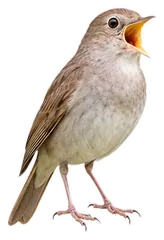 Thrush NightingaleLuscinia luscinia
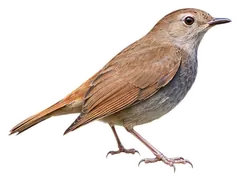 Common NightingaleLuscinia megarhynchos
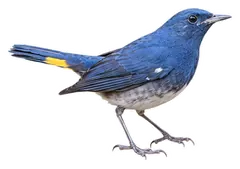 White-bellied RedstartLuscinia phaenicuroides
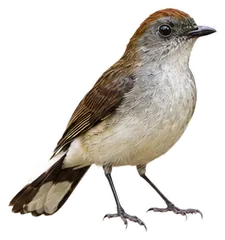 White-tailed AletheAlethe diademata
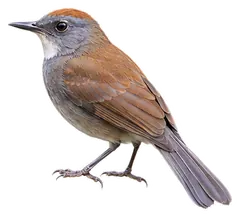 Fire-crested AletheAlethe castanea
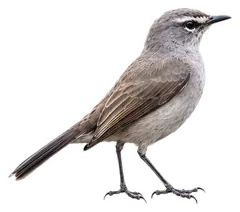 Karoo Scrub RobinTychaedon coryphoeus
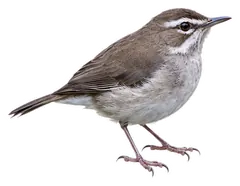 Brown Scrub RobinTychaedon signata
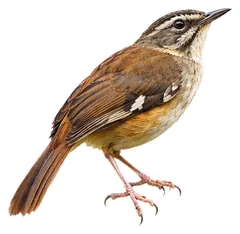 Forest Scrub RobinTychaedon leucosticta
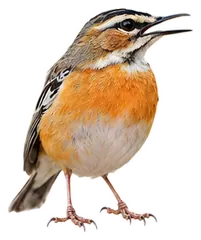 Bearded Scrub RobinTychaedon quadrivirgata
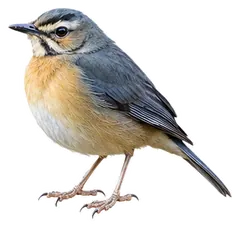 Miombo Scrub RobinTychaedon barbata
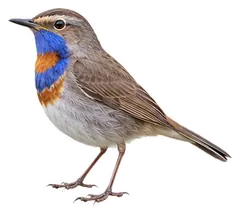
Download illustration
Free to use with credit: “Illustration: Bird Album (birdalbum.com)”. Drawn by AI from a reference photo by Charles J. Sharp. ↗

Heard it but can't see it? Mingji identifies birds by sound and photo, on your phone.