 Bird Album
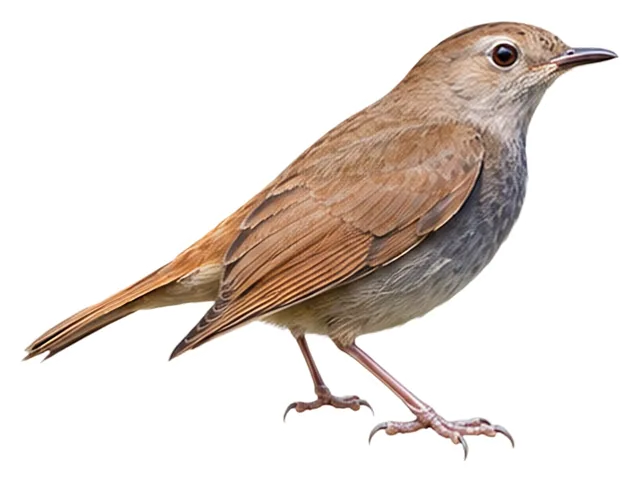
Common Nightingale
Luscinia megarhynchos Brehm, CL, 1831
≈16 cmLength24 cmWingspan20 gWeight
It has plain brown upperparts and a reddish tail, and is known for its loud, melodious song, which it also gives at night.
Busiest months: April–May · Most records: Spain, Portugal, Germany
How to identify
Field marks
- Plain brown upperparts, with only the tail reddish
- Pale yellowish-brown to white underparts
Male, female and young
Sexes similar, but female does not sing.
Voice
Song is loud, with an extremely wide pitch range, and is also given at night.
Where and when it's recorded

Common Nightingale has been recorded at 1,052 of the 8,171 birding hotspots we track, in 82 countries and regions.
Records by month Northern Hemisphere
Where it's recorded most
- Jerusalem Bird ObservatoryIsrael1,394 records
- Desembocadura del Guadalhorce – ÁreaSpain1,269 records
- South Downs NP – Pulborough Brooks RSPB ReserveUnited Kingdom979 records
More places
- Zamora – Río DueroSpain914 records
- Mushrif Palace GardensUnited Arab Emirates807 records
- Sureste PNat – Soto de las JuntasSpain804 records
- WagbachniederungGermany779 records
- International Birding and Research Center Eilat (IBRCE)Israel773 records
- Minsmere RSPB ReserveUnited Kingdom735 records
- Sureste PNat – Miralrío, Velilla de San AntonioSpain715 records
Countries and regions with the most records
eBird records via GBIF up to 2024-12-31. A record means someone listed it; more records partly mean more birders, not more birds.
About
The common nightingale, rufous nightingale or simply nightingale (Luscinia megarhynchos), is a small passerine bird which is known for its powerful and beautiful song, often described as one of the most beautiful sounds in nature. An Old World flycatcher, it belongs to a group of more terrestrial species, often called chats. Its range partly overlaps with that of the more northerly thrush nightingale (Luscinia luscinia), a closely related species with which hybrids have occurred.
Excerpt from Wikipedia, CC BY-SA 4.0 · authors · Read more on Wikipedia
Questions
How big is the Common Nightingale?
The Common Nightingale is about ≈16 cm long, with a wingspan of 24 cm and weighs around 20 g.
Where does the Common Nightingale live?
Its breeding range: Palearctic: central, western. It is most often recorded in Spain, Portugal and Germany.
When is the best time to see the Common Nightingale?
At the hotspots we track, it is recorded most in April and May (Northern Hemisphere).
Is the Common Nightingale endangered?
The IUCN Red List classifies the Common Nightingale as Least Concern.
What does the Common Nightingale eat?
Main food: Insects & other invertebrates.
What family is the Common Nightingale in?
It belongs to the family Chats, Old World Flycatchers (Muscicapidae), order Passerines (Passeriformes).
At a glance
- Length
- ≈16 cm
- Wingspan
- 24 cm
- Weight
- 20 g
- Habitat
- Woodland
- Diet
- Insects & other invertebrates
- Lifestyle
- Varied
- Migration
- Migratory
- Conservation
- Least Concern
More measurements
- Wing
- 84 mm
- Tail
- 68 mm
- Bill
- 16 mm
- Tarsus
- 26 mm
Averages from the AVONET dataset; length from field guides where available.
Range
Palearctic: central, western
Breeding range, IOC World Bird List 15.2
Subspecies · 1
- Luscinia megarhynchos golzii e Iran to Kazakhstan, sw Mongolia and nw China | non-breeding: to e Africa
Classification
- Order
- Passerines Passeriformes
- Family
- Chats, Old World Flycatchers Muscicapidae
- Genus
- Luscinia
Other birds in the genus Luscinia
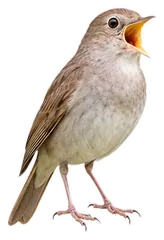 Thrush NightingaleLuscinia luscinia
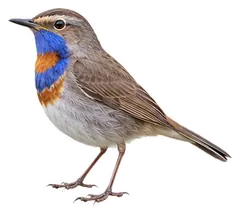 BluethroatLuscinia svecica
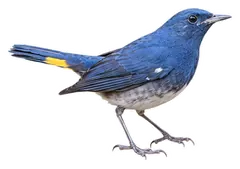 White-bellied RedstartLuscinia phaenicuroides
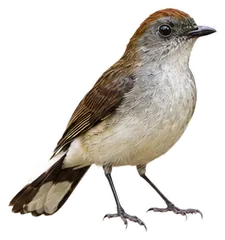 White-tailed AletheAlethe diademata
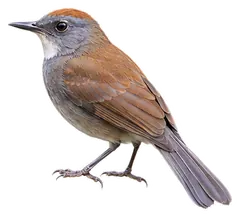 Fire-crested AletheAlethe castanea
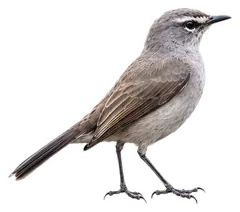 Karoo Scrub RobinTychaedon coryphoeus
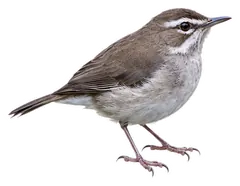 Brown Scrub RobinTychaedon signata
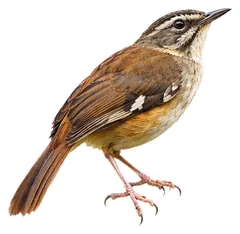 Forest Scrub RobinTychaedon leucosticta
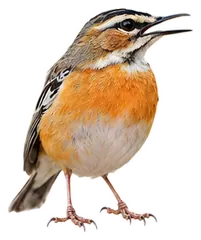 Bearded Scrub RobinTychaedon quadrivirgata
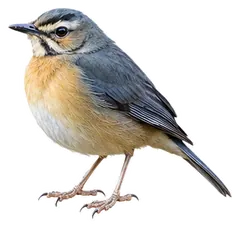 Miombo Scrub RobinTychaedon barbata
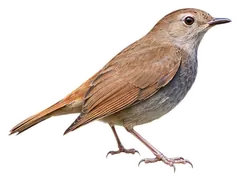
Download illustration
Free to use with credit: “Illustration: Bird Album (birdalbum.com)”. Drawn by AI from a reference photo by Francisco Clamote. ↗
Heard it but can't see it? Mingji identifies birds by sound and photo, on your phone.