 Bird Album
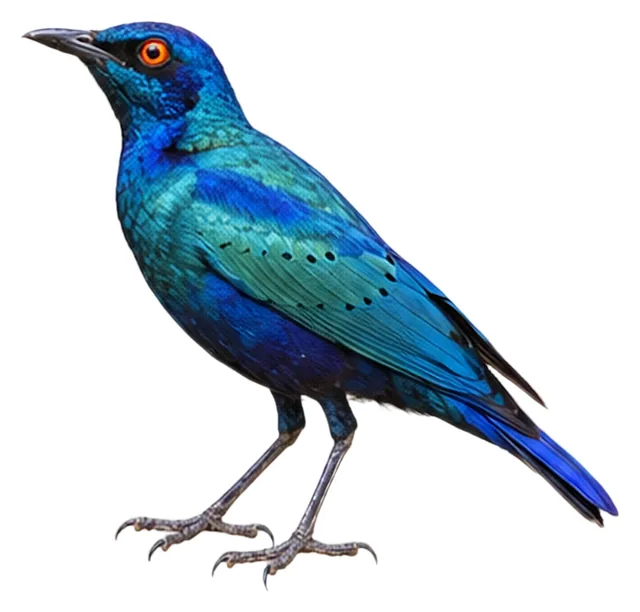
Bronze-tailed Starling
Lamprotornis chalcurus Nordmann, 1835
63 gWeight
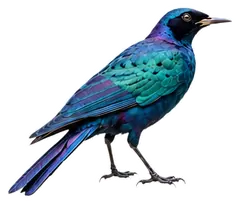
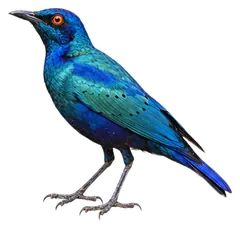
The bronze-tailed starling or bronze-tailed glossy-starling (Lamprotornis chalcurus) is a species of starling in the family Sturnidae.
Busiest months: November · Most records: Gambia, Senegal, Ghana
Where and when it's recorded

Bronze-tailed Starling has been recorded at 66 of the 8,171 birding hotspots we track, in 10 countries and regions.
Records by month Northern Hemisphere
Where it's recorded most
- Campement de WassadouSenegal117 records
- Senegambia Hotel Gardens and BeachGambia64 records
- Kartong WetlandGambia43 records
More places
- Tono Dam & vicinityGhana43 records
- Tendaba – Tendaba CampGambia37 records
- Kotu CreekGambia32 records
- TendabaGambia31 records
- Ziwa Rhino SanctuaryUganda30 records
- Ngaoundaba RanchCameroon29 records
- Benoue NPCameroon29 records
Countries and regions with the most records
eBird records via GBIF up to 2024-12-31. A record means someone listed it; more records partly mean more birders, not more birds.
About
The bronze-tailed starling or bronze-tailed glossy-starling (Lamprotornis chalcurus) is a species of starling in the family Sturnidae. It is native to the Sudan and adjacent areas.
Excerpt from Wikipedia, CC BY-SA 4.0 · authors · Read more on Wikipedia
Questions
How big is the Bronze-tailed Starling?
The Bronze-tailed Starling weighs around 63 g.
Where does the Bronze-tailed Starling live?
Its breeding range: Africa: western, central, east-central. It is most often recorded in Gambia, Senegal and Ghana.
When is the best time to see the Bronze-tailed Starling?
At the hotspots we track, it is recorded most in November (Northern Hemisphere).
Is the Bronze-tailed Starling endangered?
The IUCN Red List classifies the Bronze-tailed Starling as Least Concern.
What does the Bronze-tailed Starling eat?
Main food: Omnivore.
What family is the Bronze-tailed Starling in?
It belongs to the family Starlings, Rhabdornises (Sturnidae), order Passerines (Passeriformes).
At a glance
- Weight
- 63 g
- Habitat
- Shrubland
- Diet
- Omnivore
- Lifestyle
- Varied
- Migration
- Resident (barely migrates)
- Conservation
- Least Concern
More measurements
- Wing
- 136 mm
- Tail
- 81 mm
- Bill
- 26 mm
- Tarsus
- 32 mm
Averages from the AVONET dataset; length from field guides where available.
Range
Africa: western, central, east-central
Breeding range, IOC World Bird List 15.2
Classification
- Order
- Passerines Passeriformes
- Family
- Starlings, Rhabdornises Sturnidae
- Genus
- Lamprotornis
Other birds in the genus Lamprotornis
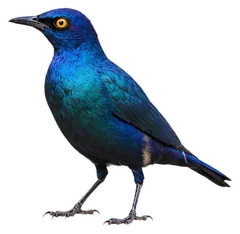 Cape StarlingLamprotornis nitens
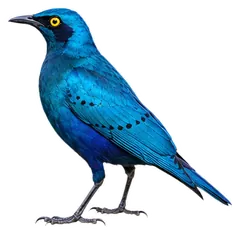 Greater Blue-eared StarlingLamprotornis chalybaeus
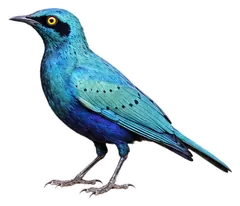 Lesser Blue-eared StarlingLamprotornis chloropterus
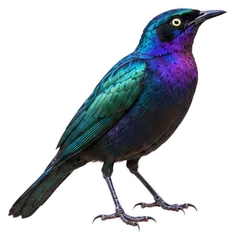 Splendid StarlingLamprotornis splendidus
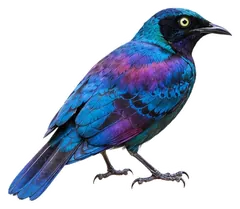 Principe StarlingLamprotornis ornatus
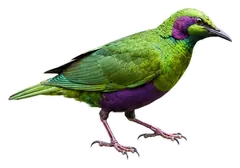 Emerald StarlingLamprotornis iris
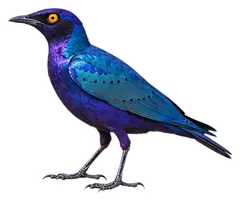 Purple StarlingLamprotornis purpureus
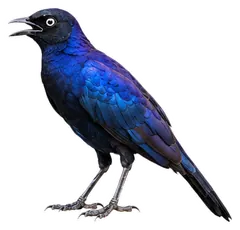 Rüppell's StarlingLamprotornis purpuroptera
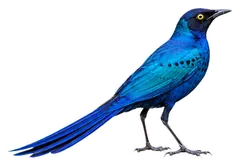 Long-tailed Glossy StarlingLamprotornis caudatus
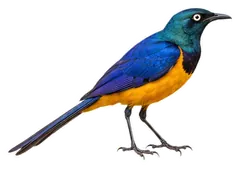 Golden-breasted StarlingLamprotornis regius
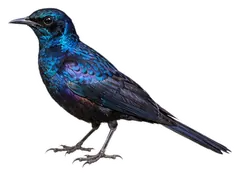 Meves's StarlingLamprotornis mevesii
 Burchell's StarlingLamprotornis australis
Download illustration
Free to use with credit: “Illustration: Bird Album (birdalbum.com)”. Drawn by AI from a reference photo by G. VIGO. ↗
Heard it but can't see it? Mingji identifies birds by sound and photo, on your phone.
In other languages
- EnglishBronze-tailed Starling
- 简体中文铜绿辉椋鸟
- 繁體中文短尾輝椋鳥
- 日本語ブロンズテリムク
- DeutschErzglanzstar
- FrançaisChoucador à queue violette
- EspañolEstornino colibronceado
- Portuguêsestorninho-de-rabo-violeta
- ItalianoStorno splendente codabronzo
- NederlandsBronsstaartglansspreeuw
- РусскийБронзовохвостый спрео
- Svenskabronsstjärtad glansstare
- DanskBronzehalet Glansstær
- Polskibłyszczak spiżowosterny