 Bird Album
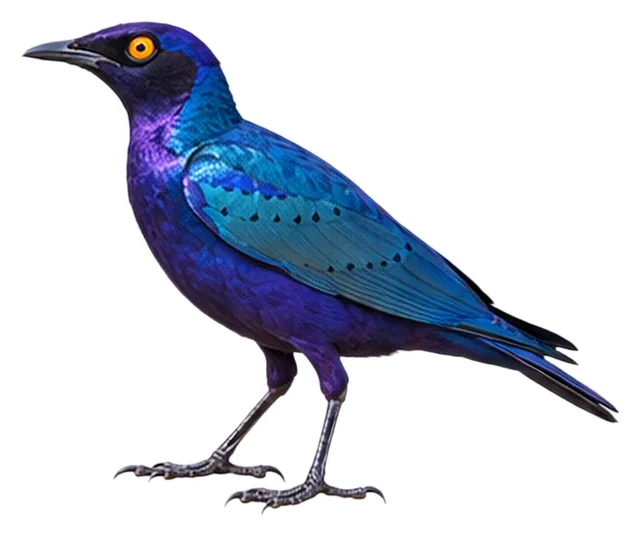
Purple Starling
Lamprotornis purpureus (Müller, PLS, 1776)
≈27 cmLength113 gWeight
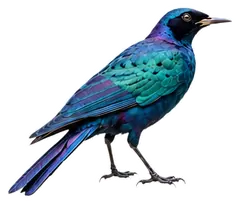
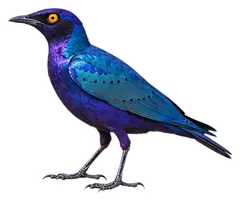
The adult is stocky, with a metallic purple head and body and bright green wings.
Busiest months: January–March and November · Most records: Gambia, Ghana, Senegal
How to identify
Field marks
- Adult’s head and body metallic purple
- Adult’s wings bright green
- Adult’s eyes yellow
- Short tail
Male, female and young
Sexes similar; juveniles are much duller, with gray underparts and a brown iris.
Voice
Starling-like shrieks and chatter; very noisy in flocks.
Where and when it's recorded
Busiest months: January–March and November · Most records: Gambia, Ghana, Senegal

Purple Starling has been recorded at 112 of the 8,276 birding hotspots we track, in 17 countries and regions.
Records by month Northern Hemisphere
Where it's recorded most
- Campement de WassadouSenegal387 records
- Amurum Forest ReserveNigeria239 records
- Sakumono LagoonGhana160 records
More places
- Shai Hills Resource ReserveGhana146 records
- Mole NPGhana110 records
- Tono Dam & vicinityGhana102 records
- Tendaba – Tendaba CampGambia100 records
- Mole NP – Samole Loop & waterholeGhana97 records
- Parc Urbain Bangr-WeoogoBurkina Faso90 records
- Senegambia Hotel Gardens and BeachGambia90 records
Countries and regions with the most records
eBird records via GBIF up to 2024-12-31. A record means someone listed it; more records partly mean more birders, not more birds.
About
The purple starling (Lamprotornis purpureus), also known as the purple glossy starling, is a member of the starling family of birds.
Excerpt from Wikipedia, CC BY-SA 4.0 · authors · Read more on Wikipedia
Questions
How big is the Purple Starling?
The Purple Starling is about ≈27 cm long and weighs around 113 g.
Where does the Purple Starling live?
Its breeding range: Africa: western, central. It is most often recorded in Gambia, Ghana and Senegal.
When is the best time to see the Purple Starling?
At the hotspots we track, it is recorded most in January, February, March and November (Northern Hemisphere).
Is the Purple Starling endangered?
The IUCN Red List classifies the Purple Starling as Least Concern.
What does the Purple Starling eat?
Main food: Omnivore.
What family is the Purple Starling in?
It belongs to the family Starlings, Rhabdornises (Sturnidae), order Passerines (Passeriformes).
At a glance
- Length
- ≈27 cm
- Weight
- 113 g
- Habitat
- Shrubland
- Diet
- Omnivore
- Lifestyle
- Perches in trees
- Migration
- Partial migrant
- Conservation
- Least Concern
More measurements
- Wing
- 148 mm
- Tail
- 75 mm
- Bill
- 31 mm
- Tarsus
- 34 mm
Averages from the AVONET dataset; length from field guides where available.
Range
Africa: western, central
Breeding range, IOC World Bird List 15.2
Classification
- Order
- Passerines Passeriformes
- Family
- Starlings, Rhabdornises Sturnidae
- Genus
- Lamprotornis
Other birds in the genus Lamprotornis
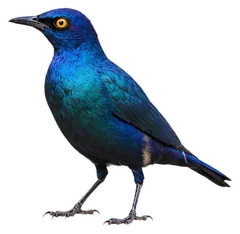 Cape StarlingLamprotornis nitens
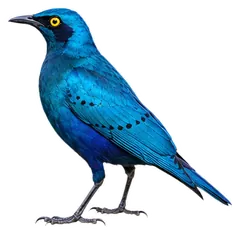 Greater Blue-eared StarlingLamprotornis chalybaeus
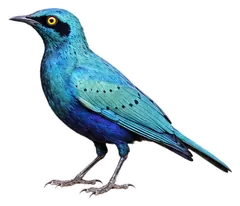 Lesser Blue-eared StarlingLamprotornis chloropterus
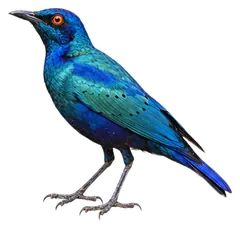 Bronze-tailed StarlingLamprotornis chalcurus
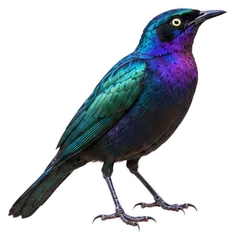 Splendid StarlingLamprotornis splendidus
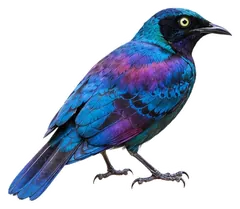 Principe StarlingLamprotornis ornatus
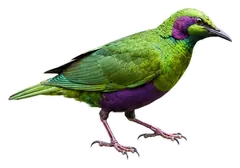 Emerald StarlingLamprotornis iris
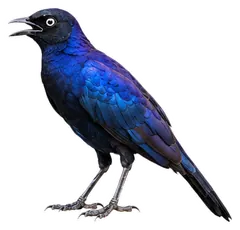 Rüppell's StarlingLamprotornis purpuroptera
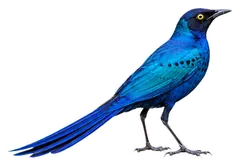 Long-tailed Glossy StarlingLamprotornis caudatus
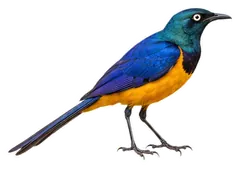 Golden-breasted StarlingLamprotornis regius
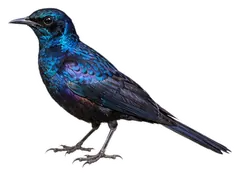 Meves's StarlingLamprotornis mevesii
 Burchell's StarlingLamprotornis australis
Download illustration
Free to use with credit: “Illustration: Bird Album (birdalbum.com)”. Drawn by AI from a reference photo by Shamgar Brook. ↗
Heard it but can't see it? Mingji identifies birds by sound and photo, on your phone.
In other languages
- EnglishPurple Starling
- 简体中文紫辉椋鸟
- 繁體中文紫色輝椋鳥
- 日本語ムラサキテリムクドリ
- DeutschPurpurglanzstar
- FrançaisChoucador pourpré
- EspañolEstornino purpúreo
- Portuguêsestorninho-metálico-de-cauda-curta
- ItalianoStorno splendente purpureo
- NederlandsPurperglansspreeuw
- РусскийПурпурный спрео
- Svenskapurpurglansstare
- DanskPurpur glansstær
- Polskibłyszczak purpurowy