 Bird Album
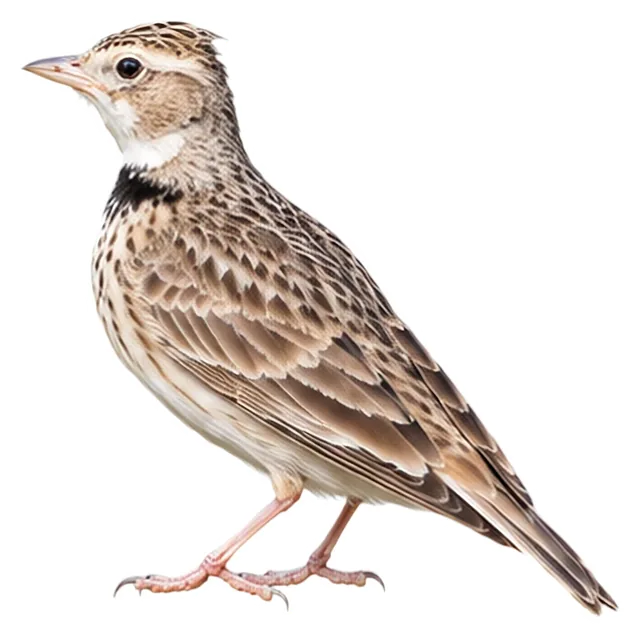
Calandra Lark
Melanocorypha calandra (Linnaeus, 1766)
≈21 cmLength62 gWeight
It has large black patches on the sides of the breast, with dark underwings and white tail edges visible in flight.
Busiest months: April–May · Most records: Spain, Portugal, Türkiye
How to identify
Field marks
- Large black patches on the sides of the breast
- White supercilium
- Short, broad wings with dark underwings
- Short tail with white edges
Voice
Song resembles that of Eurasian Skylark, but with a slower rhythm.
Where and when it's recorded

Calandra Lark has been recorded at 236 of the 8,171 birding hotspots we track, in 40 countries and regions.
Records by month Northern Hemisphere
Where it's recorded most
- Azud de RiolobosSpain941 records
- El Oso – Laguna y entornoSpain907 records
- Besh Barmag bottleneckAzerbaijan827 records
More places
- Laguna de Pitillas RN – AreaSpain816 records
- ZPE Castro Verde – Vale GonçalinhoPortugal651 records
- Laguna de Gallocanta RN – ÁreaSpain647 records
- La Janda – ÁreaSpain607 records
- Lagunas de Villafáfila RNat – ÁreaSpain492 records
- La Breña y Marismas de Barbate PNat – El CañilloSpain464 records
- ZPE Castro Verde – área geralPortugal348 records
Countries and regions with the most records
eBird records via GBIF up to 2024-12-31. A record means someone listed it; more records partly mean more birders, not more birds.
About
The calandra lark (Melanocorypha calandra) or European calandra-lark breeds in warm temperate countries around the Mediterranean and eastwards through Turkey into northern Iran and southern Russia. It is replaced further east by its relative, the bimaculated lark.
Excerpt from Wikipedia, CC BY-SA 4.0 · authors · Read more on Wikipedia
Questions
How big is the Calandra Lark?
The Calandra Lark is about ≈21 cm long and weighs around 62 g.
Where does the Calandra Lark live?
Its breeding range: Palearctic: southwestern, also northern Africa. It is most often recorded in Spain, Portugal and Türkiye.
When is the best time to see the Calandra Lark?
At the hotspots we track, it is recorded most in April and May (Northern Hemisphere).
Is the Calandra Lark endangered?
The IUCN Red List classifies the Calandra Lark as Least Concern.
What does the Calandra Lark eat?
Main food: Omnivore.
What family is the Calandra Lark in?
It belongs to the family Larks (Alaudidae), order Passerines (Passeriformes).
At a glance
- Length
- ≈21 cm
- Weight
- 62 g
- Habitat
- Grassland
- Diet
- Omnivore
- Lifestyle
- Active on the ground
- Migration
- Partial migrant
- Conservation
- Least Concern
More measurements
- Wing
- 124 mm
- Tail
- 62 mm
- Bill
- 19 mm
- Tarsus
- 27 mm
Averages from the AVONET dataset; length from field guides where available.
Range
Palearctic: southwestern, also northern Africa
Breeding range, IOC World Bird List 15.2
Classification
- Order
- Passerines Passeriformes
- Family
- Larks Alaudidae
- Genus
- Melanocorypha
Other birds in the genus Melanocorypha
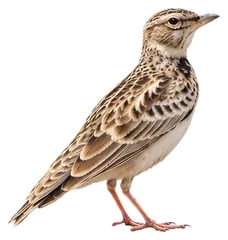 Bimaculated LarkMelanocorypha bimaculata
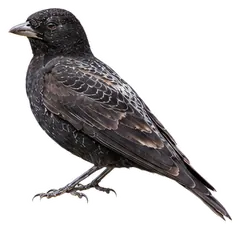 Black LarkMelanocorypha yeltoniensis
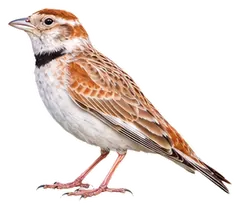 Mongolian LarkMelanocorypha mongolica
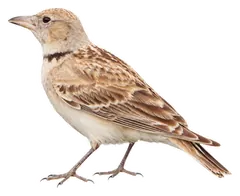 Tibetan LarkMelanocorypha maxima
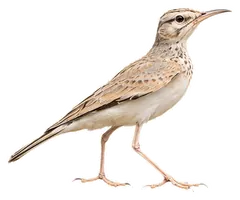 Greater Hoopoe-LarkAlaemon alaudipes
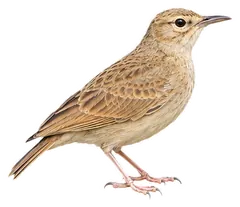 Lesser Hoopoe-LarkAlaemon hamertoni
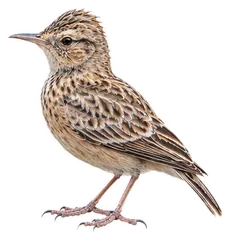 Beesley's LarkChersomanes beesleyi
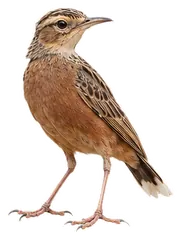 Spike-heeled LarkChersomanes albofasciata
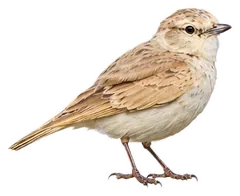 Gray's LarkAmmomanopsis grayi
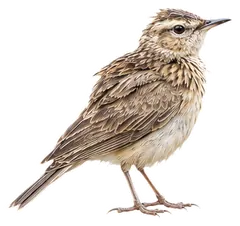 Short-clawed LarkCerthilauda chuana
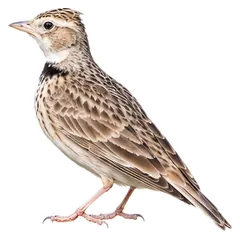
Download illustration
Free to use with credit: “Illustration: Bird Album (birdalbum.com)”. Drawn by AI from a reference photo by Giuseppe Citino. ↗
Heard it but can't see it? Mingji identifies birds by sound and photo, on your phone.