 Bird Album
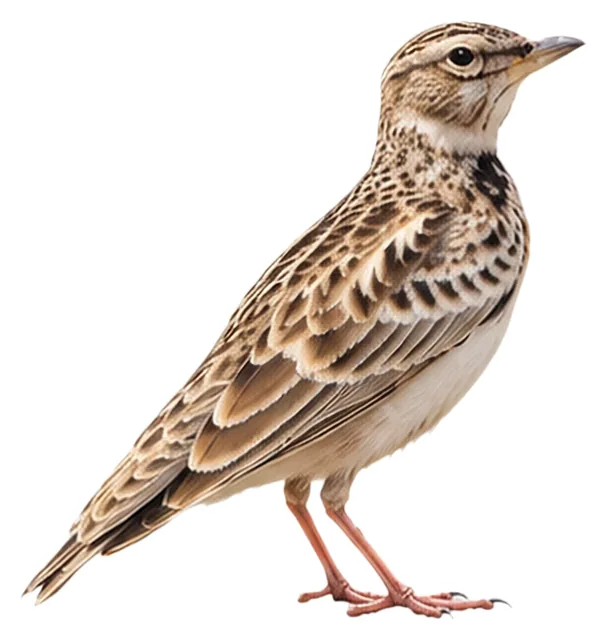
Bimaculated Lark
Melanocorypha bimaculata (Ménétriés, 1832)
≈19 cmLength54 gWeight
It has two small black patches on the sides of the breast and a short tail with white tips but no white edges.
Busiest months: May · Most records: India, Kazakhstan, United Arab Emirates
How to identify
Field marks
- Small black patch on each side of the breast
- White supercilium
- Short, broad wings with a gray-brown underwing
- Short tail with white tips but no white edges
Voice
Song resembles that of Calandra Lark, but sounds harsher.
Where and when it's recorded
Busiest months: May · Most records: India, Kazakhstan, United Arab Emirates

Bimaculated Lark has been recorded at 77 of the 8,276 birding hotspots we track, in 26 countries and regions.
Records by month Northern Hemisphere
Where it's recorded most
- Taukum DesertKazakhstan82 records
- Tal Chhapar SanctuaryIndia81 records
- Wamm FarmsUnited Arab Emirates78 records
More places
- KanshengelKazakhstan48 records
- Nalsarovar Bird SanctuaryIndia38 records
- Mandria – CoastCyprus36 records
- Nalsarovar OutskirtsIndia33 records
- Hatzuk Beach TLVIsrael28 records
- Milleyha ve sahil şeridiTürkiye27 records
- Aras Kuş Halkalama İstasyonuTürkiye27 records
Countries and regions with the most records
eBird records via GBIF up to 2024-12-31. A record means someone listed it; more records partly mean more birders, not more birds.
About
The bimaculated lark (Melanocorypha bimaculata) breeds in warm temperate countries eastwards from Turkey into Central Asia. It is the eastern counterpart of its relative, the calandra lark.
Excerpt from Wikipedia, CC BY-SA 4.0 · authors · Read more on Wikipedia
Questions
How big is the Bimaculated Lark?
The Bimaculated Lark is about ≈19 cm long and weighs around 54 g.
Where does the Bimaculated Lark live?
Its breeding range: Palearctic: west-central Turkey to southern Kazakhstan, Kyrgyzstan, northeastern Iran and northern Afghanistan; also northern Israel, Lebanon, western Syria and northern Iraq. It is most often recorded in India, Kazakhstan and United Arab Emirates.
When is the best time to see the Bimaculated Lark?
At the hotspots we track, it is recorded most in May (Northern Hemisphere).
Is the Bimaculated Lark endangered?
The IUCN Red List classifies the Bimaculated Lark as Least Concern.
What does the Bimaculated Lark eat?
Main food: Omnivore.
What family is the Bimaculated Lark in?
It belongs to the family Larks (Alaudidae), order Passerines (Passeriformes).
At a glance
- Length
- ≈19 cm
- Weight
- 54 g
- Habitat
- Grassland
- Diet
- Omnivore
- Lifestyle
- Active on the ground
- Migration
- Migratory
- Conservation
- Least Concern
More measurements
- Wing
- 117 mm
- Tail
- 53 mm
- Bill
- 19 mm
- Tarsus
- 24 mm
Averages from the AVONET dataset; length from field guides where available.
Range
Palearctic: west-central Turkey to southern Kazakhstan, Kyrgyzstan, northeastern Iran and northern Afghanistan; also northern Israel, Lebanon, western Syria and northern Iraq
Breeding range, IOC World Bird List 15.2
Classification
- Order
- Passerines Passeriformes
- Family
- Larks Alaudidae
- Genus
- Melanocorypha
Other birds in the genus Melanocorypha
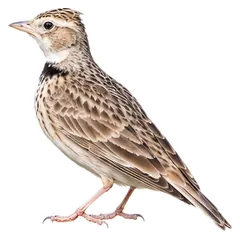 Calandra LarkMelanocorypha calandra
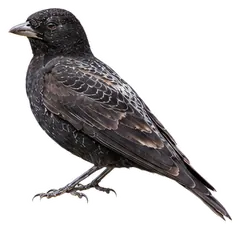 Black LarkMelanocorypha yeltoniensis
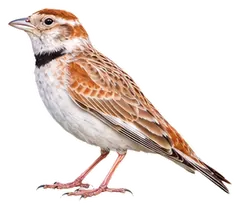 Mongolian LarkMelanocorypha mongolica
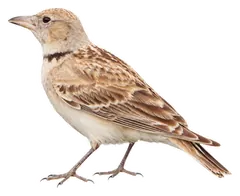 Tibetan LarkMelanocorypha maxima
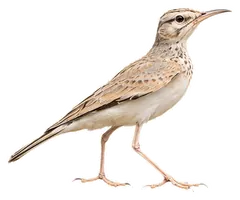 Greater Hoopoe-LarkAlaemon alaudipes
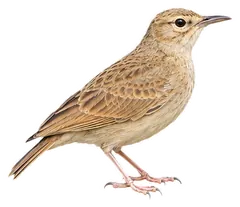 Lesser Hoopoe-LarkAlaemon hamertoni
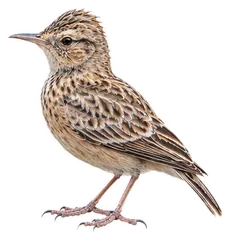 Beesley's LarkChersomanes beesleyi
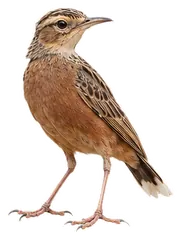 Spike-heeled LarkChersomanes albofasciata
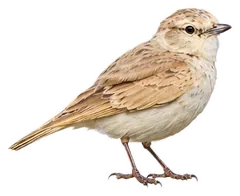 Gray's LarkAmmomanopsis grayi
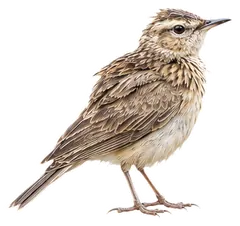 Short-clawed LarkCerthilauda chuana
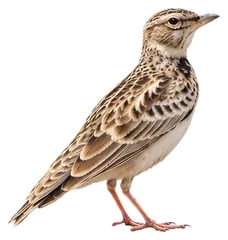
Download illustration
Free to use with credit: “Illustration: Bird Album (birdalbum.com)”. Drawn by AI from a reference photo by SGSHANKAR. ↗
Heard it but can't see it? Mingji identifies birds by sound and photo, on your phone.
In other languages
- EnglishBimaculated Lark
- 简体中文双斑百灵
- 繁體中文二斑百靈
- 日本語クビワコウテンシ
- 한국어큰부리종다리
- DeutschBergkalanderlerche
- FrançaisAlouette monticole
- EspañolCalandria bimaculada
- Portuguêscalhandra-bastarda
- ItalianoCalandra asiatica
- NederlandsBergkalanderleeuwerik
- РусскийДвупятнистый жаворонок
- Svenskaasiatisk kalanderlärka
- DanskTurkmensk Kalenderlærke
- Polskikalandra dwuplamista