 Bird Album
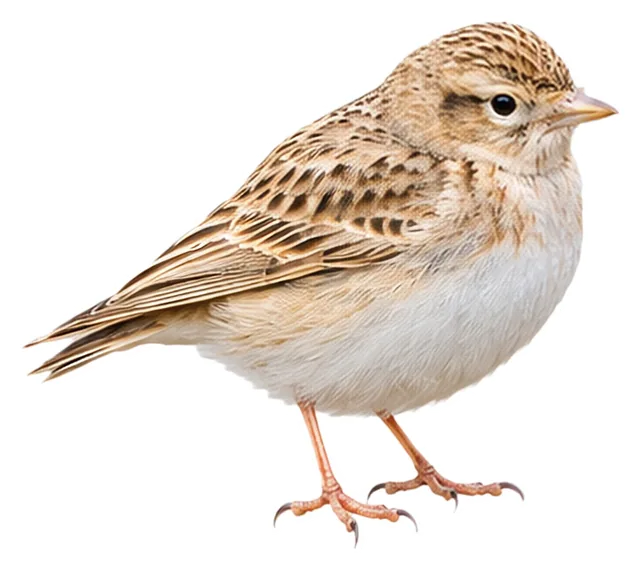
Greater Short-toed Lark
Calandrella brachydactyla (Leisler, 1814)
≈15 cmLength21 gWeight
It is a pale small lark with a single dark patch on each side of the neck.
Busiest months: April · Most records: Spain, Portugal, India
Looks like Mongolian Short-toed Lark
How to identify
Field marks
- Gray-brown upperparts with dark streaks
- A single dark patch on each side of neck
- Pale supercilium
- Strong, sharp pink bill with a gray culmen
Male, female and young
Sexes similar.
Voice
Song varies from dry chirping to more varied melodies with mimicry.
Similar species
Where and when it's recorded

Greater Short-toed Lark has been recorded at 512 of the 8,171 birding hotspots we track, in 73 countries and regions.
Records by month Northern Hemisphere
Where it's recorded most
- Lezíria Grande de Vila Franca de Xira – área geralPortugal986 records
- La Breña y Marismas de Barbate PNat – El CañilloSpain671 records
- El Estrecho PNat – Los LancesSpain630 records
More places
- Tal Chhapar SanctuaryIndia554 records
- Wamm FarmsUnited Arab Emirates471 records
- Mandria – CoastCyprus360 records
- International Birding and Research Center Eilat (IBRCE)Israel301 records
- Nalsarovar OutskirtsIndia294 records
- RivaTürkiye284 records
- Ria de Aveiro – Canal de Mira – troço Areão-VagueiraPortugal268 records
Countries and regions with the most records
eBird records via GBIF up to 2024-12-31. A record means someone listed it; more records partly mean more birders, not more birds.
About
The greater short-toed lark (Calandrella brachydactyla) is a small passerine bird. The current scientific name is from Ancient Greek. The genus name, Calandrella, is a diminutive of kalandros, the calandra lark, and brachydactila is from brakhus, "short", and daktulos, "toe".
Excerpt from Wikipedia, CC BY-SA 4.0 · authors · Read more on Wikipedia
Questions
How big is the Greater Short-toed Lark?
The Greater Short-toed Lark is about ≈15 cm long and weighs around 21 g.
Where does the Greater Short-toed Lark live?
Its breeding range: Palearctic: central, southern. It is most often recorded in Spain, Portugal and India.
When is the best time to see the Greater Short-toed Lark?
At the hotspots we track, it is recorded most in April (Northern Hemisphere).
Is the Greater Short-toed Lark endangered?
The IUCN Red List classifies the Greater Short-toed Lark as Least Concern.
What does the Greater Short-toed Lark eat?
Main food: Omnivore.
What family is the Greater Short-toed Lark in?
It belongs to the family Larks (Alaudidae), order Passerines (Passeriformes).
At a glance
- Length
- ≈15 cm
- Weight
- 21 g
- Habitat
- Grassland
- Diet
- Omnivore
- Lifestyle
- Active on the ground
- Migration
- Partial migrant
- Conservation
- Least Concern
More measurements
- Wing
- 94 mm
- Tail
- 60 mm
- Bill
- 13 mm
- Tarsus
- 20 mm
Averages from the AVONET dataset; length from field guides where available.
Range
Palearctic: central, southern
Breeding range, IOC World Bird List 15.2
Subspecies · 1
- Calandrella brachydactyla orientalis c Siberia, n Mongolia and n China | non-breeding: to s Asia
Classification
- Order
- Passerines Passeriformes
- Family
- Larks Alaudidae
- Genus
- Calandrella
Other birds in the genus Calandrella
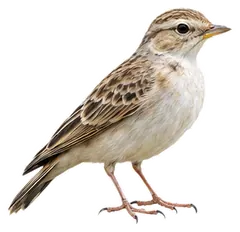 Hume's Short-toed LarkCalandrella acutirostris
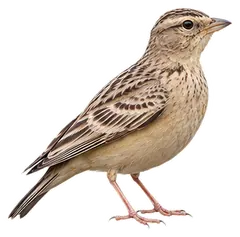 Mongolian Short-toed LarkCalandrella dukhunensis
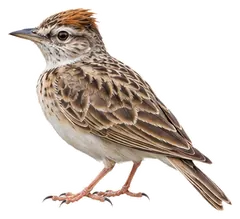 Blanford's LarkCalandrella blanfordi
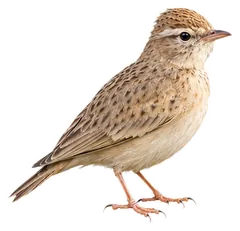 Rufous-capped LarkCalandrella eremica
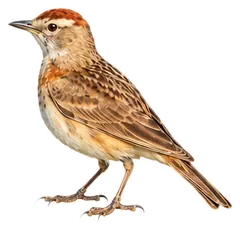 Red-capped LarkCalandrella cinerea
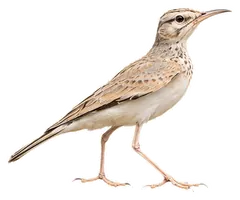 Greater Hoopoe-LarkAlaemon alaudipes
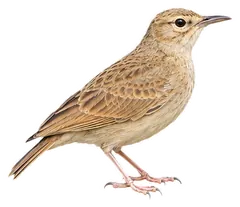 Lesser Hoopoe-LarkAlaemon hamertoni
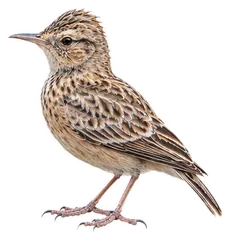 Beesley's LarkChersomanes beesleyi
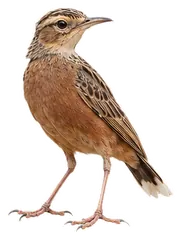 Spike-heeled LarkChersomanes albofasciata
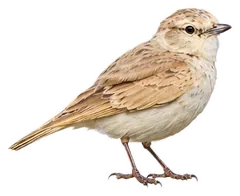 Gray's LarkAmmomanopsis grayi
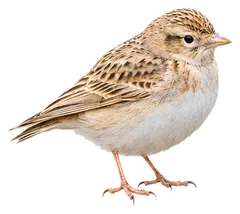
Download illustration
Free to use with credit: “Illustration: Bird Album (birdalbum.com)”. Drawn by AI from a reference photo by rvorob1899. ↗
Heard it but can't see it? Mingji identifies birds by sound and photo, on your phone.
In other languages
- EnglishGreater Short-toed Lark
- 简体中文大短趾百灵
- 繁體中文大短趾百靈
- 日本語ヒメコウテンシ
- 한국어쇠종다리
- DeutschKurzzehenlerche
- FrançaisAlouette calandrelle
- EspañolTerrera común
- Portuguêscalhandrinha-galucha
- ItalianoCalandrella
- NederlandsKortteenleeuwerik
- РусскийМалый жаворонок
- Svenskakorttålärka
- DanskKorttået Lærke
- Polskiskowrończyk krótkopalcowy