 Bird Album
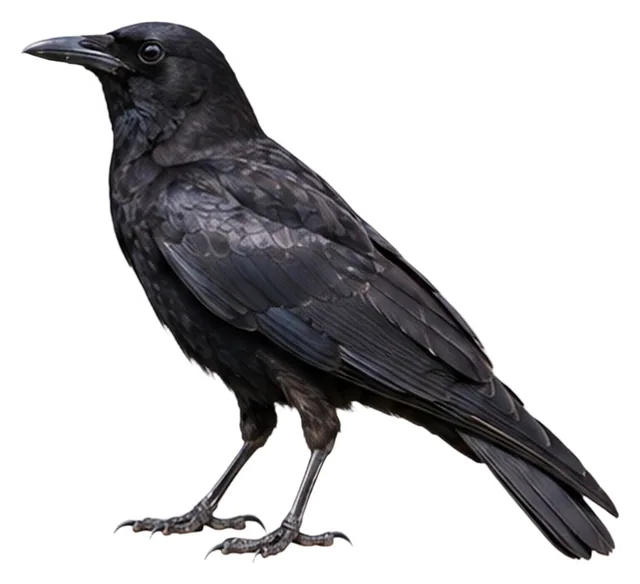
Cape Crow
Corvus capensis Lichtenstein, MHC, 1823
48–50 cmLength553 gWeight
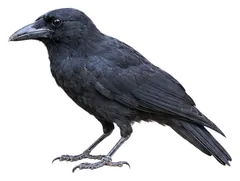
The Cape crow or black crow (Corvus capensis) is slightly larger (48–50 cm in length) than the carrion crow and is completely black with a slight gloss of purple in its feathers.
Busiest months: October–November · Most records: South Africa, Tanzania, Namibia
Where and when it's recorded
Busiest months: October–November · Most records: South Africa, Tanzania, Namibia

Cape Crow has been recorded at 169 of the 8,276 birding hotspots we track, in 12 countries and regions.
Records by month Southern Hemisphere
Where it's recorded most
- Etosha NP – Okaukuejo CampNamibia471 records
- De Hoop Nature ReserveSouth Africa360 records
- Wakkerstroom areaSouth Africa280 records
More places
- Lake Nakuru NPKenya248 records
- Serengeti NPTanzania225 records
- Sululta PlainEthiopia201 records
- Ngorongoro Conservation Area – Ngorongoro CraterTanzania167 records
- Midmar Dam – South ShoreSouth Africa158 records
- Sani Pass (ZA) – low elevationSouth Africa145 records
- Etosha NP – Halali CampNamibia116 records
Countries and regions with the most records
eBird records via GBIF up to 2024-12-31. A record means someone listed it; more records partly mean more birders, not more birds.
About
The Cape crow or black crow (Corvus capensis) is slightly larger (48–50 cm in length) than the carrion crow and is completely black with a slight gloss of purple in its feathers. It also has proportionately longer legs, wings, and tail, and has a much longer, slimmer bill that seems to be adapted for probing into the ground for invertebrates. The head feathers have a coppery-purple gloss and the throat feathers are quite long and fluffed out in some calls and displays.
Excerpt from Wikipedia, CC BY-SA 4.0 · authors · Read more on Wikipedia
Questions
How big is the Cape Crow?
The Cape Crow is about 48–50 cm long and weighs around 553 g.
Where does the Cape Crow live?
Its breeding range: Africa: northeastern, eastern, southern. It is most often recorded in South Africa, Tanzania and Namibia.
When is the best time to see the Cape Crow?
At the hotspots we track, it is recorded most in October and November (Southern Hemisphere).
Is the Cape Crow endangered?
The IUCN Red List classifies the Cape Crow as Least Concern.
What does the Cape Crow eat?
Main food: Omnivore.
What family is the Cape Crow in?
It belongs to the family Crows, Jays (Corvidae), order Passerines (Passeriformes).
At a glance
- Length
- 48–50 cm
- Weight
- 553 g
- Habitat
- Grassland
- Diet
- Omnivore
- Lifestyle
- Active on the ground
- Migration
- Partial migrant
- Conservation
- Least Concern
More measurements
- Wing
- 322 mm
- Tail
- 165 mm
- Bill
- 63 mm
- Tarsus
- 66 mm
Averages from the AVONET dataset; length from field guides where available.
Range
Africa: northeastern, eastern, southern
Breeding range, IOC World Bird List 15.2
Classification
- Order
- Passerines Passeriformes
- Family
- Crows, Jays Corvidae
- Genus
- Corvus
Other birds in the genus Corvus
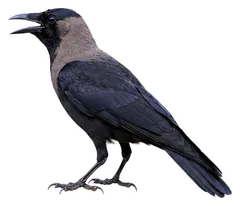 House CrowCorvus splendens
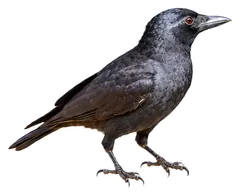 New Caledonian CrowCorvus moneduloides
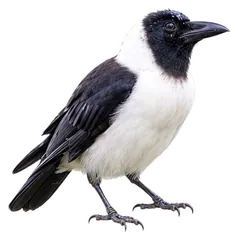 Piping CrowCorvus typicus
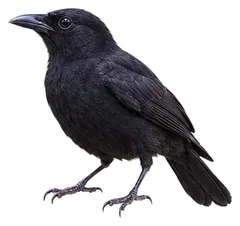 Banggai CrowCorvus unicolor
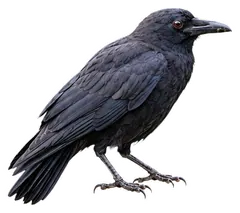 Sunda CrowCorvus enca
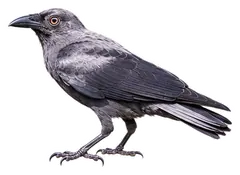 Sulawesi CrowCorvus celebensis
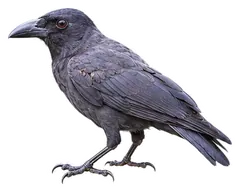 Samar CrowCorvus samarensis
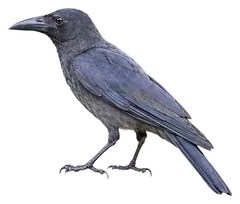 Sierra Madre CrowCorvus sierramadrensis
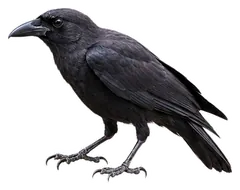 Palawan CrowCorvus pusillus
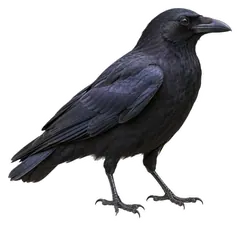 Violet CrowCorvus violaceus
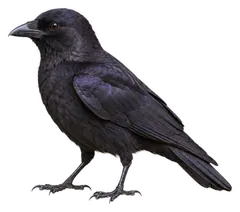 Flores CrowCorvus florensis
 Mariana CrowCorvus kubaryi
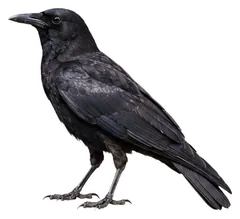
Download illustration
Free to use with credit: “Illustration: Bird Album (birdalbum.com)”. Drawn by AI from a reference photo by Dave Curtis. ↗
Heard it but can't see it? Mingji identifies birds by sound and photo, on your phone.