 Bird Album
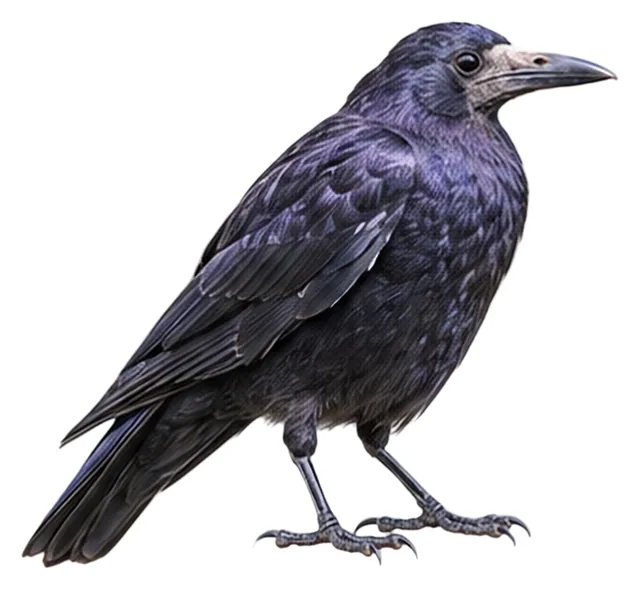
Rook
Corvus frugilegus Linnaeus, 1758
46 cmLength93 cmWingspan452 gWeight
It is black overall with a blue-purple metallic gloss and a patch of bare grayish-white skin at the base of the bill.
Busiest months: April–May and October · Most records: United Kingdom, Ireland, Sweden
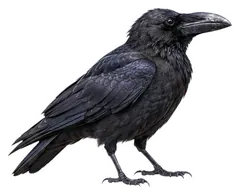
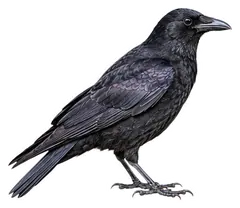
Looks like Large-billed Crow, Carrion Crow
How to identify
Field marks
- Adult has bare grayish-white skin at the base of the bill
- Jet-black overall, with a blue-purple metallic gloss to the body feathers
- Bare skin makes the bill look longer and the head more rounded and domed
- Leg feathers shaggier than those of Carrion Crow
Male, female and young
The sexes have the same shape and coloration; juveniles lack bare skin at the base of the bill and have a finer bill than juvenile Carrion Crow, with the facial feathers falling out after about half a year.
Voice
Coarse, harsh croaking calls.
Similar species
Where and when it's recorded

Rook has been recorded at 1,346 of the 8,171 birding hotspots we track, in 62 countries and regions.
Records by month Northern Hemisphere
Where it's recorded most
- WWT Slimbridge Wetland CentreUnited Kingdom3,116 records
- Amwell HMWT NRUnited Kingdom2,666 records
- South Downs NP – Pulborough Brooks RSPB ReserveUnited Kingdom2,486 records
More places
- Rutland WaterUnited Kingdom2,407 records
- Cley & Salthouse Marshes NWT NR – Cley Marshes including Hides and Visitor CentreUnited Kingdom1,776 records
- East Tilbury River and MarshesUnited Kingdom1,691 records
- Minsmere RSPB ReserveUnited Kingdom1,528 records
- Otmoor RSPB ReserveUnited Kingdom1,447 records
- Aras Kuş Halkalama İstasyonuTürkiye1,232 records
- University of York – Heslington East CampusUnited Kingdom1,049 records
Countries and regions with the most records
eBird records via GBIF up to 2024-12-31. A record means someone listed it; more records partly mean more birders, not more birds.
About
The rook (Corvus frugilegus) is a member of the family Corvidae in the passerine order of birds. It is found in the Palearctic, its range extending from Scandinavia and western Europe to eastern Siberia. Rooks nest collectively in the tops of tall trees, often close to farms or villages; the groups of nests are known as rookeries.
Excerpt from Wikipedia, CC BY-SA 4.0 · authors · Read more on Wikipedia
Questions
How big is the Rook?
The Rook is about 46 cm long, with a wingspan of 93 cm and weighs around 452 g.
Where does the Rook live?
Its breeding range: Palearctic: widespread. It is most often recorded in United Kingdom, Ireland and Sweden.
When is the best time to see the Rook?
At the hotspots we track, it is recorded most in April, May and October (Northern Hemisphere).
Is the Rook endangered?
The IUCN Red List classifies the Rook as Least Concern.
What does the Rook eat?
Main food: Omnivore.
What family is the Rook in?
It belongs to the family Crows, Jays (Corvidae), order Passerines (Passeriformes).
At a glance
- Length
- 46 cm
- Wingspan
- 93 cm
- Weight
- 452 g
- Habitat
- Grassland
- Diet
- Omnivore
- Lifestyle
- Active on the ground
- Migration
- Resident (barely migrates)
- Conservation
- Least Concern
More measurements
- Wing
- 312 mm
- Tail
- 167 mm
- Bill
- 60 mm
- Tarsus
- 56 mm
Averages from the AVONET dataset; length from field guides where available.
Range
Palearctic: widespread
Breeding range, IOC World Bird List 15.2
Classification
- Order
- Passerines Passeriformes
- Family
- Crows, Jays Corvidae
- Genus
- Corvus
Other birds in the genus Corvus
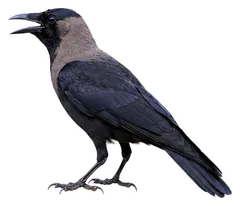 House CrowCorvus splendens
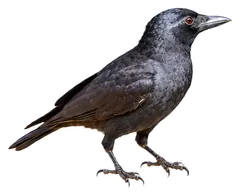 New Caledonian CrowCorvus moneduloides
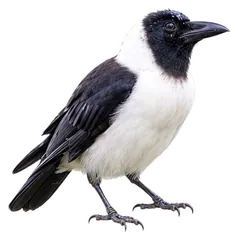 Piping CrowCorvus typicus
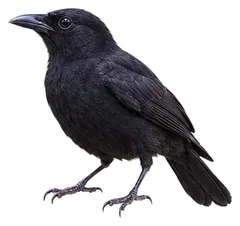 Banggai CrowCorvus unicolor
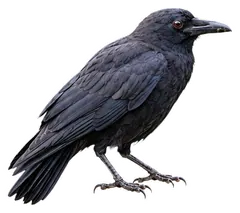 Sunda CrowCorvus enca
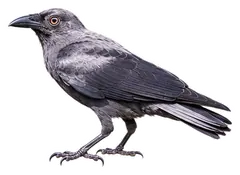 Sulawesi CrowCorvus celebensis
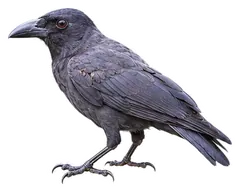 Samar CrowCorvus samarensis
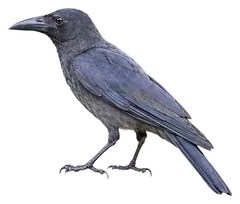 Sierra Madre CrowCorvus sierramadrensis
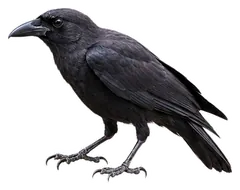 Palawan CrowCorvus pusillus
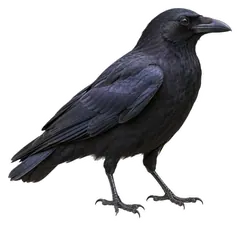 Violet CrowCorvus violaceus
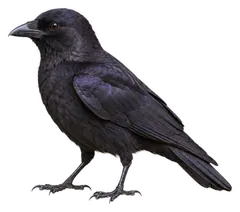 Flores CrowCorvus florensis
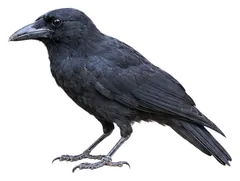 Mariana CrowCorvus kubaryi
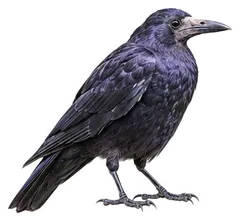
Download illustration
Free to use with credit: “Illustration: Bird Album (birdalbum.com)”. Drawn by AI from a reference photo by Charles J. Sharp. ↗

Heard it but can't see it? Mingji identifies birds by sound and photo, on your phone.