 Bird Album
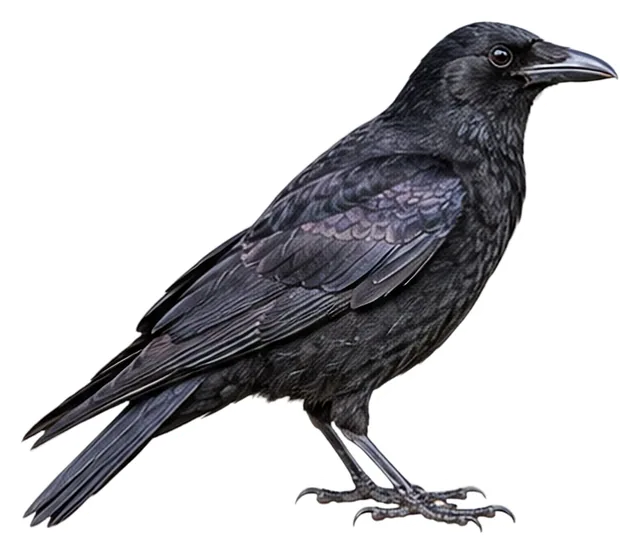
Carrion Crow
Corvus corone Linnaeus, 1758
48–52 cmLength91 cmWingspan570 gWeight
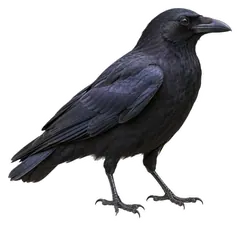
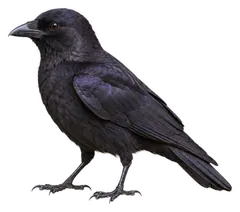
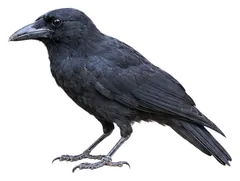
This large crow is black overall, with a blue, purple and green metallic gloss to the feathers.
Busiest months: April–May and October · Most records: United Kingdom, Spain, Portugal
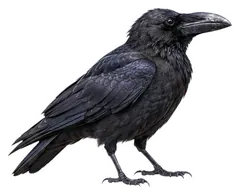
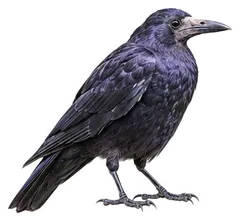
Looks like Large-billed Crow, Rook
How to identify
Field marks
- Black overall, including the bill, legs and feet
- Blue, purple and green metallic gloss to the feathers, conspicuous in side lighting
- Bill finer than that of Large-billed Crow
- No bare grayish-white area at the base of the upper bill
Male, female and young
The sexes have the same shape and coloration; juveniles have brownish feathers and blue eyes that gradually darken as they mature.
Voice
A harsh, low “kraa”, often given three or four times in succession.
Similar species
Where and when it's recorded
Busiest months: April–May and October · Most records: United Kingdom, Spain, Portugal

Carrion Crow has been recorded at 1,520 of the 8,276 birding hotspots we track, in 45 countries and regions.
Records by month Northern Hemisphere
Where it's recorded most
- Amwell HMWT NRUnited Kingdom7,859 records
- Minsmere RSPB ReserveUnited Kingdom5,164 records
- Beddington FarmlandsUnited Kingdom4,951 records
More places
- WWT London Wetland CentreUnited Kingdom3,831 records
- Urdaibai RB – bird center y laguna de OruetaSpain3,800 records
- Titchwell Marsh RSPB ReserveUnited Kingdom3,780 records
- Walthamstow WetlandsUnited Kingdom3,663 records
- Spurn Bird Observatory Recording AreaUnited Kingdom3,647 records
- Rainham Marshes RSPB Reserve, SSSI and LNRUnited Kingdom3,583 records
- Lezíria Grande de Vila Franca de Xira – área geralPortugal3,578 records
Countries and regions with the most records
eBird records via GBIF up to 2024-12-31. A record means someone listed it; more records partly mean more birders, not more birds.
About
The carrion crow (Corvus corone) is a passerine bird of the family Corvidae, native to western Europe and the eastern Palearctic. Along with the hooded crow (Corvus cornix), the carrion crow occupies a similar ecological niche in Eurasia to the American crow (Corvus brachyrhynchos) in North America. The two species look very similar to one another, but can be differentiated by size, as the carrion crow is larger and of a stockier build compared to the American crow.
Excerpt from Wikipedia, CC BY-SA 4.0 · authors · Read more on Wikipedia
Questions
How big is the Carrion Crow?
The Carrion Crow is about 48–52 cm long, with a wingspan of 91 cm and weighs around 570 g.
Where does the Carrion Crow live?
Its breeding range: Palearctic: northern, southwestern, eastern. It is most often recorded in United Kingdom, Spain and Portugal.
When is the best time to see the Carrion Crow?
At the hotspots we track, it is recorded most in April, May and October (Northern Hemisphere).
Is the Carrion Crow endangered?
The IUCN Red List classifies the Carrion Crow as Least Concern.
What does the Carrion Crow eat?
Main food: Omnivore.
What family is the Carrion Crow in?
It belongs to the family Crows, Jays (Corvidae), order Passerines (Passeriformes).
At a glance
- Length
- 48–52 cm
- Wingspan
- 91 cm
- Weight
- 570 g
- Habitat
- Towns & farmland
- Diet
- Omnivore
- Lifestyle
- Active on the ground
- Migration
- Resident (barely migrates)
- Conservation
- Least Concern
More measurements
- Wing
- 334 mm
- Tail
- 193 mm
- Bill
- 55 mm
- Tarsus
- 59 mm
Averages from the AVONET dataset; length from field guides where available.
Range
Palearctic: northern, southwestern, eastern
Breeding range, IOC World Bird List 15.2
Classification
- Order
- Passerines Passeriformes
- Family
- Crows, Jays Corvidae
- Genus
- Corvus
Other birds in the genus Corvus
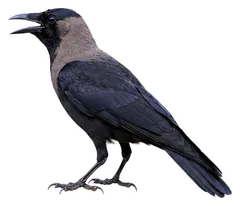 House CrowCorvus splendens
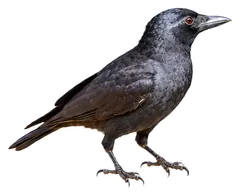 New Caledonian CrowCorvus moneduloides
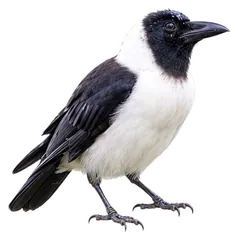 Piping CrowCorvus typicus
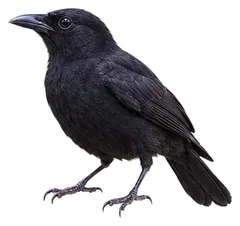 Banggai CrowCorvus unicolor
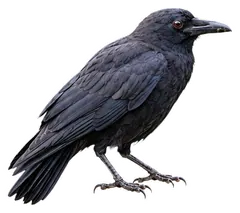 Sunda CrowCorvus enca
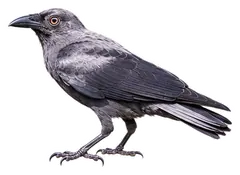 Sulawesi CrowCorvus celebensis
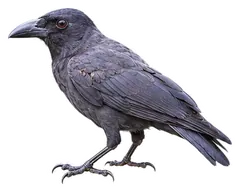 Samar CrowCorvus samarensis
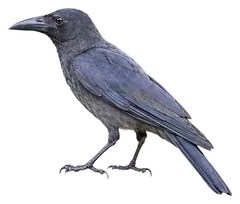 Sierra Madre CrowCorvus sierramadrensis
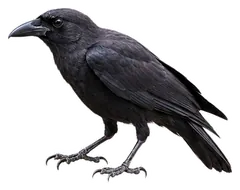 Palawan CrowCorvus pusillus
 Violet CrowCorvus violaceus
 Flores CrowCorvus florensis
 Mariana CrowCorvus kubaryi
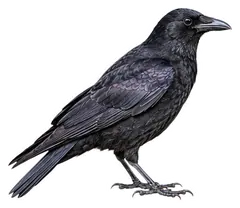
Download illustration
Free to use with credit: “Illustration: Bird Album (birdalbum.com)”. Drawn by AI from a reference photo by Alexis Lours. ↗

Heard it but can't see it? Mingji identifies birds by sound and photo, on your phone.