 Bird Album
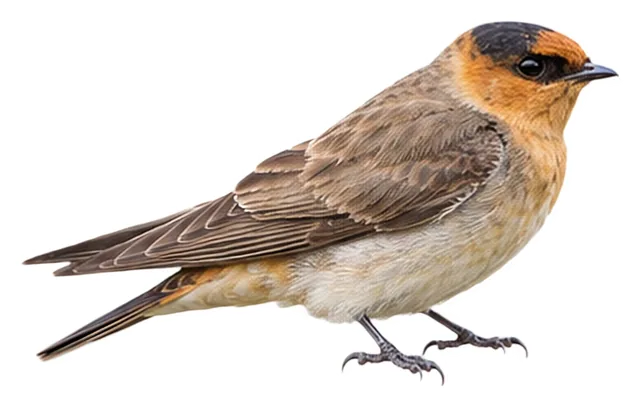
Cave Swallow
Petrochelidon fulva (Vieillot, 1808)
12–14 cmLength19 gWeight
The cave swallow (Petrochelidon fulva) is a medium-sized, squarish-tailed swallow belonging to the same genus as the more familiar and widespread cliff swallow of North America.
Busiest months: April and November · Most records: United States, Puerto Rico, Mexico
Where and when it's recorded

Cave Swallow has been recorded at 351 of the 8,171 birding hotspots we track, in 22 countries and regions.
Records by month Northern Hemisphere
Where it's recorded most
- Estero Llano Grande SP WBCUnited States5,246 records
- Bentsen-Rio Grande Val. SP WBC (Mission)United States3,818 records
- Mitchell Lake Audubon CenterUnited States3,356 records
More places
- Santa Ana NWRUnited States3,157 records
- Hornsby BendUnited States2,885 records
- Hacienda La EsperanzaPuerto Rico1,420 records
- Anzalduas ParkUnited States850 records
- Choke Canyon SP – Calliham Unit (McMullen Co.)United States717 records
- Salineño Wildlife PreserveUnited States683 records
- Commons Ford Ranch Metro ParkUnited States534 records
Countries and regions with the most records
eBird records via GBIF up to 2024-12-31. A record means someone listed it; more records partly mean more birders, not more birds.
About
The cave swallow (Petrochelidon fulva) is a medium-sized, squarish-tailed swallow belonging to the same genus as the more familiar and widespread cliff swallow of North America. The cave swallow, also native to the Americas, nests and roosts primarily in caves and sinkholes.
Excerpt from Wikipedia, CC BY-SA 4.0 · authors · Read more on Wikipedia
Questions
How big is the Cave Swallow?
The Cave Swallow is about 12–14 cm long and weighs around 19 g.
Where does the Cave Swallow live?
Its breeding range: North America, Middle America: southern USA, Caribbean and Mexico. It is most often recorded in United States, Puerto Rico and Mexico.
When is the best time to see the Cave Swallow?
At the hotspots we track, it is recorded most in April and November (Northern Hemisphere).
Is the Cave Swallow endangered?
The IUCN Red List classifies the Cave Swallow as Least Concern.
What does the Cave Swallow eat?
Main food: Insects & other invertebrates.
What family is the Cave Swallow in?
It belongs to the family Swallows, Martins (Hirundinidae), order Passerines (Passeriformes).
At a glance
- Length
- 12–14 cm
- Weight
- 19 g
- Habitat
- Grassland
- Diet
- Insects & other invertebrates
- Lifestyle
- Feeds in the air
- Migration
- Partial migrant
- Conservation
- Least Concern
More measurements
- Wing
- 103 mm
- Tail
- 48 mm
- Bill
- 10 mm
- Tarsus
- 12 mm
Averages from the AVONET dataset; length from field guides where available.
Range
North America, Middle America: southern USA, Caribbean and Mexico
Breeding range, IOC World Bird List 15.2
Classification
- Order
- Passerines Passeriformes
- Family
- Swallows, Martins Hirundinidae
- Genus
- Petrochelidon
Other birds in the genus Petrochelidon
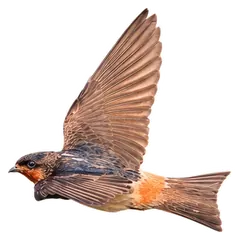 Red-throated Cliff SwallowPetrochelidon rufigula
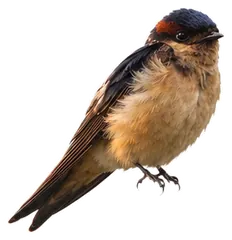 Preuss's Cliff SwallowPetrochelidon preussi
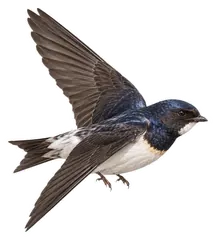 Red Sea Cliff SwallowPetrochelidon perdita
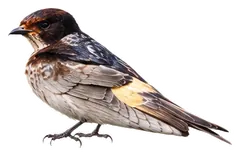 South African Cliff SwallowPetrochelidon spilodera
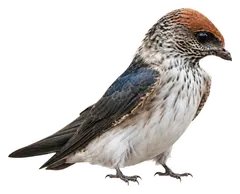 Streak-throated SwallowPetrochelidon fluvicola
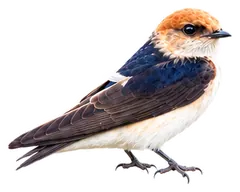 Fairy MartinPetrochelidon ariel
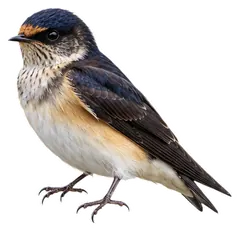 Tree MartinPetrochelidon nigricans
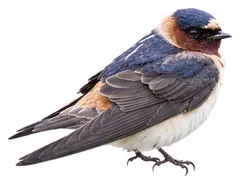 American Cliff SwallowPetrochelidon pyrrhonota
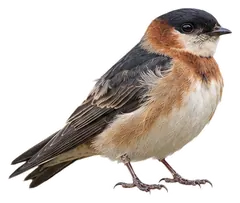 Chestnut-collared SwallowPetrochelidon rufocollaris
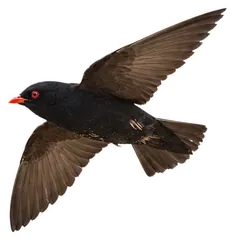 African River MartinPseudochelidon eurystomina
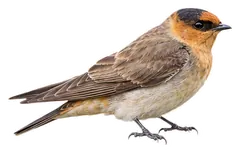
Download illustration
Free to use with credit: “Illustration: Bird Album (birdalbum.com)”. Drawn by AI from a reference photo by Greg Lasley. ↗
Heard it but can't see it? Mingji identifies birds by sound and photo, on your phone.