 Bird Album
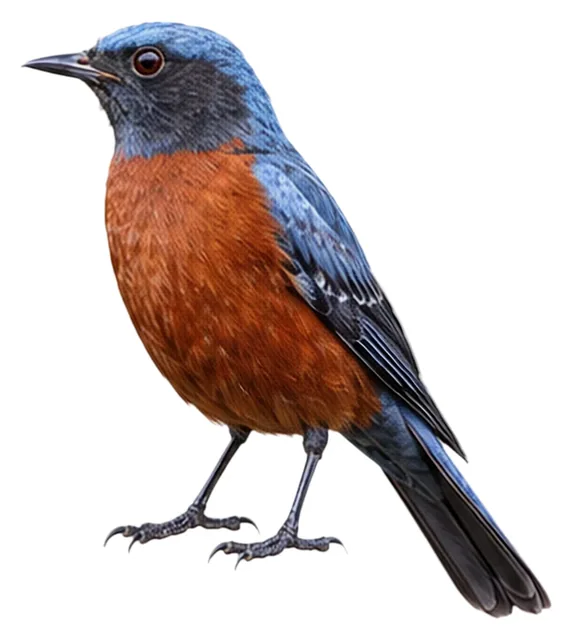
Chestnut-bellied Rock Thrush
Monticola rufiventris (Jardine & Selby, 1833)
≈24 cmLength53 gWeight
It often perches in the crowns of small trees.
Busiest months: January–February and April · Most records: China, India, Thailand
How to identify
Where and when it's recorded

Chestnut-bellied Rock Thrush has been recorded at 264 of the 8,171 birding hotspots we track, in 9 countries and regions.
Records by month Northern Hemisphere
Where it's recorded most
- PangotIndia355 records
- Doi Pha Hom Pok NP – Doi Lang (W), AKA Doi San JuThailand326 records
- Baihualing [General Area]China312 records
More places
- SattalIndia273 records
- Mahananda WLS – Rongtong and Shivakhola ForestIndia228 records
- Mahananda WLS – LatpancharIndia206 records
- Doi Pha Hom Pok NP – Doi AngkhangThailand167 records
- Emei Peak NNRChina134 records
- Doi Inthanon NPThailand131 records
- Mt. PhulchowkiNepal127 records
Countries and regions with the most records
eBird records via GBIF up to 2024-12-31. A record means someone listed it; more records partly mean more birders, not more birds.
About
The chestnut-bellied rock thrush (Monticola rufiventris) is a species of passerine bird in the Old World flycatcher family Muscicapidae.
Excerpt from Wikipedia, CC BY-SA 4.0 · authors · Read more on Wikipedia
Questions
How big is the Chestnut-bellied Rock Thrush?
The Chestnut-bellied Rock Thrush is about ≈24 cm long and weighs around 53 g.
Where does the Chestnut-bellied Rock Thrush live?
Its breeding range: Oriental: Himalayas through Southeast Asia. It is most often recorded in China, India and Thailand.
When is the best time to see the Chestnut-bellied Rock Thrush?
At the hotspots we track, it is recorded most in January, February and April (Northern Hemisphere).
Is the Chestnut-bellied Rock Thrush endangered?
The IUCN Red List classifies the Chestnut-bellied Rock Thrush as Least Concern.
What does the Chestnut-bellied Rock Thrush eat?
Main food: Insects & other invertebrates.
What family is the Chestnut-bellied Rock Thrush in?
It belongs to the family Chats, Old World Flycatchers (Muscicapidae), order Passerines (Passeriformes).
At a glance
- Length
- ≈24 cm
- Weight
- 53 g
- Habitat
- Forest
- Diet
- Insects & other invertebrates
- Lifestyle
- Varied
- Migration
- Resident (barely migrates)
- Conservation
- Least Concern
More measurements
- Wing
- 121 mm
- Tail
- 98 mm
- Bill
- 26 mm
- Tarsus
- 27 mm
Averages from the AVONET dataset; length from field guides where available.
Range
Oriental: Himalayas through Southeast Asia
Breeding range, IOC World Bird List 15.2
Classification
- Order
- Passerines Passeriformes
- Family
- Chats, Old World Flycatchers Muscicapidae
- Genus
- Monticola
Other birds in the genus Monticola
 Blue-capped Rock ThrushMonticola cinclorhyncha
 White-throated Rock ThrushMonticola gularis
 Short-toed Rock ThrushMonticola brevipes
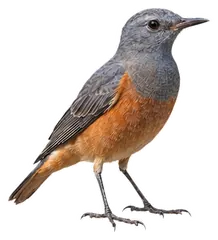 Sentinel Rock ThrushMonticola explorator
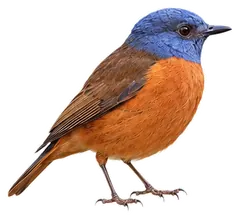 Amber Mountain Rock ThrushMonticola erythronotus
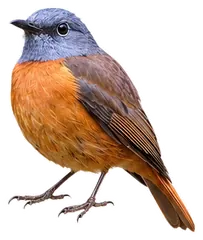 Forest Rock ThrushMonticola sharpei
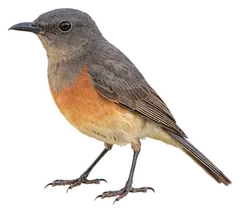 Littoral Rock ThrushMonticola imerina
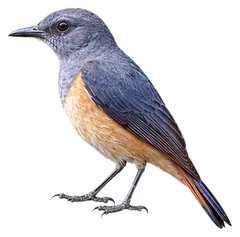 Little Rock ThrushMonticola rufocinereus
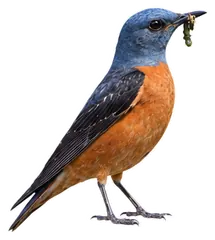 Common Rock ThrushMonticola saxatilis
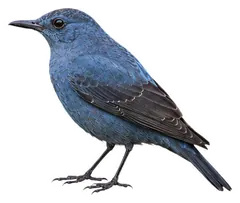 Blue Rock ThrushMonticola solitarius
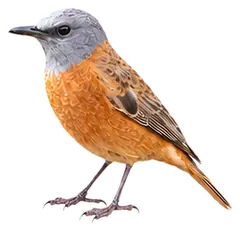 Cape Rock ThrushMonticola rupestris
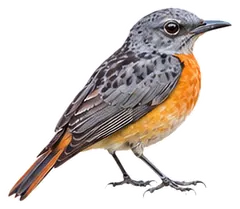 Miombo Rock ThrushMonticola angolensis
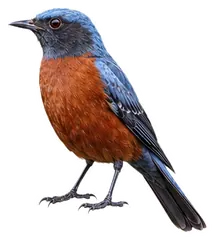
Download illustration
Free to use with credit: “Illustration: Bird Album (birdalbum.com)”. Drawn by AI from a reference photo by Annethingnam. ↗

Heard it but can't see it? Mingji identifies birds by sound and photo, on your phone.
In other languages
- EnglishChestnut-bellied Rock Thrush
- 简体中文栗腹矶鸫
- 繁體中文栗胸磯鶇
- 日本語カオグロイソヒヨドリ
- DeutschKastanienbauchrötel
- FrançaisMonticole à ventre marron
- EspañolRoquero ventrirrufo
- Portuguêsmelro-das-rochas-de-barriga-castanha
- ItalianoCodirossone panciacastana
- NederlandsRoodbuikrotslijster
- РусскийКраснобрюхий каменный дрозд
- Svenskakastanjebukig stentrast
- DanskStor Stendrossel
- Polskinagórnik kasztanowobrzuchy