 Bird Album
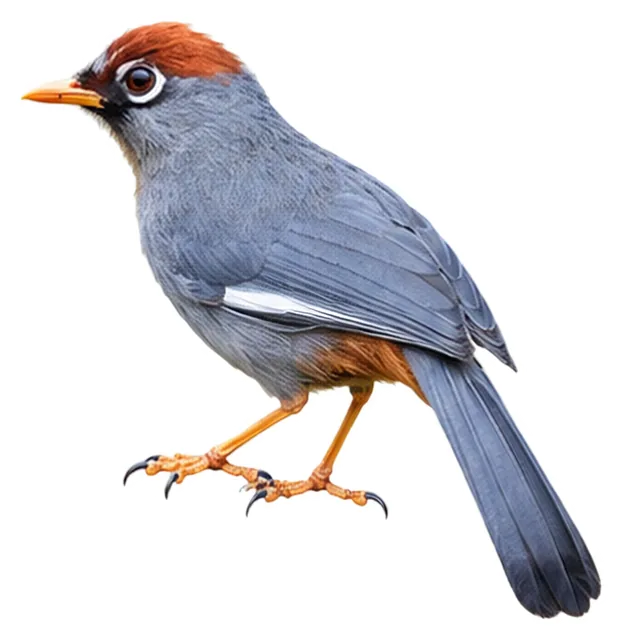
Chestnut-capped Laughingthrush
Pterorhinus mitratus (Müller, S, 1836)
62 gWeight
The chestnut-capped laughingthrush (Pterorhinus mitratus), also known as the spectacled laughingthrush, is a species of bird in the family Leiothrichidae.
Busiest months: March and June–July · Most records: Malaysia
Where and when it's recorded

Chestnut-capped Laughingthrush has been recorded at 21 of the 8,276 birding hotspots we track, in 1 country or region.
Records by month Northern Hemisphere
Where it's recorded most
- Bukit FraserMalaysia2,133 records
- Bukit Fraser – Telekom LoopMalaysia570 records
- Bukit Fraser – Jalan RichmondMalaysia417 records
More places
- Bukit Fraser – Former Jelai Highland Resort AreaMalaysia328 records
- Bukit Fraser – Bishop TrailMalaysia315 records
- Bukit Fraser – Mager TrailMalaysia283 records
- Bukit Fraser – Jalan Lady GuillemardMalaysia187 records
- Fraser's HillMalaysia141 records
- Genting Highlands – Awana Pumphouse RoadMalaysia129 records
- Bukit Fraser – Road from Gap to Bukit FraserMalaysia120 records
Countries and regions with the most records
eBird records via GBIF up to 2024-12-31. A record means someone listed it; more records partly mean more birders, not more birds.
About
The chestnut-capped laughingthrush (Pterorhinus mitratus), also known as the spectacled laughingthrush, is a species of bird in the family Leiothrichidae.
Excerpt from Wikipedia, CC BY-SA 4.0 · authors · Read more on Wikipedia
Questions
How big is the Chestnut-capped Laughingthrush?
The Chestnut-capped Laughingthrush weighs around 62 g.
Where does the Chestnut-capped Laughingthrush live?
Its breeding range: Oriental: montane Malay Peninsula and Sumatra. It is most often recorded in Malaysia.
When is the best time to see the Chestnut-capped Laughingthrush?
At the hotspots we track, it is recorded most in March, June and July (Northern Hemisphere).
Is the Chestnut-capped Laughingthrush endangered?
The IUCN Red List classifies the Chestnut-capped Laughingthrush as Near Threatened.
What does the Chestnut-capped Laughingthrush eat?
Main food: Insects & other invertebrates.
What family is the Chestnut-capped Laughingthrush in?
It belongs to the family Laughingthrushes & Allies (Leiothrichidae), order Passerines (Passeriformes).
At a glance
- Weight
- 62 g
- Habitat
- Forest
- Diet
- Insects & other invertebrates
- Lifestyle
- Perches in trees
- Migration
- Resident (barely migrates)
- Conservation
- Near Threatened
More measurements
- Wing
- 101 mm
- Tail
- 112 mm
- Bill
- 22 mm
- Tarsus
- 35 mm
Averages from the AVONET dataset; length from field guides where available.
Range
Oriental: montane Malay Peninsula and Sumatra
Breeding range, IOC World Bird List 15.2
Classification
- Order
- Passerines Passeriformes
- Family
- Laughingthrushes & Allies Leiothrichidae
- Genus
- Pterorhinus
Other birds in the genus Pterorhinus
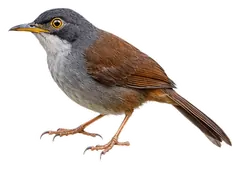 Wayanad LaughingthrushPterorhinus delesserti
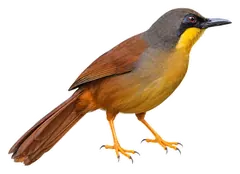 Rufous-vented LaughingthrushPterorhinus gularis
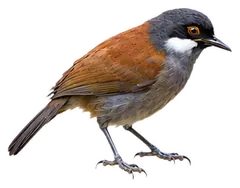 White-cheeked LaughingthrushPterorhinus vassali
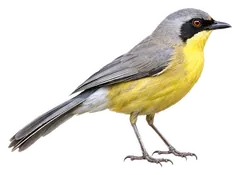 Yellow-throated LaughingthrushPterorhinus galbanus
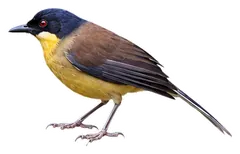 Blue-crowned LaughingthrushPterorhinus courtoisi
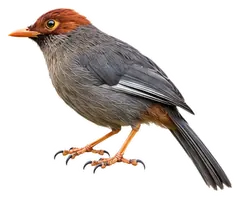 Chestnut-hooded LaughingthrushPterorhinus treacheri
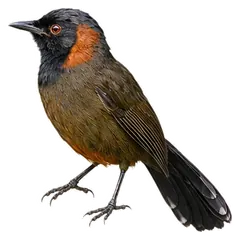 Rufous-necked LaughingthrushPterorhinus ruficollis
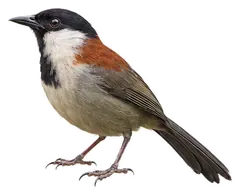 Chestnut-backed LaughingthrushPterorhinus nuchalis
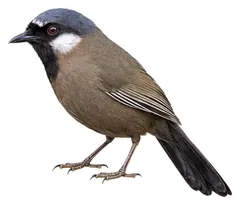 Black-throated LaughingthrushPterorhinus chinensis
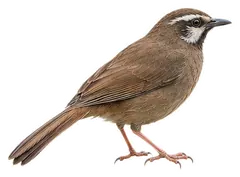 White-browed LaughingthrushPterorhinus sannio
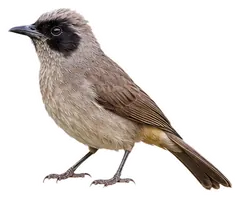 Masked LaughingthrushPterorhinus perspicillatus
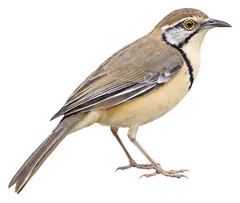 Greater Necklaced LaughingthrushPterorhinus pectoralis
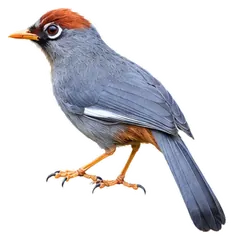
Download illustration
Free to use with credit: “Illustration: Bird Album (birdalbum.com)”. Drawn by AI from a reference photo by Jono Dashper. ↗
Heard it but can't see it? Mingji identifies birds by sound and photo, on your phone.
In other languages
- EnglishChestnut-capped Laughingthrush
- 简体中文栗顶噪鹛
- 繁體中文慄頂噪鶥
- 日本語チャガシラガビチョウ
- DeutschSpiegelhäherling
- FrançaisGarrulaxe mitré
- EspañolCharlatán mitrado
- Portuguêszaragateiro-mitrado
- ItalianoGarrulo sghignazzante capocastano
- NederlandsSpiegellijstergaai
- РусскийБелокрылая кустарница
- Svenskabrunhättad fnittertrast
- DanskBrunhættet Skadedrossel
- Polskisójkowiec kasztanowogłowy