 Bird Album
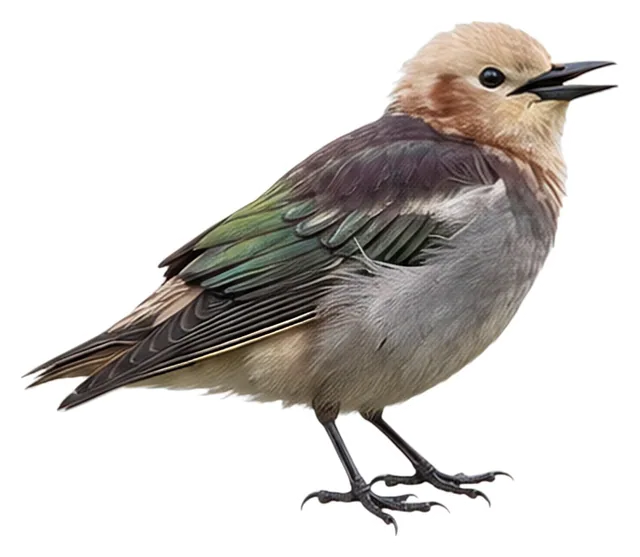
Chestnut-cheeked Starling
Agropsar philippensis (Pennant, 1781)
≈17 cmLength29 gWeight
This starling breeds in Japan, Sakhalin and the Kuril Islands and winters in Taiwan (China) and the Philippines.
Busiest months: April · Most records: China, Japan, Philippines
How to identify
Where and when it's recorded

Chestnut-cheeked Starling has been recorded at 206 of the 8,171 birding hotspots we track, in 12 countries and regions.
Records by month Northern Hemisphere
Where it's recorded most
- Matsu – Dongyin Shizi Vegetable FarmChina253 records
- Matsu – DongyinChina171 records
- Wajima – Hegurajima (island)Japan142 records
More places
- Kenting NP – Sheding Lingxiao Pavilion (Raptors Observation Spot)Taiwan (China)138 records
- Taipei – Gongliao Dexin TempleTaiwan (China)138 records
- Taipei – Tianliaoyang WetlandTaiwan (China)97 records
- Basco Plaza, BatanPhilippines91 records
- Sakata – Tobishima (island)Japan71 records
- Edogawa Ward – Kasai Rinkai Park / Kasai Kaihin ParkJapan69 records
- Pulau Mantanani BesarMalaysia60 records
Countries and regions with the most records
eBird records via GBIF up to 2024-12-31. A record means someone listed it; more records partly mean more birders, not more birds.
About
The chestnut-cheeked starling (Agropsar philippensis) is a species of starling in the family Sturnidae. It breeds in Japan and the Russian islands of Sakhalin and Kuriles; it winters in Taiwan (China), the Philippines and northern Borneo.
Excerpt from Wikipedia, CC BY-SA 4.0 · authors · Read more on Wikipedia
Questions
How big is the Chestnut-cheeked Starling?
The Chestnut-cheeked Starling is about ≈17 cm long and weighs around 29 g.
Where does the Chestnut-cheeked Starling live?
Its breeding range: Palearctic: northern Japan. It is most often recorded in China, Japan and Philippines.
When is the best time to see the Chestnut-cheeked Starling?
At the hotspots we track, it is recorded most in April (Northern Hemisphere).
Is the Chestnut-cheeked Starling endangered?
The IUCN Red List classifies the Chestnut-cheeked Starling as Least Concern.
What does the Chestnut-cheeked Starling eat?
Main food: Omnivore.
What family is the Chestnut-cheeked Starling in?
It belongs to the family Starlings, Rhabdornises (Sturnidae), order Passerines (Passeriformes).
At a glance
- Length
- ≈17 cm
- Weight
- 29 g
- Habitat
- Woodland
- Diet
- Omnivore
- Lifestyle
- Perches in trees
- Migration
- Migratory
- Conservation
- Least Concern
More measurements
- Wing
- 105 mm
- Tail
- 49 mm
- Bill
- 18 mm
- Tarsus
- 24 mm
Averages from the AVONET dataset; length from field guides where available.
Range
Palearctic: northern Japan
Breeding range, IOC World Bird List 15.2
Classification
- Order
- Passerines Passeriformes
- Family
- Starlings, Rhabdornises Sturnidae
- Genus
- Agropsar
Other birds in the genus Agropsar
 Daurian StarlingAgropsar sturninus
 Metallic StarlingAplonis metallica
 Yellow-eyed StarlingAplonis mystacea
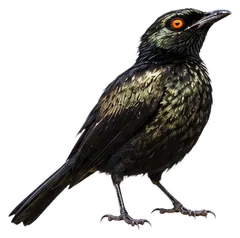 Singing StarlingAplonis cantoroides
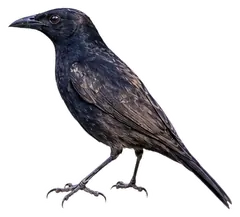 Tanimbar StarlingAplonis crassa
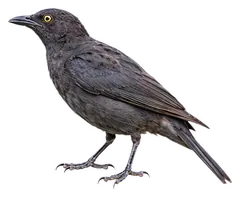 Atoll StarlingAplonis feadensis
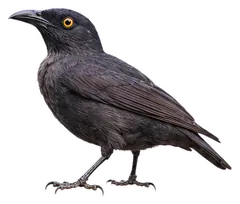 Rennell StarlingAplonis insularis
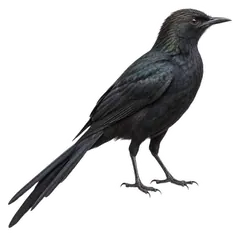 Long-tailed StarlingAplonis magna
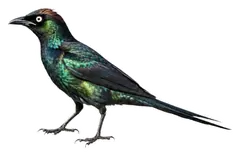 White-eyed StarlingAplonis brunneicapillus
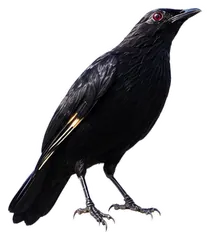 Brown-winged StarlingAplonis grandis
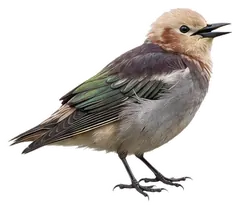
Download illustration
Free to use with credit: “Illustration: Bird Album (birdalbum.com)”. Drawn by AI from a reference photo by Анна Голубева. ↗
Heard it but can't see it? Mingji identifies birds by sound and photo, on your phone.
In other languages
- EnglishChestnut-cheeked Starling
- 简体中文紫背椋鸟
- 繁體中文小椋鳥
- 日本語コムクドリ
- 한국어쇠찌르레기
- DeutschViolettrückenstar
- FrançaisÉtourneau à joues marron
- EspañolEstornino carirrojo
- Portuguêsestorninho-de-orelha-castanha
- ItalianoStorno guancecastane
- NederlandsRoodwangspreeuw
- РусскийКрасноухий скворец
- Svenskarödkindad stare
- DanskVioletrygget Stær
- Polskiszpak rdzawolicy