 Bird Album
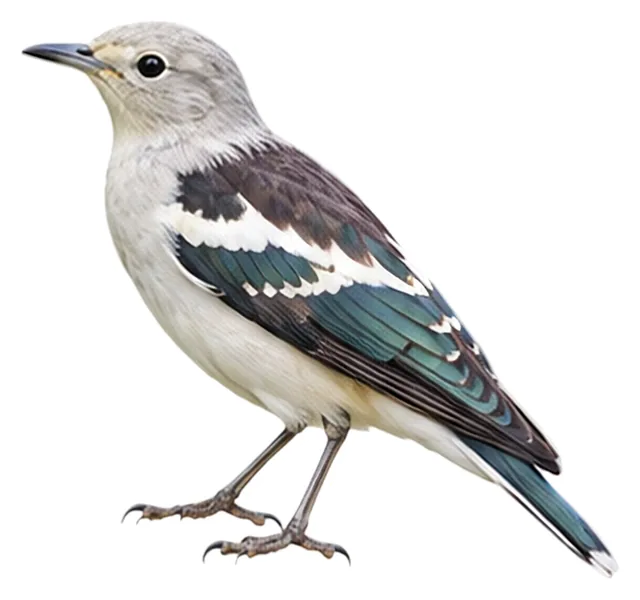
Daurian Starling
Agropsar sturninus (Pallas, 1776)
≈18 cmLength49 gWeight
Its dark upper back and narrow wing patches distinguish it from other starlings.
Busiest months: September–October · Most records: Singapore, China, Malaysia
How to identify
Field marks
- Dark upper back
- Narrow wing patches
Where and when it's recorded
Busiest months: September–October · Most records: Singapore, China, Malaysia

Daurian Starling has been recorded at 394 of the 8,276 birding hotspots we track, in 18 countries and regions.
Records by month Northern Hemisphere
Where it's recorded most
- Jurong Lake GardensSingapore313 records
- Kranji MarshSingapore197 records
- Seletar DamSingapore142 records
More places
- Peking UniversityChina140 records
- Hat Yai WTPThailand123 records
- Perdana Botanical GardenMalaysia113 records
- BidadariSingapore108 records
- Central Catchment Nature ReserveSingapore90 records
- Neo Tiew Harvest LaneSingapore86 records
- Taman Botani Negara Shah AlamMalaysia86 records
Countries and regions with the most records
eBird records via GBIF up to 2024-12-31. A record means someone listed it; more records partly mean more birders, not more birds.
About
The Daurian starling (Agropsar sturninus), or purple-backed starling, is a species of bird in the starling family found in the eastern Palearctic from eastern Mongolia and southeastern Russia to North Korea and central China.
Excerpt from Wikipedia, CC BY-SA 4.0 · authors · Read more on Wikipedia
Questions
How big is the Daurian Starling?
The Daurian Starling is about ≈18 cm long and weighs around 49 g.
Where does the Daurian Starling live?
Its breeding range: Palearctic: eastern Mongolia and southeastern Russia to North Korea and central China. It is most often recorded in Singapore, China and Malaysia.
When is the best time to see the Daurian Starling?
At the hotspots we track, it is recorded most in September and October (Northern Hemisphere).
Is the Daurian Starling endangered?
The IUCN Red List classifies the Daurian Starling as Least Concern.
What does the Daurian Starling eat?
Main food: Insects & other invertebrates.
What family is the Daurian Starling in?
It belongs to the family Starlings, Rhabdornises (Sturnidae), order Passerines (Passeriformes).
At a glance
- Length
- ≈18 cm
- Weight
- 49 g
- Habitat
- Forest
- Diet
- Insects & other invertebrates
- Lifestyle
- Varied
- Migration
- Migratory
- Conservation
- Least Concern
More measurements
- Wing
- 106 mm
- Tail
- 51 mm
- Bill
- 18 mm
- Tarsus
- 25 mm
Averages from the AVONET dataset; length from field guides where available.
Range
Palearctic: eastern Mongolia and southeastern Russia to North Korea and central China
Breeding range, IOC World Bird List 15.2
Classification
- Order
- Passerines Passeriformes
- Family
- Starlings, Rhabdornises Sturnidae
- Genus
- Agropsar
Other birds in the genus Agropsar
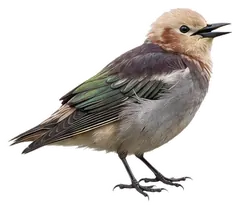 Chestnut-cheeked StarlingAgropsar philippensis
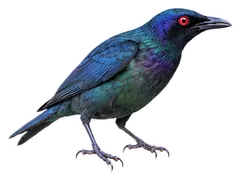 Metallic StarlingAplonis metallica
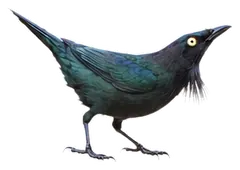 Yellow-eyed StarlingAplonis mystacea
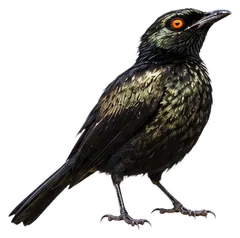 Singing StarlingAplonis cantoroides
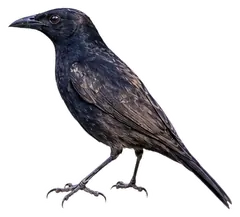 Tanimbar StarlingAplonis crassa
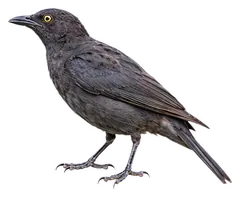 Atoll StarlingAplonis feadensis
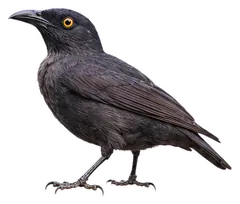 Rennell StarlingAplonis insularis
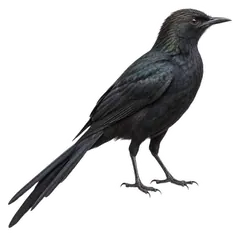 Long-tailed StarlingAplonis magna
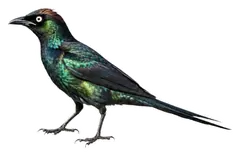 White-eyed StarlingAplonis brunneicapillus
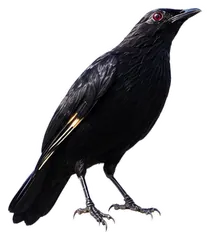 Brown-winged StarlingAplonis grandis
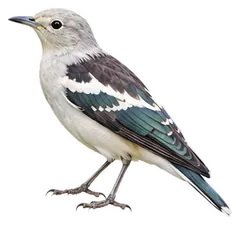
Download illustration
Free to use with credit: “Illustration: Bird Album (birdalbum.com)”. Drawn by AI from a reference photo by JJ Harrison (https://tiny.jjharrison.com.au/t/QglPolx8Ymh0999o). ↗

Heard it but can't see it? Mingji identifies birds by sound and photo, on your phone.