 Bird Album
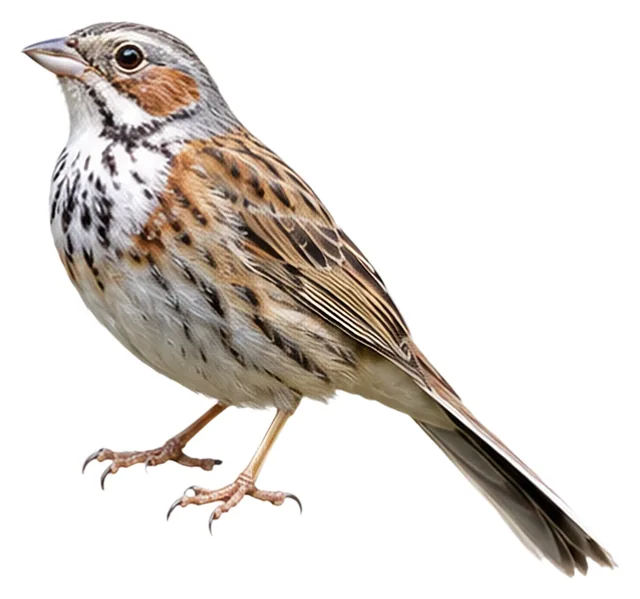
Chestnut-eared Bunting
Emberiza fucata Pallas, 1776
≈14 cmLength20 gWeight
The male has a gray head, chestnut ear-coverts and black and chestnut bands across the breast.
Busiest months: May and November · Most records: China, Japan, South Korea
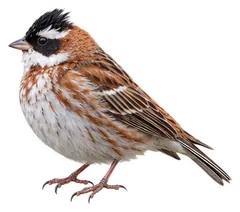
Looks like Rustic Bunting
How to identify
Field marks
- Crown and nape gray with dark streaks
- Ear-coverts chestnut
- Black and chestnut bands across the breast
- Scapulars reddish-brown; rump also reddish-brown
Male, female and young
Female similar but duller, with less distinct head and breast markings; first-winter birds are plainer, with warm rufous ear-coverts and a prominent eye-ring.
Voice
An explosive “pzick”; song is a rapid twitter, starting with detached notes, then accelerating and ending with two or three distinct notes.
Similar species
Where and when it's recorded

Chestnut-eared Bunting has been recorded at 441 of the 8,171 birding hotspots we track, in 16 countries and regions.
Records by month Northern Hemisphere
Where it's recorded most
- Long ValleyHong Kong (China)536 records
- Nanhui DongtanChina483 records
- Beihu MarshlandChina346 records
More places
- Taipei – Tianliaoyang WetlandTaiwan (China)247 records
- Baruipur MarshesIndia207 records
- South Lake, YuhangChina204 records
- Wajima – Hegurajima (island)Japan154 records
- Eocheong-do (island)South Korea146 records
- Nanpu MudflatChina145 records
- Muravyevka ParkRussia134 records
Countries and regions with the most records
eBird records via GBIF up to 2024-12-31. A record means someone listed it; more records partly mean more birders, not more birds.
About
The chestnut-eared bunting (Emberiza fucata), also called grey-headed bunting or grey-hooded bunting, with the latter name also used for grey-necked bunting, is a passerine bird in the bunting family Emberizidae.
Excerpt from Wikipedia, CC BY-SA 4.0 · authors · Read more on Wikipedia
Questions
How big is the Chestnut-eared Bunting?
The Chestnut-eared Bunting is about ≈14 cm long and weighs around 20 g.
Where does the Chestnut-eared Bunting live?
Its breeding range: Palearctic: disjunctly in subtropical western Himalayas, central China and northern temperate Northeast Asia, in scrubby hills: montane northwestern Pakistan through Himalayas to central Nepal; Sichuan and southern Shaanxi south to southeastern Tibet, Yunnan and Guizhou; north-central, northeastern Mongolia, southern Transbaikalia to Sakhalin (southeastern Russia), Nei Mongol and Heilongjiang (northeastern China) south to Korean Peninsula, southern Kuril Islands to Kyushu (northern to southern Japan); and Zhejiang and Fujian (east-central China). It is most often recorded in China, Japan and South Korea.
When is the best time to see the Chestnut-eared Bunting?
At the hotspots we track, it is recorded most in May and November (Northern Hemisphere).
Is the Chestnut-eared Bunting endangered?
The IUCN Red List classifies the Chestnut-eared Bunting as Least Concern.
What does the Chestnut-eared Bunting eat?
Main food: Seeds.
What family is the Chestnut-eared Bunting in?
It belongs to the family Buntings (Emberizidae), order Passerines (Passeriformes).
At a glance
- Length
- ≈14 cm
- Weight
- 20 g
- Habitat
- Shrubland
- Diet
- Seeds
- Lifestyle
- Active on the ground
- Migration
- Migratory
- Conservation
- Least Concern
More measurements
- Wing
- 74 mm
- Tail
- 58 mm
- Bill
- 13 mm
- Tarsus
- 20 mm
Averages from the AVONET dataset; length from field guides where available.
Range
Palearctic: disjunctly in subtropical western Himalayas, central China and northern temperate Northeast Asia, in scrubby hills: montane northwestern Pakistan through Himalayas to central Nepal; Sichuan and southern Shaanxi south to southeastern Tibet, Yunnan and Guizhou; north-central, northeastern Mongolia, southern Transbaikalia to Sakhalin (southeastern Russia), Nei Mongol and Heilongjiang (northeastern China) south to Korean Peninsula, southern Kuril Islands to Kyushu (northern to southern Japan); and Zhejiang and Fujian (east-central China)
Breeding range, IOC World Bird List 15.2
Subspecies · 3
- Emberiza fucata arcuata disjunctly in w Himalayas, c China and ne Asia: montane nw Pakistan through Himalayas to c Nepal; Sichuan and s Shaanxi s to se Tibet, Yunnan and Guizhou | non-breeding: to lower elevations
- Emberiza fucata fucata nc, ne Mongolia, s Transbaikalia to Sakhalin (se Russia), Nei Mongol and Heilongjiang (ne China) s to Korean Pen., s Kuril Is. to Kyushu (n to s Japan)
- Emberiza fucata kuatunensis Zhejiang and Fujian (ec China)
Classification
- Order
- Passerines Passeriformes
- Family
- Buntings Emberizidae
- Genus
- Emberiza
Other birds in the genus Emberiza
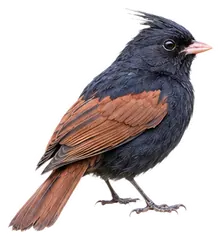 Crested BuntingEmberiza lathami
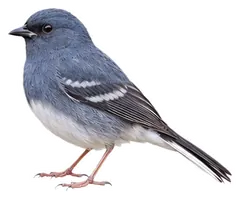 Slaty BuntingEmberiza siemsseni
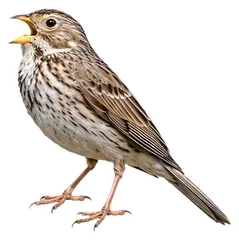 Corn BuntingEmberiza calandra
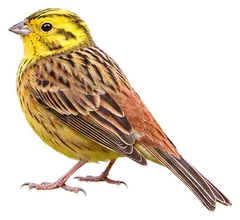 YellowhammerEmberiza citrinella
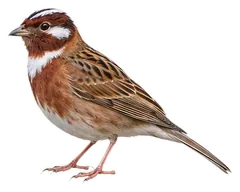 Pine BuntingEmberiza leucocephalos
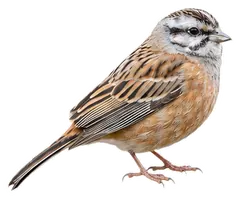 Rock BuntingEmberiza cia
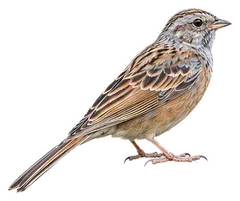 Godlewski's BuntingEmberiza godlewskii
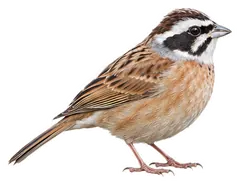 Meadow BuntingEmberiza cioides
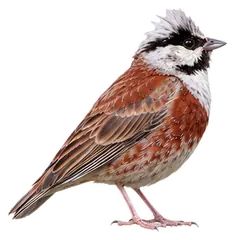 White-capped BuntingEmberiza stewarti
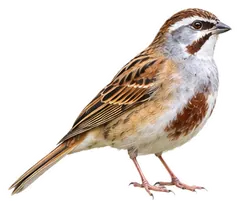 Jankowski's BuntingEmberiza jankowskii
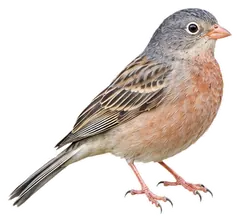 Grey-necked BuntingEmberiza buchanani
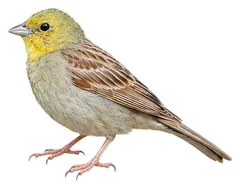 Cinereous BuntingEmberiza cineracea
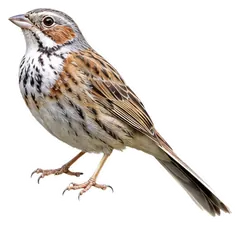
Download illustration
Free to use with credit: “Illustration: Bird Album (birdalbum.com)”. Drawn by AI from a reference photo by (c) Griha Hasanov, some rights reserved (CC BY). ↗

Heard it but can't see it? Mingji identifies birds by sound and photo, on your phone.
In other languages
- EnglishChestnut-eared Bunting
- 简体中文栗耳鹀
- 繁體中文赤胸鵐
- 日本語ホオアカ
- 한국어붉은뺨멧새
- DeutschBandammer
- FrançaisBruant à oreillons
- EspañolEscribano orejudo
- Portuguêsescrevedeira-de-faces-castanhas
- ItalianoZigolo orecchie castane
- NederlandsGrijskopgors
- РусскийОшейниковая овсянка
- Svenskarödkindad sparv
- DanskBrunøret Værling
- Polskitrznadel rdzawouchy