 Bird Album
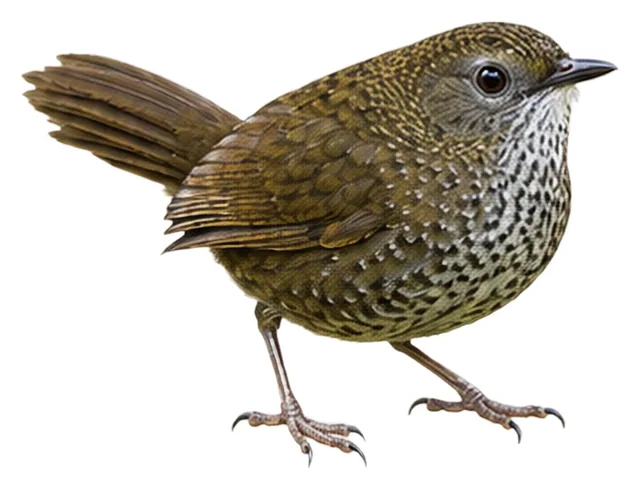
Chin Hills Wren-Babbler
Spelaeornis oatesi (Rippon, 1904)
12 gWeight
The Chin Hills wren-babbler (Spelaeornis oatesi) is a bird species in the family Timaliidae.
Busiest months: March and December · Most records: Myanmar (Burma)
Where and when it's recorded

Chin Hills Wren-Babbler has been recorded at 5 of the 8,171 birding hotspots we track, in 1 country or region.
Records by month Northern Hemisphere
Where it's recorded most
- Mount VictoriaMyanmar (Burma)49 records
- Natma Taung NP – Mount VictoriaMyanmar (Burma)41 records
- Natmataung NPMyanmar (Burma)27 records
More places
- Natma Taung NP – Mount VictoriaMyanmar (Burma)24 records
- Natmataung National ParkMyanmar (Burma)14 records
Countries and regions with the most records
eBird records via GBIF up to 2024-12-31. A record means someone listed it; more records partly mean more birders, not more birds.
About
The Chin Hills wren-babbler (Spelaeornis oatesi) is a bird species in the family Timaliidae. It was until recently considered a subspecies of the long-tailed wren-babbler; the IUCN for example started recognizing it as distinct species in 2008.
Excerpt from Wikipedia, CC BY-SA 4.0 · authors · Read more on Wikipedia
Questions
How big is the Chin Hills Wren-Babbler?
The Chin Hills Wren-Babbler weighs around 12 g.
Where does the Chin Hills Wren-Babbler live?
Its breeding range: Oriental: southeastern Assam and western Myanmar. It is most often recorded in Myanmar (Burma).
When is the best time to see the Chin Hills Wren-Babbler?
At the hotspots we track, it is recorded most in March and December (Northern Hemisphere).
Is the Chin Hills Wren-Babbler endangered?
The IUCN Red List classifies the Chin Hills Wren-Babbler as Least Concern.
What does the Chin Hills Wren-Babbler eat?
Main food: Insects & other invertebrates.
What family is the Chin Hills Wren-Babbler in?
It belongs to the family Babblers, Scimitar Babblers (Timaliidae), order Passerines (Passeriformes).
At a glance
- Weight
- 12 g
- Habitat
- Forest
- Diet
- Insects & other invertebrates
- Lifestyle
- Perches in trees
- Migration
- Resident (barely migrates)
- Conservation
- Least Concern
More measurements
- Wing
- 48 mm
- Tail
- 40 mm
- Bill
- 12 mm
- Tarsus
- 18 mm
Averages from the AVONET dataset; length from field guides where available.
Range
Oriental: southeastern Assam and western Myanmar
Breeding range, IOC World Bird List 15.2
Classification
- Order
- Passerines Passeriformes
- Family
- Babblers, Scimitar Babblers Timaliidae
- Genus
- Spelaeornis
Other birds in the genus Spelaeornis
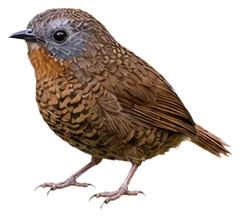 Rufous-throated Wren-BabblerSpelaeornis caudatus
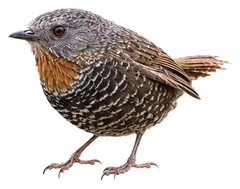 Mishmi Wren-BabblerSpelaeornis badeigularis
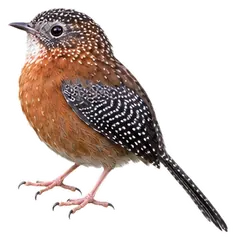 Bar-winged Wren-BabblerSpelaeornis troglodytoides
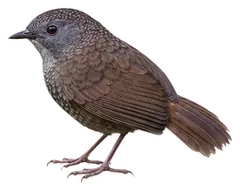 Pale-throated Wren-BabblerSpelaeornis kinneari
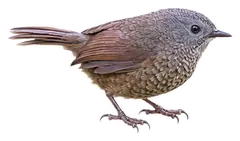 Naga Wren-BabblerSpelaeornis chocolatinus
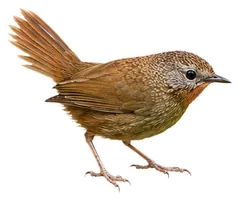 Tawny-breasted Wren-BabblerSpelaeornis longicaudatus
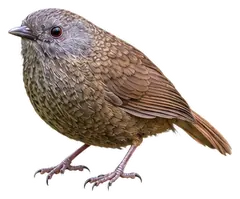 Grey-bellied Wren-BabblerSpelaeornis reptatus
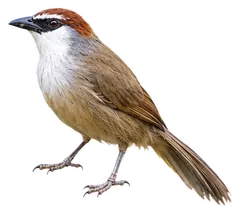 Chestnut-capped BabblerTimalia pileata
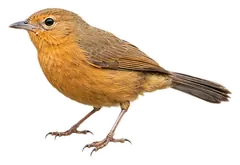 Tawny-bellied BabblerDumetia hyperythra
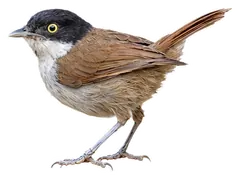 Dark-fronted BabblerDumetia atriceps
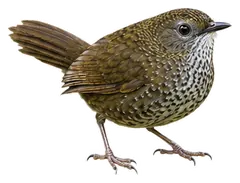
Download illustration
Free to use with credit: “Illustration: Bird Album (birdalbum.com)”. Drawn by AI from a reference photo by Dhyey Shah. ↗
Heard it but can't see it? Mingji identifies birds by sound and photo, on your phone.