 Bird Album
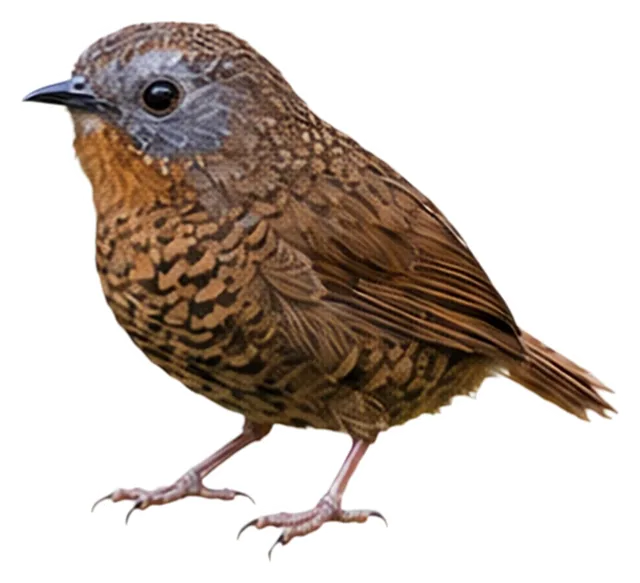
Rufous-throated Wren-Babbler
Spelaeornis caudatus (Blyth, 1845)
11 gWeight
The rufous-throated wren-babbler (Spelaeornis caudatus) is a species of bird in the family Timaliidae.
Busiest months: April · Most records: Bhutan, India
Where and when it's recorded

Rufous-throated Wren-Babbler has been recorded at 18 of the 8,171 birding hotspots we track, in 2 countries and regions.
Records by month Northern Hemisphere
Where it's recorded most
- Yongkhola campBhutan87 records
- Lingmethang Rd – Namling mid-elevation forestBhutan34 records
- JainalaBhutan9 records
More places
- LingmethangBhutan8 records
- Shonkhar Chu Valley, Limithang RoadBhutan7 records
- Sengor – camp and upper Lingmethan RdBhutan5 records
- GeduBhutan3 records
- MorongBhutan3 records
- ThrumsinglaBhutan3 records
- Lingmethang Forest Management UnitBhutan2 records
Countries and regions with the most records
eBird records via GBIF up to 2024-12-31. A record means someone listed it; more records partly mean more birders, not more birds.
About
The rufous-throated wren-babbler (Spelaeornis caudatus) is a species of bird in the family Timaliidae. It is found in Bhutan, India, and Nepal.
Excerpt from Wikipedia, CC BY-SA 4.0 · authors · Read more on Wikipedia
Questions
How big is the Rufous-throated Wren-Babbler?
The Rufous-throated Wren-Babbler weighs around 11 g.
Where does the Rufous-throated Wren-Babbler live?
Its breeding range: Oriental: Nepal to northeastern India. It is most often recorded in Bhutan and India.
When is the best time to see the Rufous-throated Wren-Babbler?
At the hotspots we track, it is recorded most in April (Northern Hemisphere).
Is the Rufous-throated Wren-Babbler endangered?
The IUCN Red List classifies the Rufous-throated Wren-Babbler as Least Concern.
What does the Rufous-throated Wren-Babbler eat?
Main food: Insects & other invertebrates.
What family is the Rufous-throated Wren-Babbler in?
It belongs to the family Babblers, Scimitar Babblers (Timaliidae), order Passerines (Passeriformes).
At a glance
- Weight
- 11 g
- Habitat
- Forest
- Diet
- Insects & other invertebrates
- Lifestyle
- Perches in trees
- Migration
- Resident (barely migrates)
- Conservation
- Least Concern
More measurements
- Wing
- 47 mm
- Tail
- 29 mm
- Bill
- 11 mm
- Tarsus
- 17 mm
Averages from the AVONET dataset; length from field guides where available.
Range
Oriental: Nepal to northeastern India
Breeding range, IOC World Bird List 15.2
Classification
- Order
- Passerines Passeriformes
- Family
- Babblers, Scimitar Babblers Timaliidae
- Genus
- Spelaeornis
Other birds in the genus Spelaeornis
 Mishmi Wren-BabblerSpelaeornis badeigularis
 Bar-winged Wren-BabblerSpelaeornis troglodytoides
 Pale-throated Wren-BabblerSpelaeornis kinneari
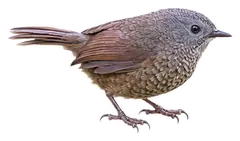 Naga Wren-BabblerSpelaeornis chocolatinus
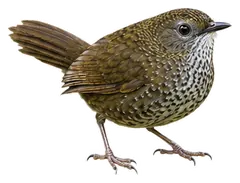 Chin Hills Wren-BabblerSpelaeornis oatesi
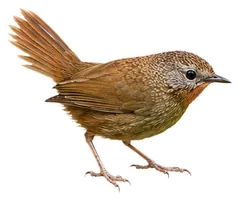 Tawny-breasted Wren-BabblerSpelaeornis longicaudatus
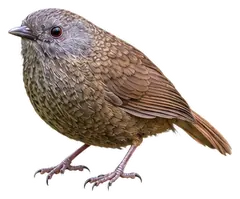 Grey-bellied Wren-BabblerSpelaeornis reptatus
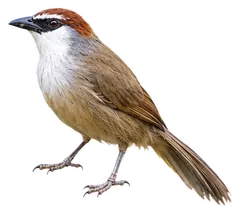 Chestnut-capped BabblerTimalia pileata
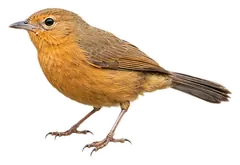 Tawny-bellied BabblerDumetia hyperythra
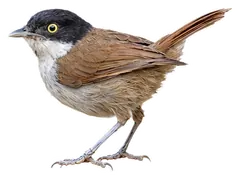 Dark-fronted BabblerDumetia atriceps
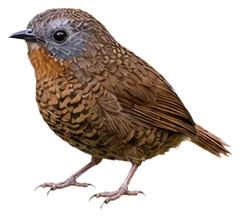
Download illustration
Free to use with credit: “Illustration: Bird Album (birdalbum.com)”. Drawn by AI from a reference photo by Jim Moore (Maryland). ↗
Heard it but can't see it? Mingji identifies birds by sound and photo, on your phone.
In other languages
- EnglishRufous-throated Wren-Babbler
- 简体中文棕喉鹩鹛
- 繁體中文紅喉鷯鶥
- 日本語ムネアカサザイチメドリ
- DeutschRotkehl-Zaunkönigtimalie
- FrançaisTimalie à gorge rousse
- EspañolRatina golirrufa
- Portuguêstagarelinha-de-garganta-ruiva
- ItalianoGarrulo scricciolo golarossiccia
- NederlandsRoodkeelsluiptimalia
- РусскийРыжегорлый тинглин
- Svenskaroststrupig snårtimalia
- DanskRuststrubet Skæltimalie
- Polskitymalek rdzawogardły