 Bird Album
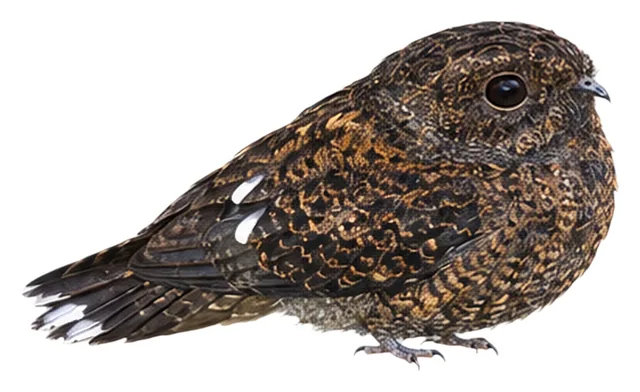
Choco Poorwill
Nyctiphrynus rosenbergi (Hartert, EJO, 1895)
20–22 cmLength52 gWeight
The Chocó poorwill (Nyctiphrynus rosenbergi) is a species of nightjar in the family Caprimulgidae.
Busiest months: November–December · Most records: Colombia, Ecuador
Where and when it's recorded
Busiest months: November–December · Most records: Colombia, Ecuador

Choco Poorwill has been recorded at 14 of the 8,276 birding hotspots we track, in 2 countries and regions.
Records by month Northern Hemisphere
Where it's recorded most
- RN San Cipriano-EscalereteColombia432 records
- Playa de Oro Reserva de Los TigrillosEcuador104 records
- Reserva Rio CanandeEcuador54 records
More places
- El Pangán ProAves reserveColombia43 records
- Mashpi – Lodge and trailsEcuador33 records
- Via Antigua a BuenaventuraColombia25 records
- Rio Silanche Bird SanctuaryEcuador10 records
- San Jorge de MilpeEcuador5 records
- Las Tangaras ProAves ReserveColombia4 records
- Rio Silanche – entrance roadEcuador3 records
Countries and regions with the most records
eBird records via GBIF up to 2024-12-31. A record means someone listed it; more records partly mean more birders, not more birds.
About
The Chocó poorwill (Nyctiphrynus rosenbergi) is a species of nightjar in the family Caprimulgidae. It is found in Colombia and Ecuador.
Excerpt from Wikipedia, CC BY-SA 4.0 · authors · Read more on Wikipedia
Questions
How big is the Choco Poorwill?
The Choco Poorwill is about 20–22 cm long and weighs around 52 g.
Where does the Choco Poorwill live?
Its breeding range: South America: western Colombia and northwestern Ecuador. It is most often recorded in Colombia and Ecuador.
When is the best time to see the Choco Poorwill?
At the hotspots we track, it is recorded most in November and December (Northern Hemisphere).
Is the Choco Poorwill endangered?
The IUCN Red List classifies the Choco Poorwill as Least Concern.
What does the Choco Poorwill eat?
Main food: Insects & other invertebrates.
What family is the Choco Poorwill in?
It belongs to the family Nightjars (Caprimulgidae), order Caprimulgiformes.
At a glance
- Length
- 20–22 cm
- Weight
- 52 g
- Habitat
- Forest
- Diet
- Insects & other invertebrates
- Lifestyle
- Feeds in the air
- Migration
- Resident (barely migrates)
- Conservation
- Least Concern
More measurements
- Wing
- 124 mm
- Tail
- 94 mm
- Bill
- 14 mm
- Tarsus
- 18 mm
Averages from the AVONET dataset; length from field guides where available.
Range
South America: western Colombia and northwestern Ecuador
Breeding range, IOC World Bird List 15.2
Classification
- Order
- Caprimulgiformes
- Family
- Nightjars Caprimulgidae
- Genus
- Nyctiphrynus
Other birds in the genus Nyctiphrynus
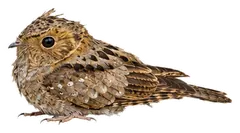 Eared PoorwillNyctiphrynus mcleodii
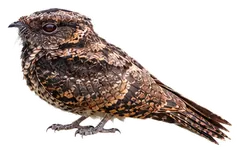 Yucatan PoorwillNyctiphrynus yucatanicus
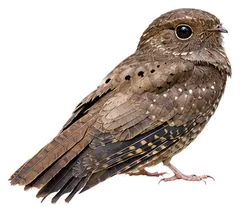 Ocellated PoorwillNyctiphrynus ocellatus
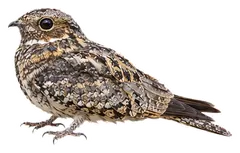 Spotted NightjarEurostopodus argus
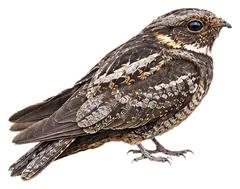 White-throated NightjarEurostopodus mystacalis
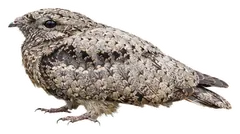 Solomons NightjarEurostopodus nigripennis
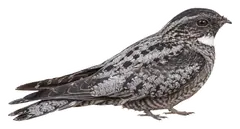 New Caledonian NightjarEurostopodus exul
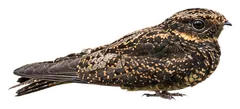 Satanic NightjarEurostopodus diabolicus
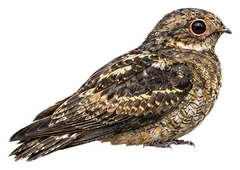 Papuan NightjarEurostopodus papuensis
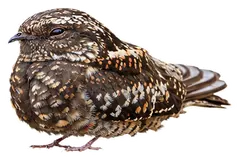 Archbold's NightjarEurostopodus archboldi
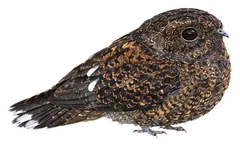
Download illustration
Free to use with credit: “Illustration: Bird Album (birdalbum.com)”. Drawn by AI from a reference photo by Guillermo Nagy Aramacao Tours. ↗
Heard it but can't see it? Mingji identifies birds by sound and photo, on your phone.