 Bird Album
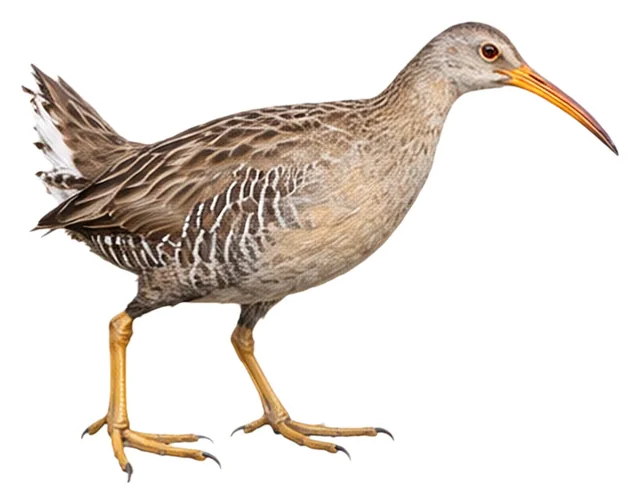
Clapper Rail
Rallus crepitans Gmelin, JF, 1789
32–41 cmLength306 gWeight
The clapper rail (Rallus crepitans) is a member of the rail family, Rallidae.
Busiest months: May · Most records: United States, Belize, Puerto Rico
Where and when it's recorded

Clapper Rail has been recorded at 192 of the 8,171 birding hotspots we track, in 16 countries and regions.
Records by month Northern Hemisphere
Where it's recorded most
- Edwin B. Forsythe NWRUnited States10,317 records
- Bombay Hook National Wildlife RefugeUnited States6,641 records
- Edwin B. Forsythe NWR – Wildlife DriveUnited States5,982 records
More places
- Huntington Beach SPUnited States5,455 records
- South Padre Is. – Birding and Nature CenterUnited States5,340 records
- Oceanside Marine Nature Study AreaUnited States5,303 records
- South Padre Is. – WBC/Conv. Center/Laguna Madre TrailUnited States3,889 records
- St. Marks NWRUnited States3,342 records
- Caw Caw Interpretive CenterUnited States3,156 records
- Plumb BeachUnited States3,130 records
Countries and regions with the most records
eBird records via GBIF up to 2024-12-31. A record means someone listed it; more records partly mean more birders, not more birds.
About
The clapper rail (Rallus crepitans) is a member of the rail family, Rallidae. The taxonomy for this species is confusing and still being determined. It is a large brown rail that is resident in wetlands along the Atlantic coasts of the eastern United States, eastern Mexico and some Caribbean islands.
Excerpt from Wikipedia, CC BY-SA 4.0 · authors · Read more on Wikipedia
Questions
How big is the Clapper Rail?
The Clapper Rail is about 32–41 cm long and weighs around 306 g.
Where does the Clapper Rail live?
Its breeding range: North America, Middle America: eastern coast of USA to Caribbean and coastal Belize. It is most often recorded in United States, Belize and Puerto Rico.
When is the best time to see the Clapper Rail?
At the hotspots we track, it is recorded most in May (Northern Hemisphere).
Is the Clapper Rail endangered?
The IUCN Red List classifies the Clapper Rail as Least Concern.
What does the Clapper Rail eat?
Main food: Fish, shrimp & shellfish.
What family is the Clapper Rail in?
It belongs to the family Rails, Crakes & Coots (Rallidae), order Gruiformes.
At a glance
- Length
- 32–41 cm
- Weight
- 306 g
- Habitat
- Wetland
- Diet
- Fish, shrimp & shellfish
- Lifestyle
- Active on the ground
- Migration
- Partial migrant
- Conservation
- Least Concern
More measurements
- Wing
- 148 mm
- Tail
- 61 mm
- Bill
- 65 mm
- Tarsus
- 48 mm
Averages from the AVONET dataset; length from field guides where available.
Range
North America, Middle America: eastern coast of USA to Caribbean and coastal Belize
Breeding range, IOC World Bird List 15.2
Classification
- Order
- Gruiformes
- Family
- Rails, Crakes & Coots Rallidae
- Genus
- Rallus
Other birds in the genus Rallus
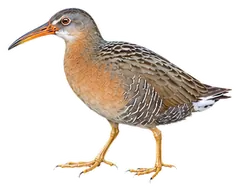 Ridgway's RailRallus obsoletus
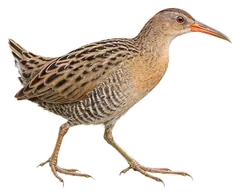 Aztec RailRallus tenuirostris
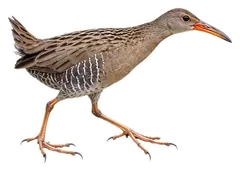 Mangrove RailRallus longirostris
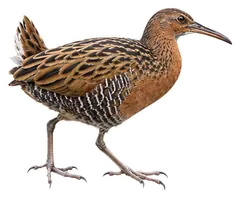 King RailRallus elegans
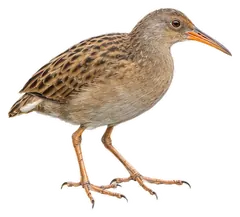 Plain-flanked RailRallus wetmorei
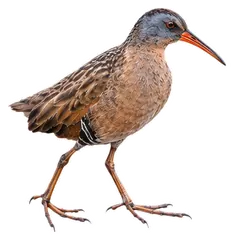 Virginia RailRallus limicola
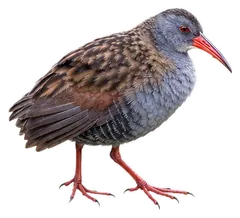 Bogota RailRallus semiplumbeus
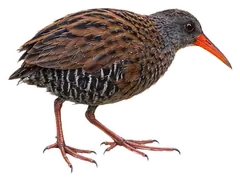 Ecuadorian RailRallus aequatorialis
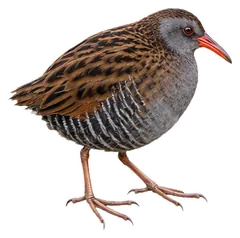 Austral RailRallus antarcticus
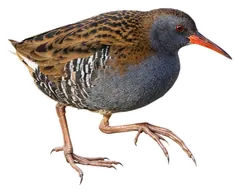 Water RailRallus aquaticus
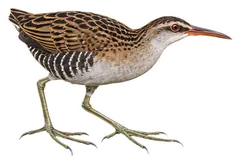 Brown-cheeked RailRallus indicus
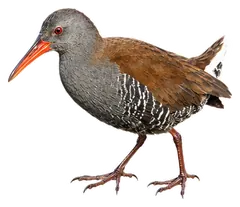 African RailRallus caerulescens
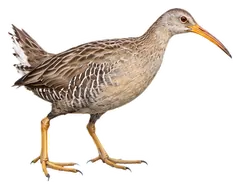
Download illustration
Free to use with credit: “Illustration: Bird Album (birdalbum.com)”. Drawn by AI from a reference photo by Ty Smith. ↗
Heard it but can't see it? Mingji identifies birds by sound and photo, on your phone.