 Bird Album
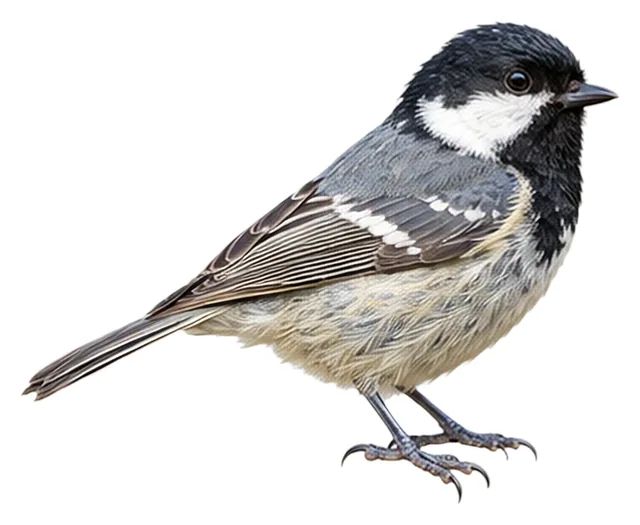
Coal Tit
Periparus ater (Linnaeus, 1758)
10–12 cmLength18 cmWingspan9.2 gWeight
This small tit has a black head with a large white nape patch and two white wing patches.
Busiest months: October · Most records: United Kingdom, Spain, China
How to identify
Field marks
- Black head with a large white nape patch
- Head and throat blue-black with a metallic gloss
- Two white patches on upperwing
- Underparts white, grading into yellowish-brown on sides of belly
Male, female and young
Juveniles are duller, with a black head lacking metallic gloss and pale yellow tinges to the white of the nape and cheeks.
Voice
Constant short “dee” or “see-see” contact calls while foraging; the song is loud, like “if-he, if-he, if-he”.
Where and when it's recorded

Coal Tit has been recorded at 1,454 of the 8,171 birding hotspots we track, in 67 countries and regions.
Records by month Northern Hemisphere
Where it's recorded most
- Parque El Retiro-MadridSpain2,250 records
- Minsmere RSPB ReserveUnited Kingdom2,000 records
- Thursley CommonUnited Kingdom1,579 records
More places
- Dasyueshan IBA – Xiaoxueshan Lodge (50K)Taiwan (China)1,329 records
- Peak District NP – Underhill Farm, ElkstoneUnited Kingdom1,240 records
- Lynford ArboretumUnited Kingdom1,225 records
- Rutland WaterUnited Kingdom1,210 records
- Leighton Moss RSPB ReserveUnited Kingdom1,145 records
- South Downs NP – Pulborough Brooks RSPB ReserveUnited Kingdom1,082 records
- Alexandra ParkUnited Kingdom1,038 records
Countries and regions with the most records
eBird records via GBIF up to 2024-12-31. A record means someone listed it; more records partly mean more birders, not more birds.
About
The coal tit (Periparus ater) is a passerine bird in the tit family, Paridae. It is a widespread and common resident breeder in forests throughout the temperate to subtropical Palearctic, including North Africa.
Excerpt from Wikipedia, CC BY-SA 4.0 · authors · Read more on Wikipedia
Questions
How big is the Coal Tit?
The Coal Tit is about 10–12 cm long, with a wingspan of 18 cm and weighs around 9.2 g.
Where does the Coal Tit live?
Its breeding range: Palearctic: widespread. It is most often recorded in United Kingdom, Spain and China.
When is the best time to see the Coal Tit?
At the hotspots we track, it is recorded most in October (Northern Hemisphere).
Is the Coal Tit endangered?
The IUCN Red List classifies the Coal Tit as Least Concern.
What does the Coal Tit eat?
Main food: Insects & other invertebrates.
What family is the Coal Tit in?
It belongs to the family Tits, Chickadees (Paridae), order Passerines (Passeriformes).
At a glance
- Length
- 10–12 cm
- Wingspan
- 18 cm
- Weight
- 9.2 g
- Habitat
- Forest
- Diet
- Insects & other invertebrates
- Lifestyle
- Perches in trees
- Migration
- Resident (barely migrates)
- Conservation
- Least Concern
More measurements
- Wing
- 61 mm
- Tail
- 46 mm
- Bill
- 11 mm
- Tarsus
- 15 mm
Averages from the AVONET dataset; length from field guides where available.
Range
Palearctic: widespread
Breeding range, IOC World Bird List 15.2
Subspecies · 6
- Periparus ater ater continental Europe and Asia Minor through Siberia to Kamchatka, Sakhalin Is., Korean Pen., ne China and ne Mongolia
- Periparus ater eckodedicatus w China
- Periparus ater rufipectus se Kazakhstan to nw China
- Periparus ater pekinensis ec China
- Periparus ater kuatunensis se China
- Periparus ater ptilosus Taiwan (China)
Classification
- Order
- Passerines Passeriformes
- Family
- Tits, Chickadees Paridae
- Genus
- Periparus
Other birds in the genus Periparus
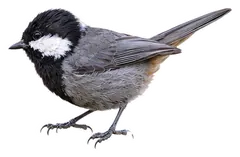 Rufous-naped TitPeriparus rufonuchalis
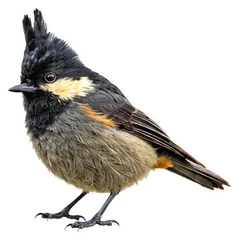 Rufous-vented TitPeriparus rubidiventris
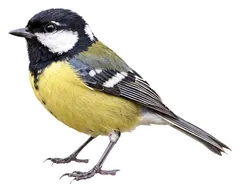 Yellow-bellied TitPeriparus venustulus
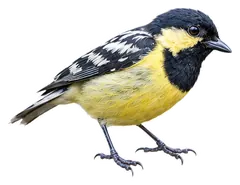 Elegant TitPeriparus elegans
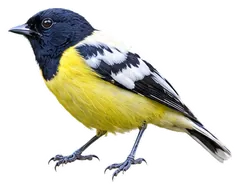 Palawan TitPeriparus amabilis
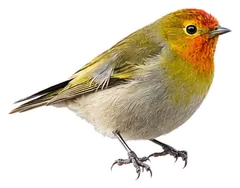 Fire-capped TitCephalopyrus flammiceps
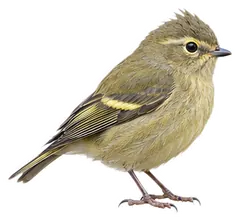 Yellow-browed TitSylviparus modestus
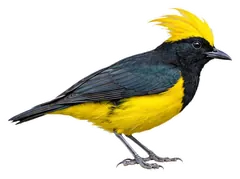 Sultan TitMelanochlora sultanea
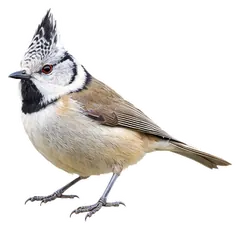 Crested TitLophophanes cristatus
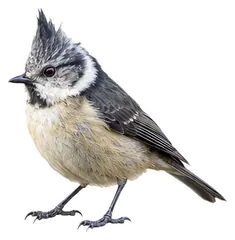 Grey-crested TitLophophanes dichrous
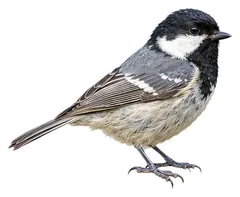
Download illustration
Free to use with credit: “Illustration: Bird Album (birdalbum.com)”. Drawn by AI from a reference photo by Alexis Lours. ↗

Heard it but can't see it? Mingji identifies birds by sound and photo, on your phone.