 Bird Album
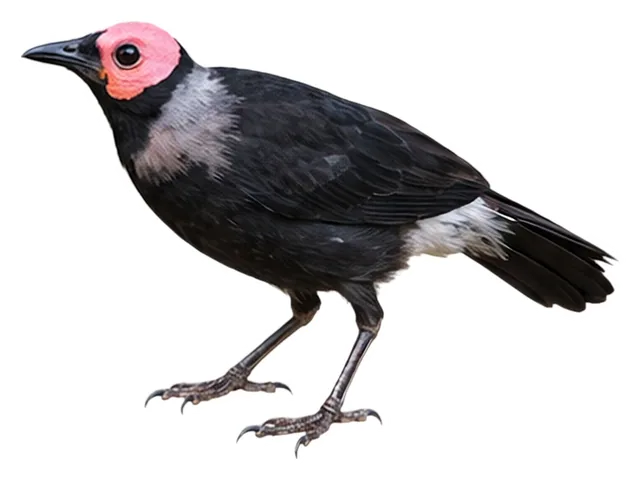
Coleto
Sarcops calvus (Linnaeus, 1766)
142 gWeight
The coleto (Sarcops calvus) is a starling species (family Sturnidae) in the monotypic genus Sarcops.
Busiest months: February–March · Most records: Philippines, Singapore
Where and when it's recorded

Coleto has been recorded at 36 of the 8,171 birding hotspots we track, in 2 countries and regions.
Records by month Northern Hemisphere
Where it's recorded most
- Subic Bay – Nabasan TrailPhilippines705 records
- Raja Sikatuna National ParkPhilippines348 records
- Lake HolonPhilippines340 records
More places
- Subic BayPhilippines280 records
- Subic Bay – Hill 394 roadPhilippines265 records
- Bislig lowlands – PICOP Road 4Philippines222 records
- Mt. Tagubud, New BataanPhilippines198 records
- Balinsasayao Twin Lakes Natural Park, SibulanPhilippines180 records
- Bislig lowlands – PICOP Road 42Philippines162 records
- Mt. Talomo – 1200masl, Davao CityPhilippines155 records
Countries and regions with the most records
eBird records via GBIF up to 2024-12-31. A record means someone listed it; more records partly mean more birders, not more birds.
About
The coleto (Sarcops calvus) is a starling species (family Sturnidae) in the monotypic genus Sarcops. It is endemic to the Philippines. Its natural habitats are tropical dry forest, tropical moist lowland forest, and tropical moist montane forest.
Excerpt from Wikipedia, CC BY-SA 4.0 · authors · Read more on Wikipedia
Questions
How big is the Coleto?
The Coleto weighs around 142 g.
Where does the Coleto live?
Its breeding range: Oriental: Philippines (except Palawan group). It is most often recorded in Philippines and Singapore.
When is the best time to see the Coleto?
At the hotspots we track, it is recorded most in February and March (Northern Hemisphere).
Is the Coleto endangered?
The IUCN Red List classifies the Coleto as Least Concern.
What does the Coleto eat?
Main food: Omnivore.
What family is the Coleto in?
It belongs to the family Starlings, Rhabdornises (Sturnidae), order Passerines (Passeriformes).
At a glance
- Weight
- 142 g
- Habitat
- Forest
- Diet
- Omnivore
- Lifestyle
- Perches in trees
- Migration
- Resident (barely migrates)
- Conservation
- Least Concern
More measurements
- Wing
- 125 mm
- Tail
- 113 mm
- Bill
- 30 mm
- Tarsus
- 31 mm
Averages from the AVONET dataset; length from field guides where available.
Range
Oriental: Philippines (except Palawan group)
Breeding range, IOC World Bird List 15.2
Classification
- Order
- Passerines Passeriformes
- Family
- Starlings, Rhabdornises Sturnidae
- Genus
- Sarcops
More from the family Starlings, Rhabdornises
 Metallic StarlingAplonis metallica
 Yellow-eyed StarlingAplonis mystacea
 Singing StarlingAplonis cantoroides
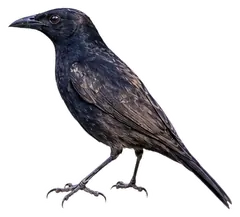 Tanimbar StarlingAplonis crassa
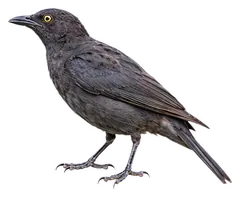 Atoll StarlingAplonis feadensis
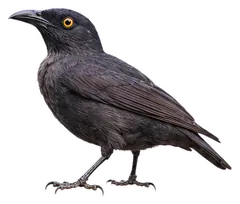 Rennell StarlingAplonis insularis
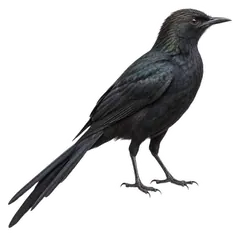 Long-tailed StarlingAplonis magna
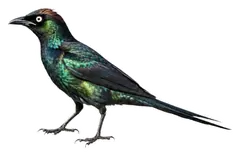 White-eyed StarlingAplonis brunneicapillus
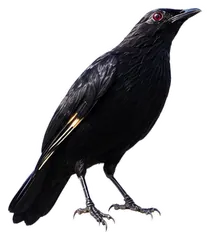 Brown-winged StarlingAplonis grandis
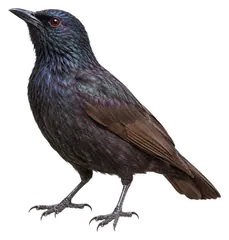 Makira StarlingAplonis dichroa
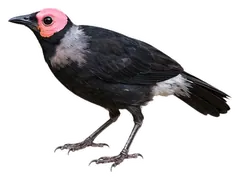
Download illustration
Free to use with credit: “Illustration: Bird Album (birdalbum.com)”. Drawn by AI from a reference photo by Domzjuniorwildlife. ↗
Heard it but can't see it? Mingji identifies birds by sound and photo, on your phone.