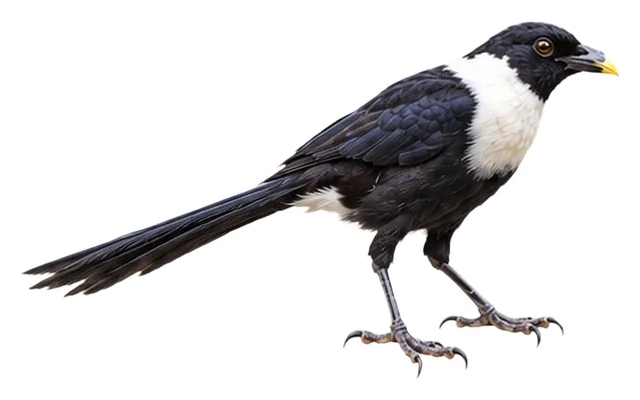
White-necked Myna
Streptocitta albicollis (Vieillot, 1818)
248 gWeight
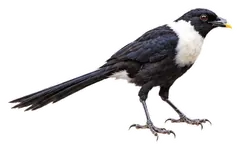
The white-necked myna (Streptocitta albicollis) is a large, long-tailed species of starling in the family Sturnidae.
Busiest months: July–August · Most records: Indonesia
Where and when it's recorded
Busiest months: July–August · Most records: Indonesia

White-necked Myna has been recorded at 7 of the 8,276 birding hotspots we track, in 1 country or region.
Records by month Northern Hemisphere
Where it's recorded most
- Tangkoko Batuangus NR – Forest andIndonesia376 records
- Tangkoko Batuangas NR – overlookIndonesia169 records
- Dumoga-Bone (Bogani Nani Wartabone) NP – TambunIndonesia126 records
More places
- Dumoga-Bone (Bogani Nani Wartabone) NP – TorautIndonesia41 records
- Lore Lindu NPIndonesia26 records
- Lore Lindu NP – Lake Tambing vicinityIndonesia3 records
- Gunung MahawuIndonesia2 records
Countries and regions with the most records
eBird records via GBIF up to 2024-12-31. A record means someone listed it; more records partly mean more birders, not more birds.
About
The white-necked myna (Streptocitta albicollis) is a large, long-tailed species of starling in the family Sturnidae. Due to its superficial resemblance to a magpie, it has been referred to as the Celebes magpie or Sulawesi magpie in the past. It is endemic to forests on Sulawesi and adjacent smaller islands in Indonesia.
Excerpt from Wikipedia, CC BY-SA 4.0 · authors · Read more on Wikipedia
Questions
How big is the White-necked Myna?
The White-necked Myna weighs around 248 g.
Where does the White-necked Myna live?
Its breeding range: Australasia: Sulawesi and satellites. It is most often recorded in Indonesia.
When is the best time to see the White-necked Myna?
At the hotspots we track, it is recorded most in July and August (Northern Hemisphere).
Is the White-necked Myna endangered?
The IUCN Red List classifies the White-necked Myna as Least Concern.
What does the White-necked Myna eat?
Main food: Fruit.
What family is the White-necked Myna in?
It belongs to the family Starlings, Rhabdornises (Sturnidae), order Passerines (Passeriformes).
At a glance
- Weight
- 248 g
- Habitat
- Forest
- Diet
- Fruit
- Lifestyle
- Perches in trees
- Migration
- Resident (barely migrates)
- Conservation
- Least Concern
More measurements
- Wing
- 143 mm
- Tail
- 256 mm
- Bill
- 29 mm
- Tarsus
- 36 mm
Averages from the AVONET dataset; length from field guides where available.
Range
Australasia: Sulawesi and satellites
Breeding range, IOC World Bird List 15.2
Classification
- Order
- Passerines Passeriformes
- Family
- Starlings, Rhabdornises Sturnidae
- Genus
- Streptocitta
Other birds in the genus Streptocitta
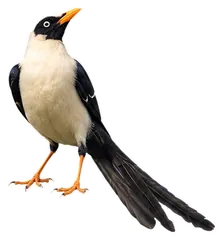 Bare-eyed MynaStreptocitta albertinae
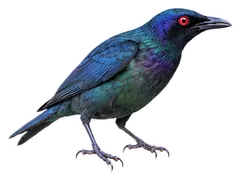 Metallic StarlingAplonis metallica
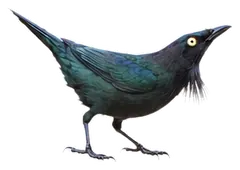 Yellow-eyed StarlingAplonis mystacea
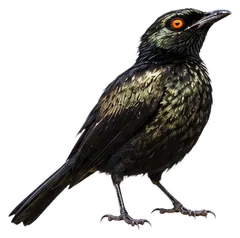 Singing StarlingAplonis cantoroides
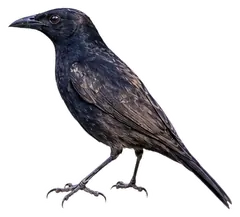 Tanimbar StarlingAplonis crassa
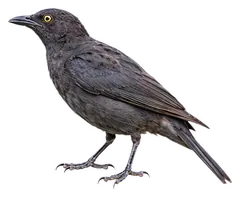 Atoll StarlingAplonis feadensis
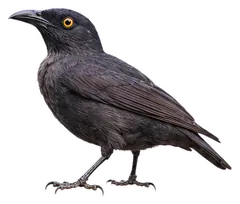 Rennell StarlingAplonis insularis
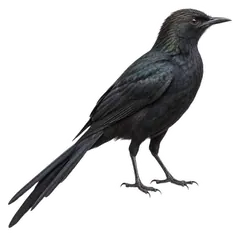 Long-tailed StarlingAplonis magna
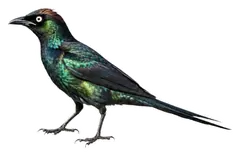 White-eyed StarlingAplonis brunneicapillus
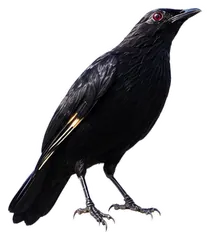 Brown-winged StarlingAplonis grandis
Download illustration
Free to use with credit: “Illustration: Bird Album (birdalbum.com)”. Drawn by AI from a reference photo by Gaell Mainguy. ↗
Heard it but can't see it? Mingji identifies birds by sound and photo, on your phone.
In other languages
- EnglishWhite-necked Myna
- 简体中文白颈鹊椋鸟
- 繁體中文白頸鵲椋鳥
- 日本語カササギムクドリ
- DeutschWeißhalsatzel
- FrançaisStreptocitte à cou blanc
- EspañolMiná cuelliblanco sureño
- Portuguêsmainato-de-pescoço-branco
- ItalianoMaina collobianco
- NederlandsWitnekmaina
- РусскийБелошейный лемба
- Svenskavithalsad skatstare
- DanskHvidhalset Stær
- Polskicelebesiak białoszyi