 Bird Album
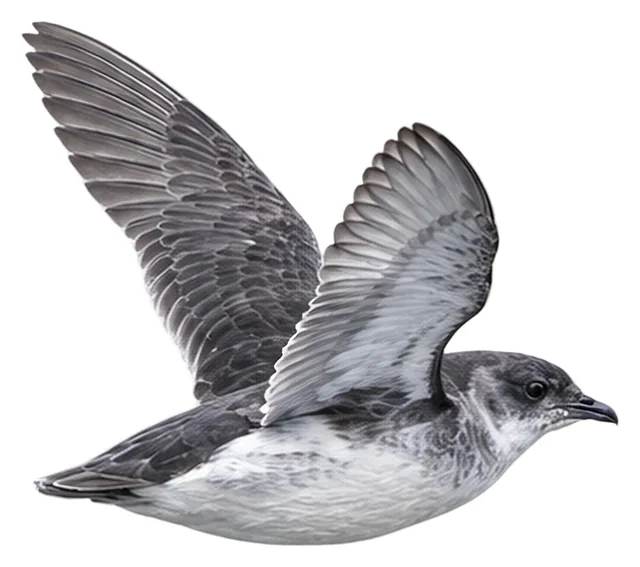
Common Diving Petrel
Pelecanoides urinatrix (Gmelin, JF, 1789)
152 gWeight
The common diving petrel (Pelecanoides urinatrix), also known as the smaller diving petrel or simply the diving petrel, is a diving petrel, one of four very similar auk-like small petrels of the southern oceans.
Busiest months: November · Most records: New Zealand, Australia, South Georgia & South Sandwich Islands
Where and when it's recorded

Common Diving Petrel has been recorded at 56 of the 8,171 birding hotspots we track, in 10 countries and regions.
Records by month Southern Hemisphere
Where it's recorded most
- Eaglehawk Neck Pelagic TripAustralia1,724 records
- Foveaux StraitNew Zealand963 records
- Tutukaka To Poor KnightsNew Zealand583 records
More places
- Kaikoura – offshore – Albatross Encounter pelagicNew Zealand480 records
- Stewart Island – east coast pelagic watersNew Zealand249 records
- Cook Strait FerryNew Zealand226 records
- Poor Knights Shelf AreaNew Zealand211 records
- Hauraki Gulf PelagicNew Zealand157 records
- Stewart Island – Titi Islands PelagicNew Zealand148 records
- Stewart Island – Oban & Halfmoon BayNew Zealand33 records
Countries and regions with the most records
eBird records via GBIF up to 2024-12-31. A record means someone listed it; more records partly mean more birders, not more birds.
About
The common diving petrel (Pelecanoides urinatrix), also known as the smaller diving petrel or simply the diving petrel, is a diving petrel, one of four very similar auk-like small petrels of the southern oceans. It is native to South Atlantic islands and islands of the subantarctic southern Indian Ocean, islands and islets off New Zealand and south-eastern Australian islands.
Excerpt from Wikipedia, CC BY-SA 4.0 · authors · Read more on Wikipedia
Questions
How big is the Common Diving Petrel?
The Common Diving Petrel weighs around 152 g.
Where does the Common Diving Petrel live?
Its breeding range: Southern Ocean: islands of subtropical to subantarctic Atlantic, Indian and southwestern Pacific. It is most often recorded in New Zealand, Australia and South Georgia & South Sandwich Islands.
When is the best time to see the Common Diving Petrel?
At the hotspots we track, it is recorded most in November (Southern Hemisphere).
Is the Common Diving Petrel endangered?
The IUCN Red List classifies the Common Diving Petrel as Least Concern.
What does the Common Diving Petrel eat?
Main food: Fish, shrimp & shellfish.
What family is the Common Diving Petrel in?
It belongs to the family Petrels, Shearwaters, Diving Petrels (Procellariidae), order Procellariiformes.
At a glance
- Weight
- 152 g
- Habitat
- Ocean
- Diet
- Fish, shrimp & shellfish
- Lifestyle
- On the water surface
- Migration
- Partial migrant
- Conservation
- Least Concern
More measurements
- Wing
- 122 mm
- Tail
- 39 mm
- Bill
- 28 mm
- Tarsus
- 24 mm
Averages from the AVONET dataset; length from field guides where available.
Range
Southern Ocean: islands of subtropical to subantarctic Atlantic, Indian and southwestern Pacific
Breeding range, IOC World Bird List 15.2
Classification
- Order
- Procellariiformes
- Family
- Petrels, Shearwaters, Diving Petrels Procellariidae
- Genus
- Pelecanoides
Other birds in the genus Pelecanoides
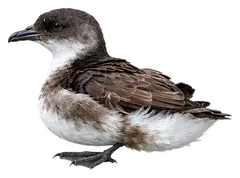 Peruvian Diving PetrelPelecanoides garnotii
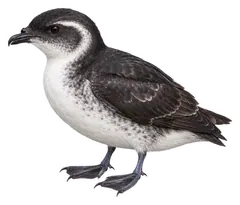 Magellanic Diving PetrelPelecanoides magellani
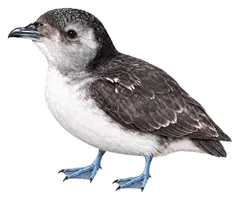 South Georgia Diving PetrelPelecanoides georgicus
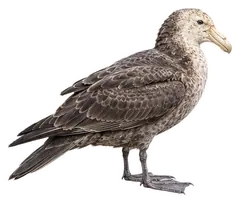 Southern Giant PetrelMacronectes giganteus
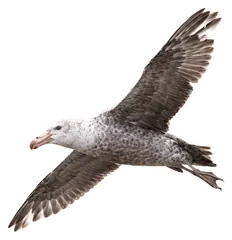 Northern Giant PetrelMacronectes halli
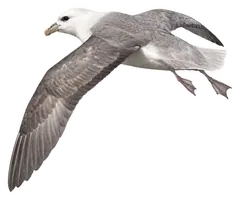 Northern FulmarFulmarus glacialis
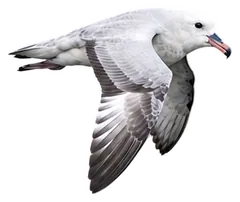 Southern FulmarFulmarus glacialoides
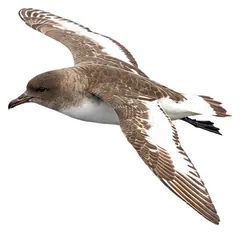 Antarctic PetrelThalassoica antarctica
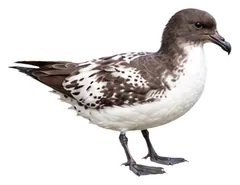 Pintado PetrelDaption capense
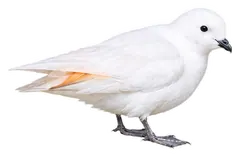 Snow PetrelPagodroma nivea
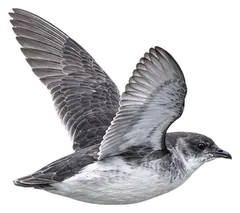
Download illustration
Free to use with credit: “Illustration: Bird Album (birdalbum.com)”. Drawn by AI from reference photos. ↗
Heard it but can't see it? Mingji identifies birds by sound and photo, on your phone.
In other languages
- EnglishCommon Diving Petrel
- 简体中文鹈燕
- 繁體中文普通鵜燕
- 日本語モグリウミツバメ
- DeutschSubantarktis-Lummensturmvogel
- FrançaisPuffinure plongeur
- EspañolPotoyunco común
- Portuguêspetrel-mergulhador-comum
- ItalianoPetrello tuffatore comune
- NederlandsAlkstormvogeltje
- РусскийЮжный ныряющий буревестник
- Svenskasmalnäbbad dykpetrell
- DanskAlkestormfugl
- Polskinurzec czarnoskrzydły