 Bird Album
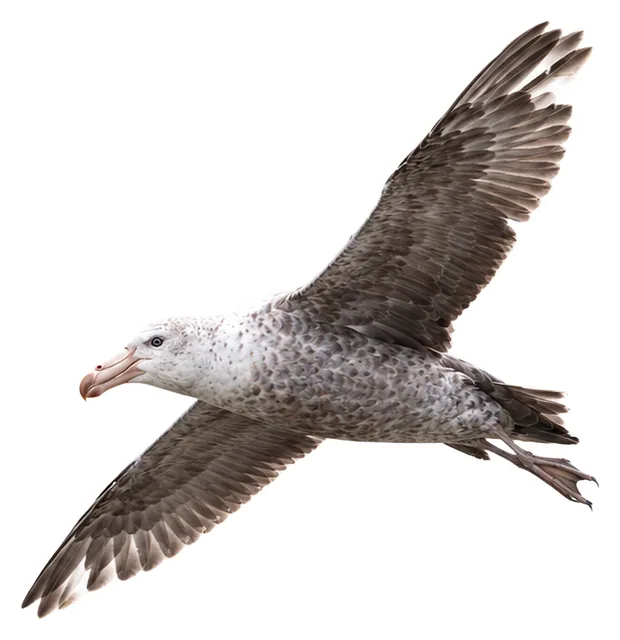
Northern Giant Petrel
Macronectes halli Mathews, 1912
4.2 kgWeight
The northern giant petrel (Macronectes halli), also known as Hall's giant petrel, is a large, predatory seabird of the southern oceans.
Busiest months: November · Most records: New Zealand, South Georgia & South Sandwich Islands, Australia
Where and when it's recorded

Northern Giant Petrel has been recorded at 115 of the 8,171 birding hotspots we track, in 13 countries and regions.
Records by month Southern Hemisphere
Where it's recorded most
- Kaikoura – offshore – Albatross Encounter pelagicNew Zealand6,393 records
- Eaglehawk Neck Pelagic TripAustralia2,020 records
- Quintero – PelágicoChile710 records
More places
- Valparaíso – PelágicoChile649 records
- Cook Strait FerryNew Zealand343 records
- Gold HarbourSouth Georgia & South Sandwich Islands330 records
- Salisbury PlainSouth Georgia & South Sandwich Islands286 records
- St Andrew's BaySouth Georgia & South Sandwich Islands275 records
- Taiaroa Head – Royal Albatross CentreNew Zealand256 records
- Taiaroa Head/Harbour EntranceNew Zealand249 records
Countries and regions with the most records
eBird records via GBIF up to 2024-12-31. A record means someone listed it; more records partly mean more birders, not more birds.
About
The northern giant petrel (Macronectes halli), also known as Hall's giant petrel, is a large, predatory seabird of the southern oceans. Its range overlaps broadly with the range of the related southern giant petrel (Macronectes giganteus), albeit slightly further to the north.
Excerpt from Wikipedia, CC BY-SA 4.0 · authors · Read more on Wikipedia
Questions
How big is the Northern Giant Petrel?
The Northern Giant Petrel weighs around 4.2 kg.
Where does the Northern Giant Petrel live?
Its breeding range: Southern Ocean: islands north of Antarctic Convergence from South Georgia to Macquarie (far southeast of Australia) and Stewart, Chatham (east of South Island), Antipodes (southeast of Stewart Island), and Auckland and Campbell islands (south of South Island; New Zealand). It is most often recorded in New Zealand, South Georgia & South Sandwich Islands and Australia.
When is the best time to see the Northern Giant Petrel?
At the hotspots we track, it is recorded most in November (Southern Hemisphere).
Is the Northern Giant Petrel endangered?
The IUCN Red List classifies the Northern Giant Petrel as Least Concern.
What does the Northern Giant Petrel eat?
Main food: Omnivore.
What family is the Northern Giant Petrel in?
It belongs to the family Petrels, Shearwaters, Diving Petrels (Procellariidae), order Procellariiformes.
At a glance
- Weight
- 4.2 kg
- Habitat
- Ocean
- Diet
- Omnivore
- Lifestyle
- Varied
- Migration
- Partial migrant
- Conservation
- Least Concern
More measurements
- Wing
- 498 mm
- Tail
- 166 mm
- Bill
- 102 mm
- Tarsus
- 89 mm
Averages from the AVONET dataset; length from field guides where available.
Range
Southern Ocean: islands north of Antarctic Convergence from South Georgia to Macquarie (far southeast of Australia) and Stewart, Chatham (east of South Island), Antipodes (southeast of Stewart Island), and Auckland and Campbell islands (south of South Island; New Zealand)
Breeding range, IOC World Bird List 15.2
Classification
- Order
- Procellariiformes
- Family
- Petrels, Shearwaters, Diving Petrels Procellariidae
- Genus
- Macronectes
Other birds in the genus Macronectes
 Southern Giant PetrelMacronectes giganteus
 Northern FulmarFulmarus glacialis
 Southern FulmarFulmarus glacialoides
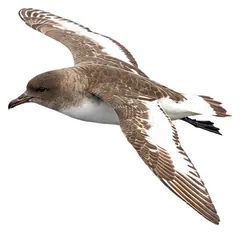 Antarctic PetrelThalassoica antarctica
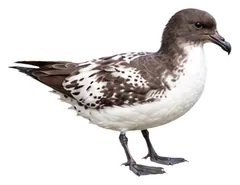 Pintado PetrelDaption capense
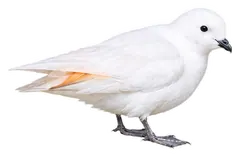 Snow PetrelPagodroma nivea
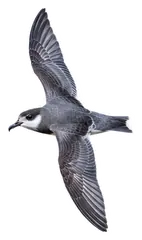 Blue PetrelHalobaena caerulea
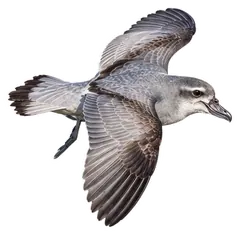 Broad-billed PrionPachyptila vittata
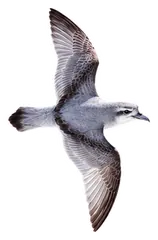 Salvin's PrionPachyptila salvini
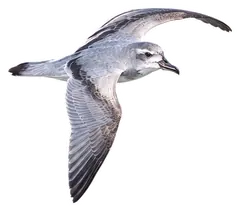 MacGillivray's PrionPachyptila macgillivrayi
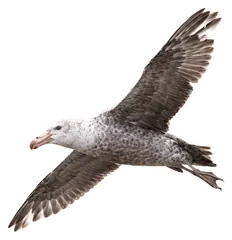
Download illustration
Free to use with credit: “Illustration: Bird Album (birdalbum.com)”. Drawn by AI from reference photos. ↗
Heard it but can't see it? Mingji identifies birds by sound and photo, on your phone.
In other languages
- EnglishNorthern Giant Petrel
- 简体中文霍氏巨鹱
- 繁體中文北方巨鸌
- 日本語キタオオフルマカモメ
- DeutschHallsturmvogel
- FrançaisPétrel de Hall
- EspañolAbanto marino subantártico
- Portuguêspardelão-subantártico
- ItalianoOssifraga del nord
- NederlandsNoordelijke Reuzenstormvogel
- РусскийСеверный гигантский буревестник
- Svenskanordlig jättestormfågel
- DanskRødspidset Kæmpestormfugl
- Polskipetrelec wielki